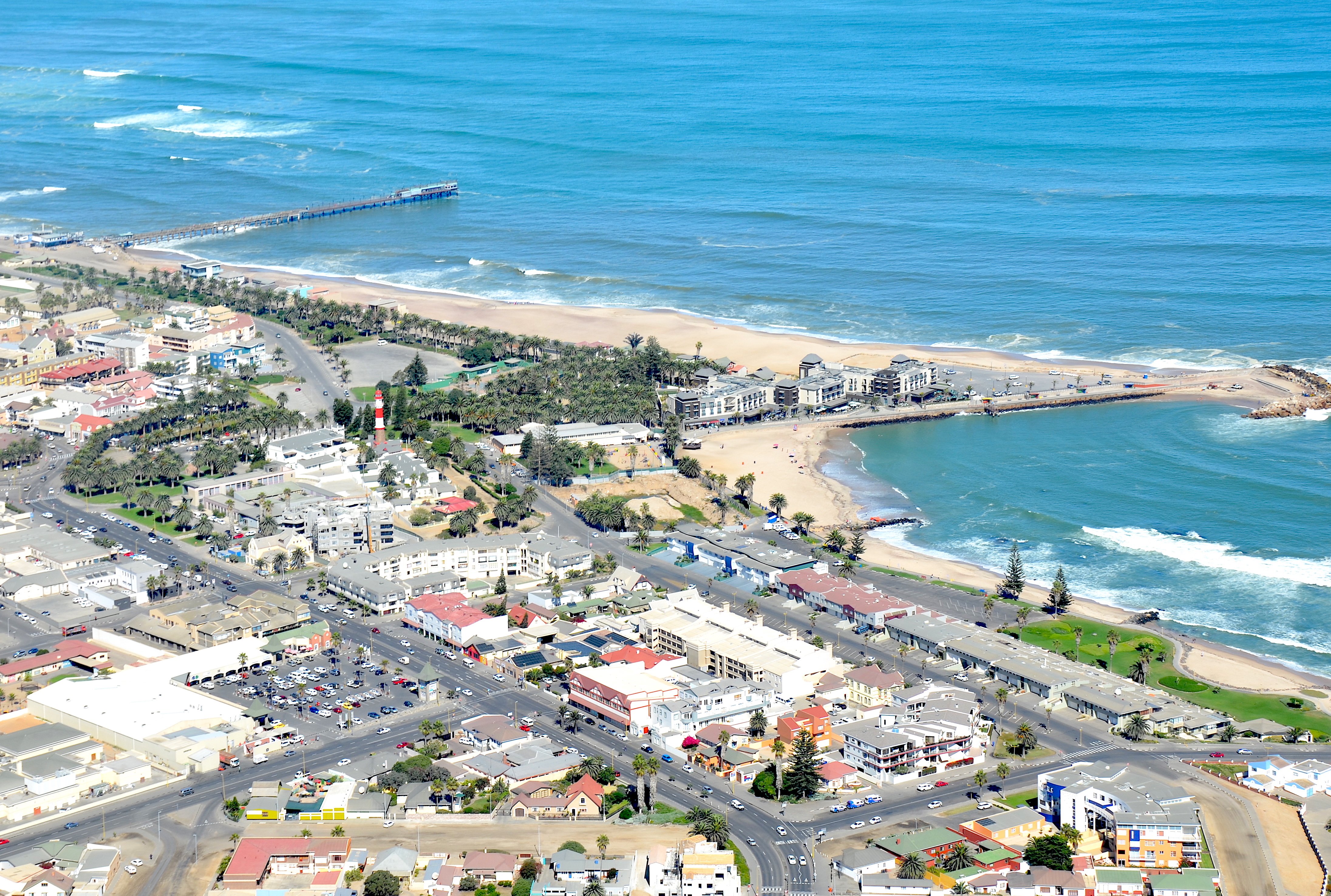
Swakopmund sits at a collision of worlds: the cold Atlantic on one side, the oldest desert on earth on the other, and in the middle a town that looks as though it was transplanted wholesale from a Bavarian market square. The German colonial architecture — turrets, towers, Jugendstil facades — is not a veneer. It is the bones of the place, and the contrast with the surrounding dunes and fog-draped coast is genuinely strange and genuinely wonderful.
Germany established a presence here in 1892, choosing this inhospitable stretch of the Namib coast for its access to fresh water and proximity to the interior. The settlement never had a proper harbour — the surf made it nearly impossible — so ships anchored offshore while goods and passengers were rowed ashore through the breakers. The 1912 iron jetty, stretching 640 metres into the Atlantic, was the colonial authorities' answer to this problem. It is still standing, still walkable, and still battered by the same swells.
Today Swakopmund is Namibia's adventure capital and its main beach resort. Namibians from Windhoek drive four hours west in summer to escape the heat; international travellers come to sandboard down the dunes or jump out of a plane over the desert. The town handles both crowds well. It has good restaurants, reasonable infrastructure, and enough of its colonial-era architecture intact — eleven buildings are national monuments — to make simply walking the streets worthwhile.
The fog is part of the deal. The cold Benguela Current chills the air blowing in from the ocean, and a thick sea fog rolls in on perhaps 200 days a year. On foggy mornings the lighthouse disappears and the promenade is ghostly quiet. By afternoon the desert wind usually clears it. In summer (November to February) the fog is less persistent; in winter (May to August) it can sit for days. Temperatures are mild year-round — around 20°C in January, 16°C in August — making Swakopmund comfortable in all seasons by Namibian standards.