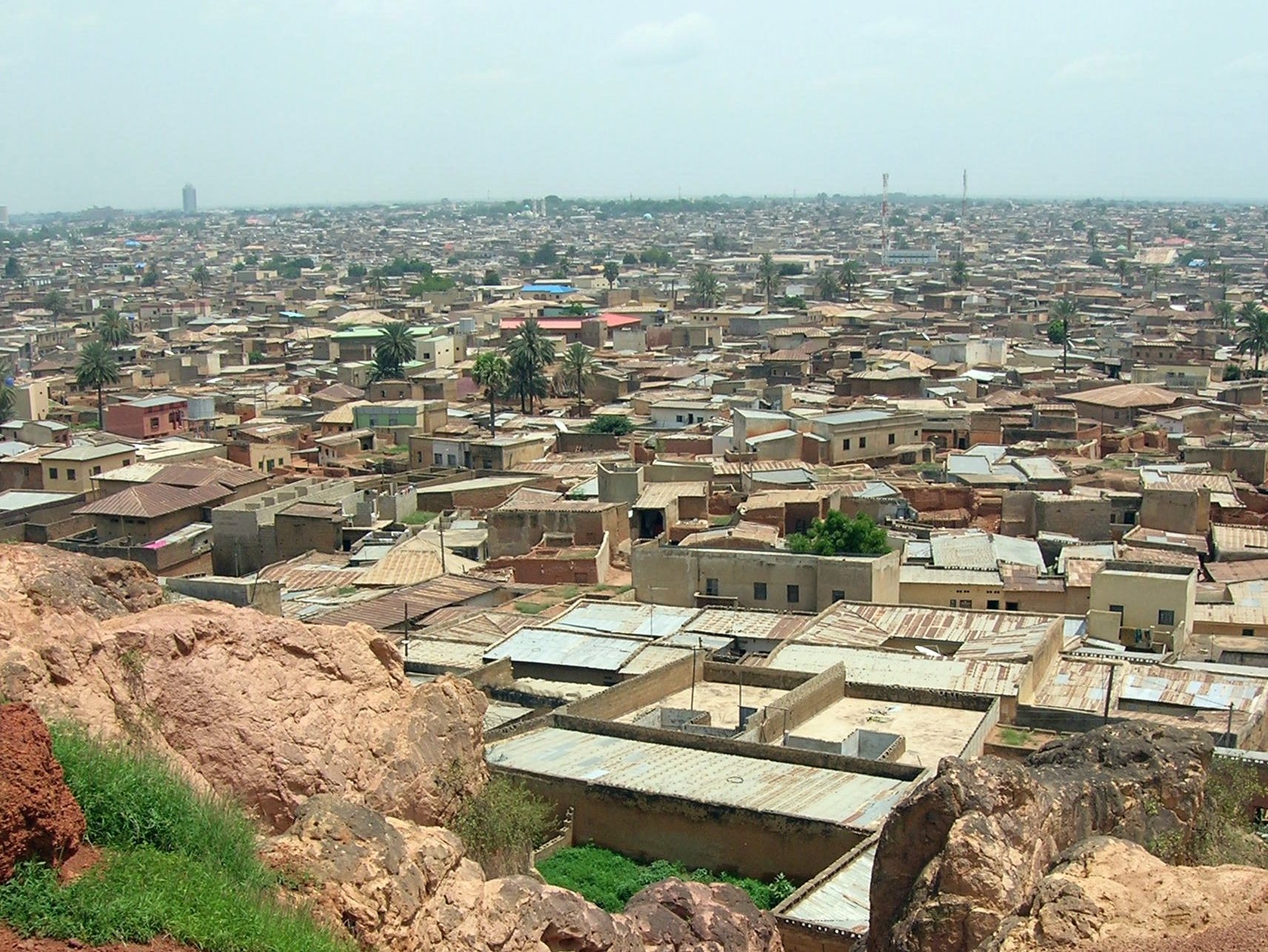
Kano is one of the most compelling cities to visit in Nigeria. It has been a major trading hub for the Hausa people for centuries — their empire dominated northern Nigeria in the 18th and 19th centuries, and their cultural influence remains enormous. The Old City, ringed by mud walls with 16 gates, is the reason most travellers come.
Sitting on the edge of the Sahel, just below the fringe of the Sahara, Kano has deep cultural and commercial links stretching north across the desert to the Maghreb. The city has grown at a frenzied pace in recent decades and is now the third-largest in Nigeria — noisy and crowded, but far more navigable than Lagos. Most of what you want to see is concentrated in the walkable Old City, which makes it easy to spend a day well.
The Old City's big four: the Kurmi Market, one of the largest traditional markets in West Africa; the Kofar Mata dye pits, where indigo cloth has been dyed in the same pits since 1498; the Gidan Makama Museum, a well-curated collection of Hausa history and crafts; and the Emir's Palace, a centuries-old compound of mud-brick architecture that remains the seat of the emirate today.
Day trips are worth considering. Sokoto has a sultan's palace and excellent markets for leather goods. Katsina and Daura are traditional Hausa towns with a quieter pace. Birnin Kudu has rock paintings. All are reachable in a day if you have your own transport.