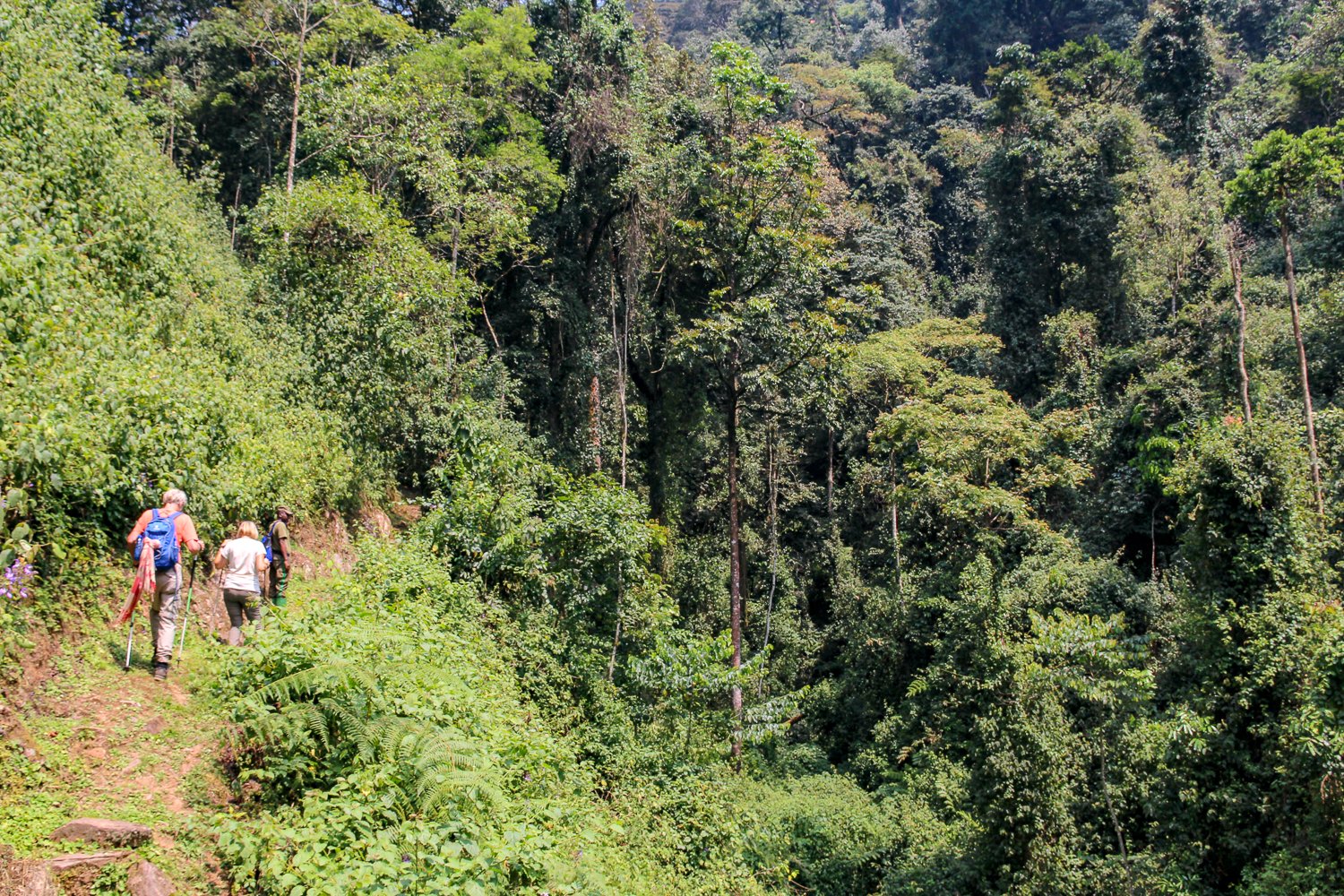
Mountain rainforest national park in southwestern Rwanda, rich in primates, birds, and ancient highland biodiversity.
Nyungwe is the largest montane forest in central Africa, covering about 1,000 square kilometres of dense, mountainous terrain in southwestern Rwanda. The forest is ancient — one of the few in Africa that survived the ice ages — and its biodiversity reflects this. More than 13 primate species live here, including chimpanzees and the striking L'Hoest's monkey. Over 275 bird species have been recorded.
The continental divide between the Congo and Nile river basins runs through the park, and the most distant source of the Nile is found here. The terrain ranges from high closed-canopy forest to bamboo groves and wetlands, with some areas of secondary regrowth where fires or disturbances have opened gaps.
The park's main activities are chimpanzee tracking and canopy walks. The Igishigishigi Trail leads to a suspension bridge hanging 50 metres above the forest floor — one of the few canopy walkways in Africa. Guided forest walks can be arranged at the Uwinka Reception Centre, which is the main visitor hub in the park.
Nyungwe is accessible from Butare (now Huye) to the east or Cyangugu to the west. The road between the two passes through the park and is scenic in itself.
Guide
Getting There
Nyungwe is in the far southwest corner of Rwanda. The drive from Kigali is around six hours on a paved road — south through Huye (formerly Butare), then west through Nyamagabe and on into the forest. Public minibuses run as far as Huye and then to Cyangugu on the western edge of the park; private hire is more practical if you're stopping to walk.
The main road, the RN1, runs straight through the park between Uwinka and Gisakura. Driving through is scenic in itself — long stretches of unbroken forest canopy on either side, with the occasional troop of monkeys crossing in front of the car. Allow time: the road is winding, and stops for wildlife are common.
Guide
When to Go
Nyungwe has two dry seasons — June to September is the longest and the most reliable for trail conditions and primate tracking. A short dry season runs from late December to early February. The rest of the year is wet, sometimes very wet, and trails turn into slippery clay slides under the canopy.
Birding is best in the wet seasons, when more species are breeding and the resident populations are joined by migrants. Temperatures stay cool year-round at the park's altitude — usually 15 to 20°C during the day, dropping into single digits at night. Bring warm layers regardless of season.