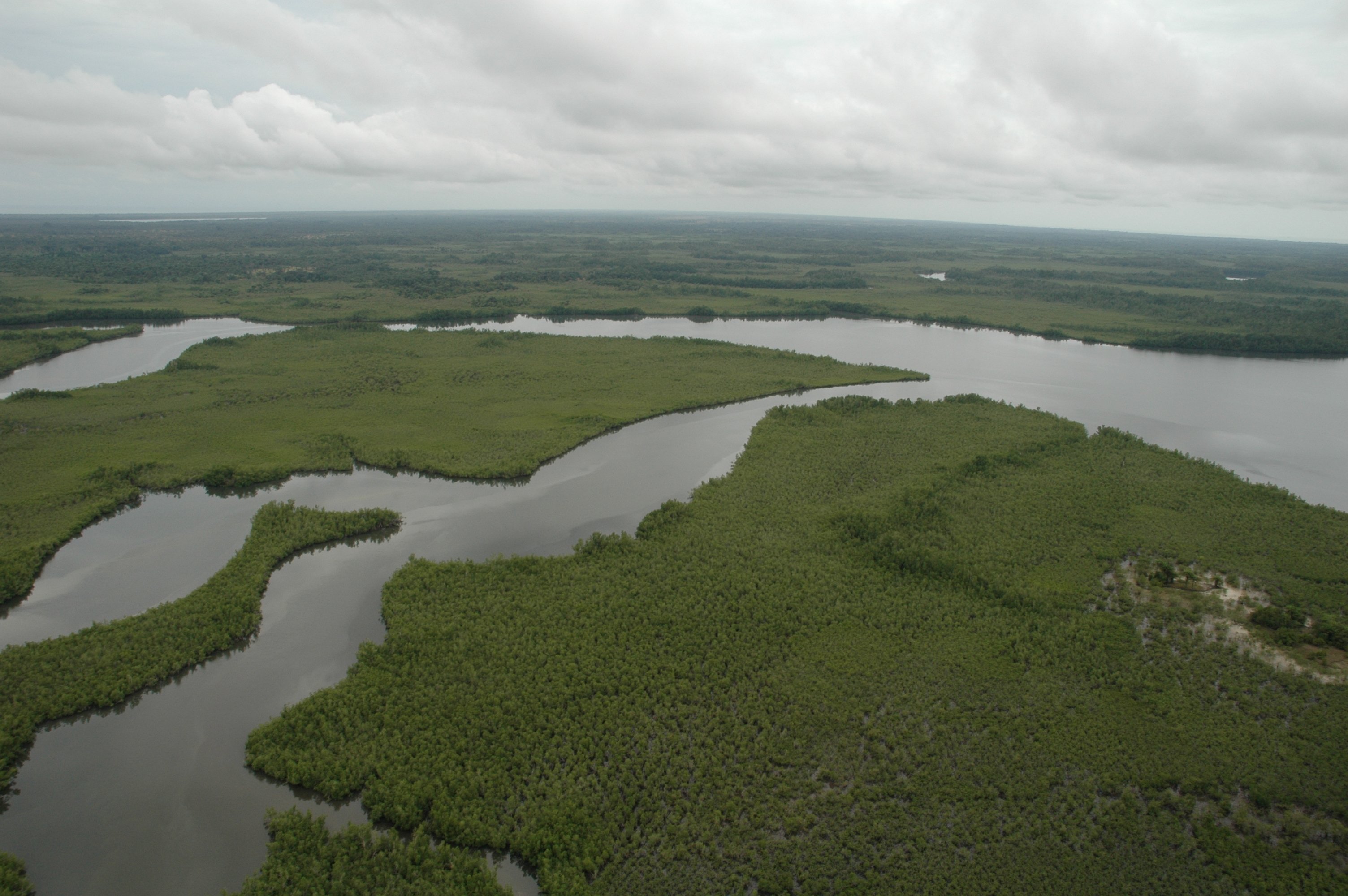
Sherbro Island sits in the mouth of the Sherbro River in southern Sierra Leone, separated from the mainland by a broad estuary. It is one of the larger islands off the West African coast and has been inhabited for centuries by the Sherbro people, who gave it their name. The island has a history intertwined with the slave trade — it was a major transit point for enslaved people in the 18th and early 19th centuries, and the town of Bonthe on the island was once a significant colonial settlement.
Bonthe's main street is lined with crumbling merchants' houses and a colonial courthouse that date from the era of palm oil trading in the late 19th century. The surrounding mangrove channels and offshore waters are exceptionally rich in birdlife, with migratory waders from Europe filling the mudflats in the dry season. The island sees very few tourists, which means facilities are basic and independent travel requires patience. The journey from Freetown typically involves a combination of road and water transport.
For travellers willing to put in the effort, Sherbro offers something increasingly rare: an undiscovered place with real historical depth and natural beauty. The beaches on the ocean side are completely empty. The fishing communities along the estuary still work the traditional grounds the way they have for generations. Go in the dry season — November through April — and the logistics are manageable. Go in the rains and you may find yourself stranded.