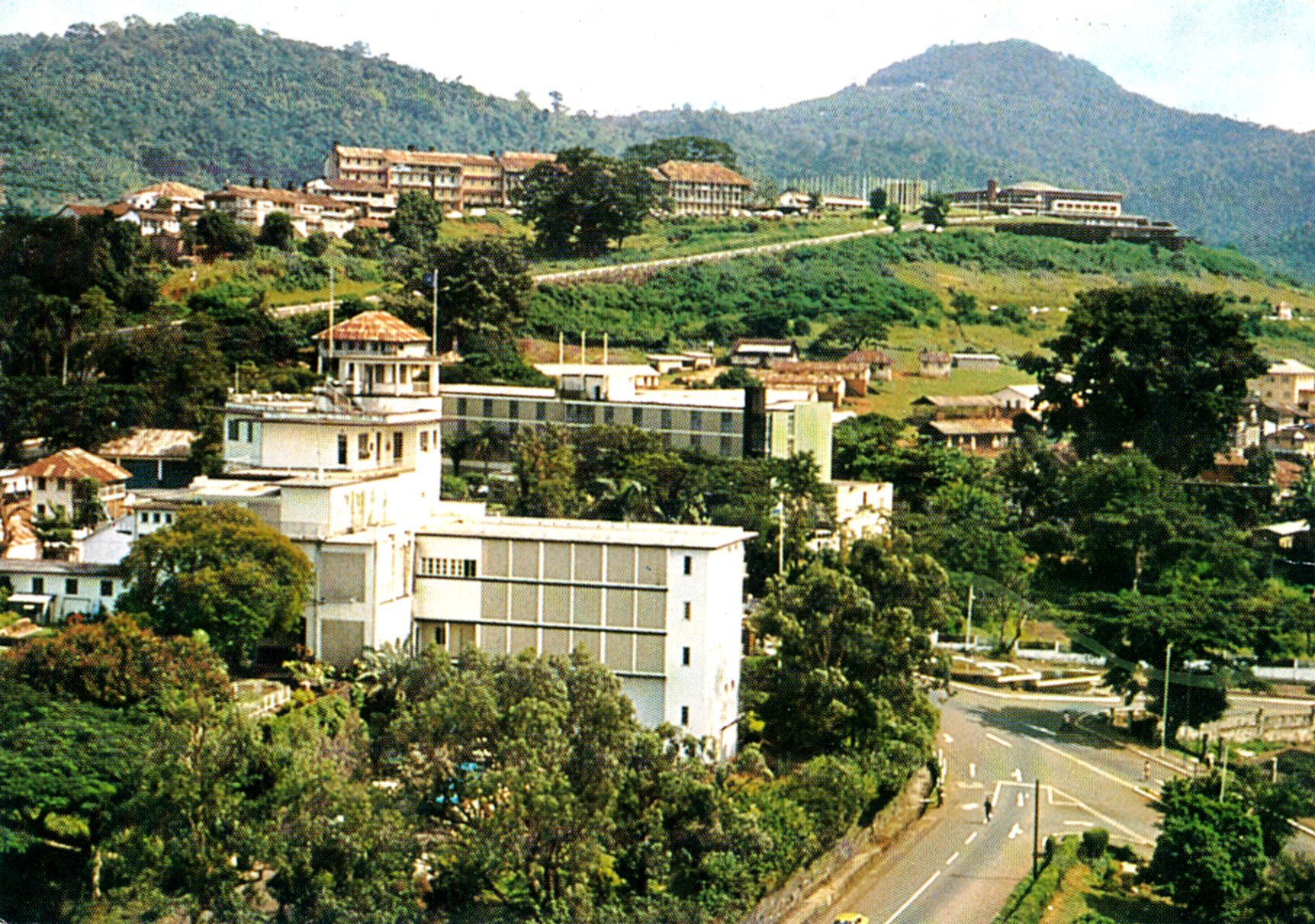
Freetown is the capital and by far the largest city in Sierra Leone, home to about a third of the country's population. It is not a city you will fall in love with immediately — it is dense, noisy, and congested, built on steep hills running down to the Atlantic, with a geography that makes traffic a constant ordeal. But it has real energy and a distinct Krio character that sets it apart from other West African capitals.
The historic centre clusters around the Cotton Tree, the giant silk-cotton tree (felled by storm in 2023, replaced by a sapling on the same spot) that has stood at the intersection of Siaka Stevens Street since before the city was founded. It is the symbolic heart of Krio heritage and the one landmark every visitor sees. Nearby, the National Museum and the State House on Tower Hill give useful context on the country's history, and the surviving King's Yard Gate, through which freed Africans walked in the early 1800s, still stands beside the Connaught Hospital. Up on the waterfront at Cline Town, the extraordinary National Railway Museum preserves a fleet of British colonial locomotives that survive nowhere else.
The Aberdeen and Lumley neighbourhoods, on the west side of the peninsula, are where most travellers end up. This is where the better restaurants, bars, and guesthouses cluster, and where Lumley Beach stretches north toward Aberdeen — a long, busy strip of sand that fills up on weekends. The Lebanese community runs many of the better restaurants, and you will find good grilled fish at the beach shacks near Aberdeen. Up in the rainforest above the city, the Tacugama Chimpanzee Sanctuary is the city's most rewarding day trip.
Freetown is also the base for day trips down the peninsula to some of West Africa's best beaches — Lakka, Tokeh, Bureh, and River No. 2. Budget an hour or two each way on variable roads, but the white sand and jungle backdrops are worth the effort.