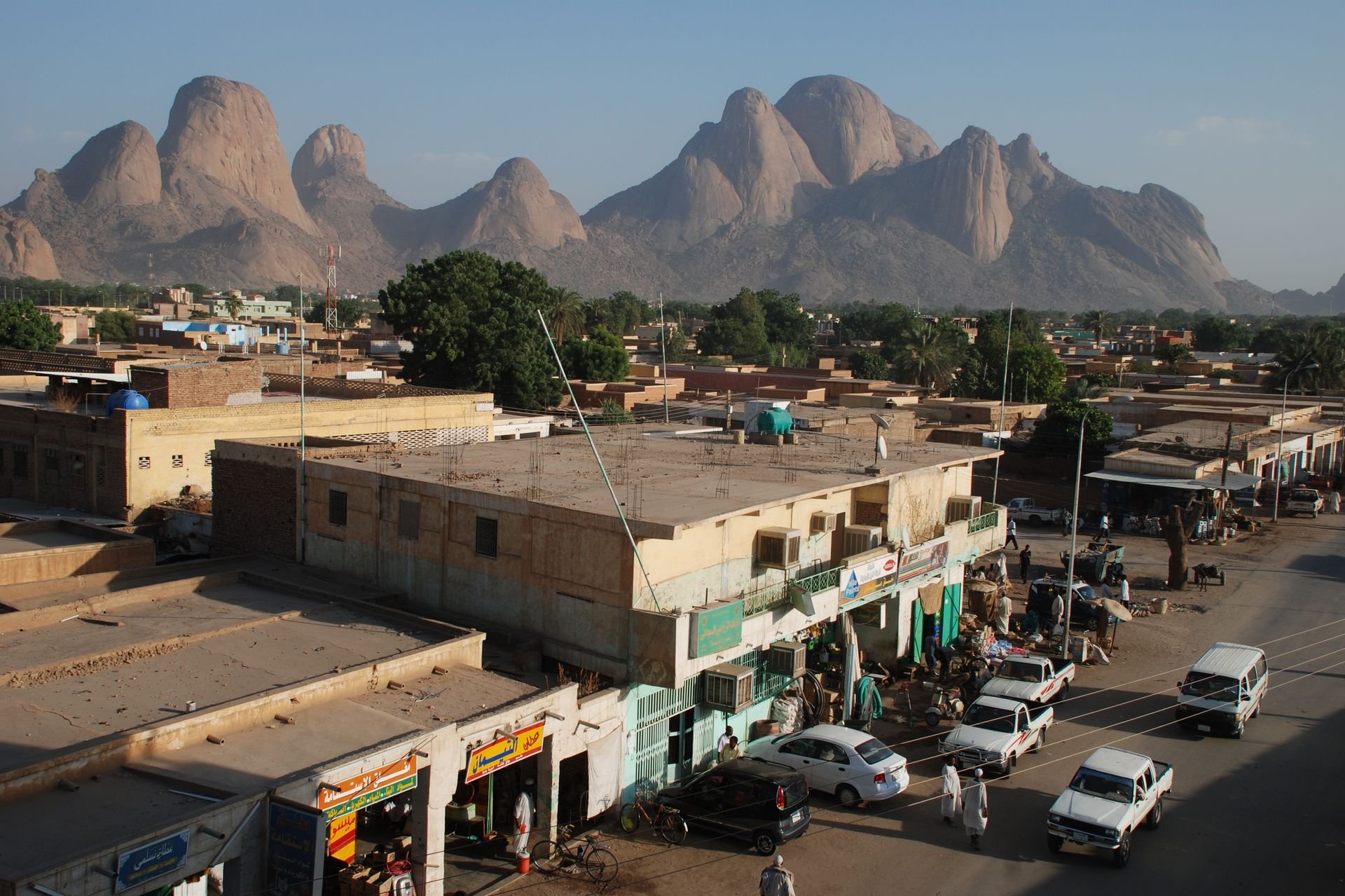
Kassala sits in the east of Sudan, some 600 km from Khartoum and practically on the border with Eritrea. It used to be one of the touristic highlights of the country and is still popular with Sudanese newlyweds who come here to honeymoon. The cool climate and the spectacular scenery — particularly the Taka Mountains rising straight out of the plain — are the main attractions.
The city itself is laid out in a low rectangular grid, with tens of thousands of trees giving the streets a shaded, lived-in feel. The Kassala souq is one of the most distinctive markets in Sudan — sweet fruit, Rashaida silver, Beja swords, and clay coffee pots — and the spiritual centre of town is the Khatmiya mosque at the foot of the rocks, home to one of the country's most influential Sufi orders. Above it, the Totil rock cafes serve the famous Kassala coffee, spiced with ginger and cinnamon, among the giant boulders of the lower slopes.
On the outskirts of the city live the Rashaida tribe, mostly inhabiting goatskin tents. They are a nomadic people who breed camels and goats, and are closely related to the Saudi Arabian Bedouin, having migrated from the Arabian Peninsula about 150 years ago. It is the mysteriously-veiled Rashaida women who make a great deal of the silver jewellery sold in the Kassala souq.
Several kilometres outside Kassala are the curiously-shaped 'sugar-loaf' hills, the jebels. They can be seen from the city and are the habitat of a colony of hamadryas baboons, which come down from the rocks at sunset to drink at a nearby village well. Through the centre of town runs the Gash River, a wide sandy bed for most of the year that briefly becomes a fierce summer torrent.
Kassala is an easygoing place by Sudanese standards. Travel here was effectively suspended after the 2023 outbreak of war and conditions on the ground change quickly; check the latest situation before planning a visit.