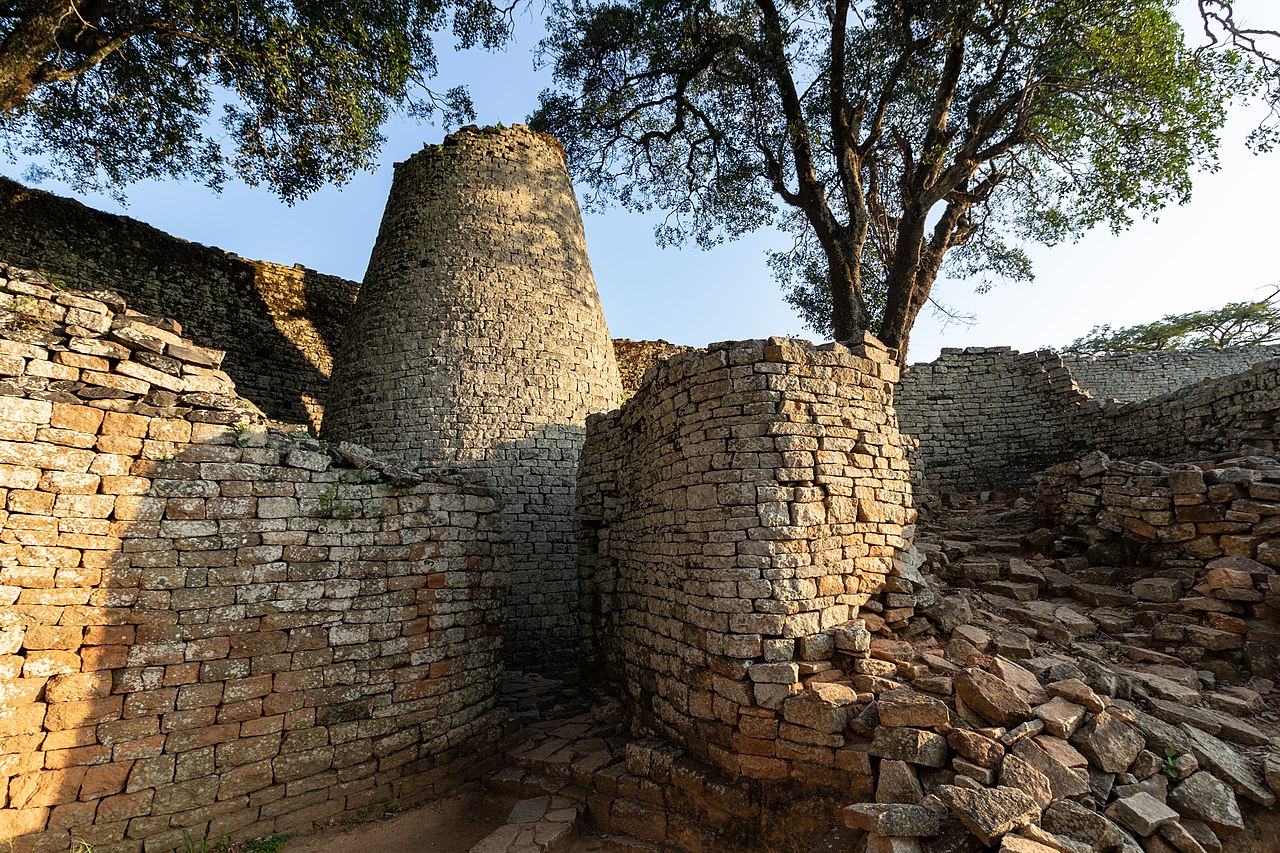
Great Zimbabwe is the largest stone ruin in sub-Saharan Africa south of the Sahara, and one of the most important archaeological sites on the continent. Built between the eleventh and fifteenth centuries, it was the capital of a wealthy Shona trading state that controlled gold and ivory routes between the interior and the Indian Ocean coast. The name Zimbabwe — "houses of stone" — gave the modern country its name at independence in 1980.
The ruins cover a wide area and divide into three main zones. The Hill Complex sits on a granite kopje with commanding views and is the oldest part of the site; the Great Enclosure below it has walls eleven metres high built without mortar, curving with an elegance that still impresses; and the Valley Ruins spread between them. The soapstone Zimbabwe Birds found here are now the national emblem.
Great Zimbabwe is near the town of Masvingo, about 290 kilometres south of Harare. The site is a UNESCO World Heritage Site and is well maintained. The site museum at the entrance has original finds including gold beads and Chinese porcelain that attest to the city's remarkable long-distance trade. Allow at least half a day — a full day is better.