Hwange National Park is Zimbabwe's largest and best-known wildlife reserve, stretching across nearly 15,000 square kilometres of Kalahari sand, teak woodland, mopane, fossil riverbeds, and open pans. It is close enough to Victoria Falls to be practical, but once you are inside the park the tourist town feels a long way away.
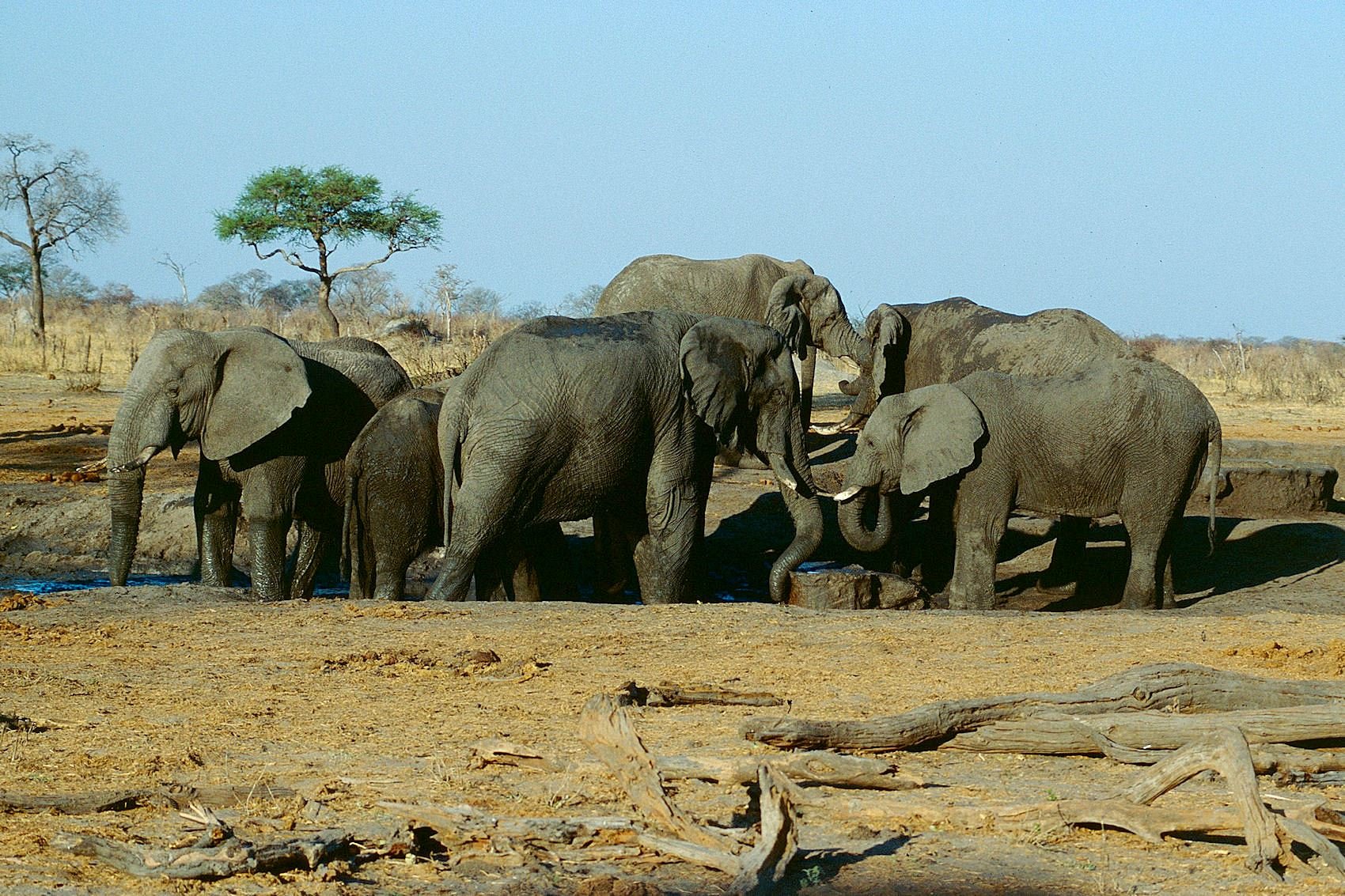
The park is famous above all for elephants. In the dry season, when natural water disappears, huge herds gather at pumped pans such as Nyamandhlovu Pan, Masuma Dam, and Ngweshla Pan. Hwange's waterhole network is a conservation compromise: without pumped water the park could not support anything like its current wildlife numbers, but the spectacle it creates is extraordinary.
Hwange is not a single landscape. Main Camp in the east has the easiest access and the busiest game loops. Sinamatella in the north sits on a ridge above wide country and feels wilder. The Robins area in the northwest is quieter still, useful for travellers driving between Victoria Falls and the park's deeper sections.
This is a destination for slow game drives, early starts, and patience at waterholes. Lion, leopard, wild dog, buffalo, sable, roan, giraffe, zebra, and more than 400 bird species all occur here, but Hwange's strongest moments often involve doing very little: parking in shade, switching off the engine, and watching the bush come to water.