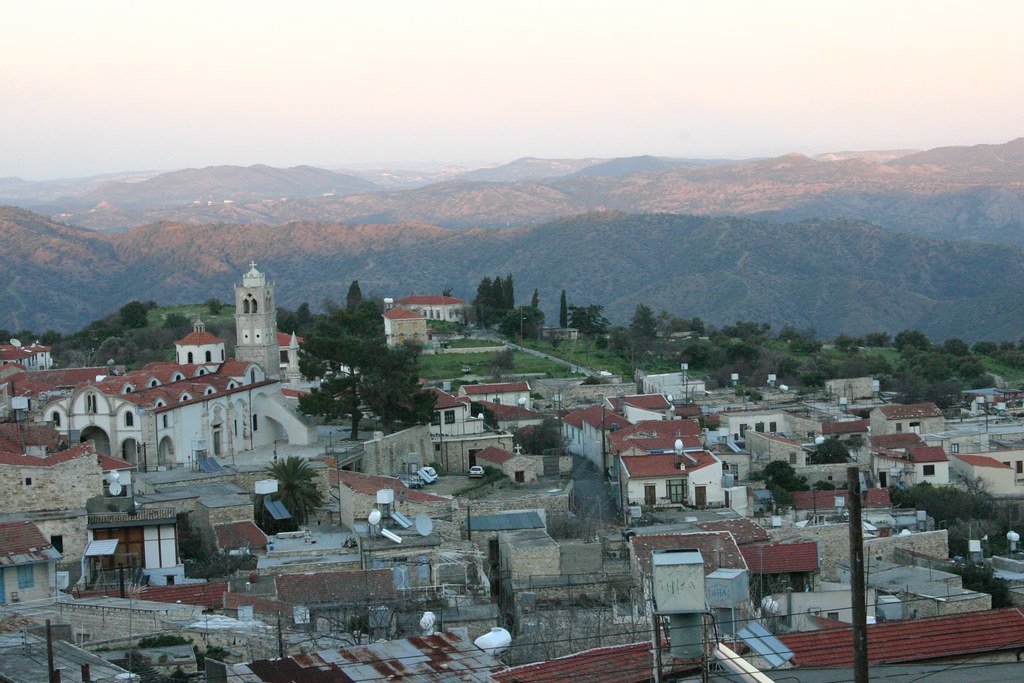
Pano (Upper) and Kato (Lower) Lefkara are picturesque hill villages between Larnaca and Limassol, best known for their traditional lacemaking. The village lanes are narrow and whitewashed, and Lefkaritika lace and silverwork hang outside virtually every shop. The craftsmanship is genuinely fine — and the prices reflect that.
According to local tradition, Leonardo da Vinci visited in 1481 and purchased a lace cloth for the main altar of Milan Cathedral. The Lefkaritika style is thought to have ancient roots, possibly imported from Assyria; the Venetians later brought it home to establish their own lace industry on the island of Burano. A local lace school opened in 1889 and helped revive the craft's international reputation. Lefkara lacemaking was inscribed on the UNESCO Intangible Cultural Heritage list in 2009. The Museum of Lefkara Lace and Silver in an old stone mansion provides the best background on the craft. A short drive southeast, the Neolithic site of Khirokitia — a UNESCO World Heritage Site dating from 7000 BCE — makes an excellent add-on for a day trip.