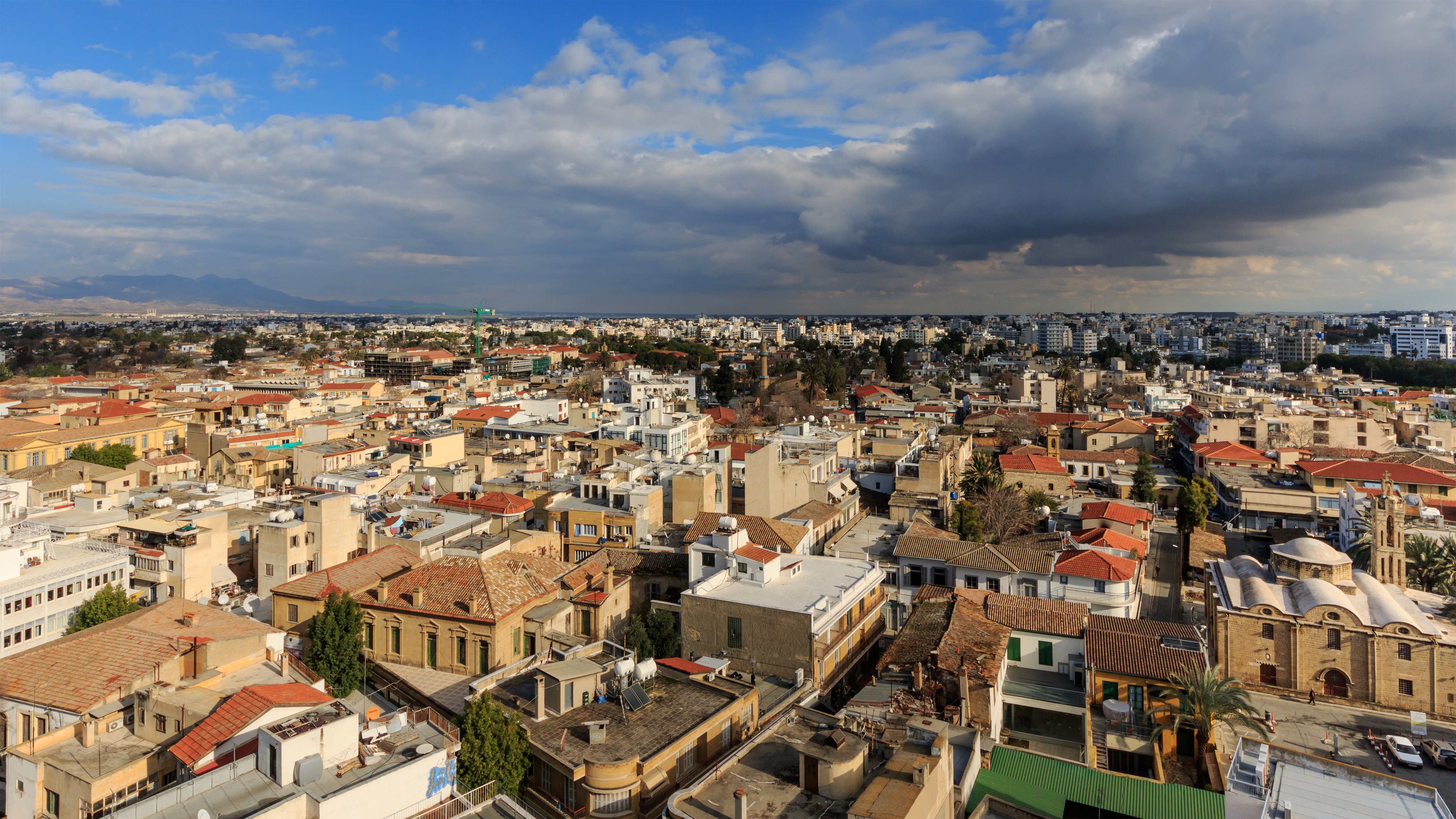
Nicosia — known in Greek as Levkosia and in Turkish as Lefkoşa — is still a divided city, the last divided capital in Europe. The Green Line of the UN buffer zone cuts across the old city, separating the Greek Cypriot south from the Turkish Cypriot north. What could be a depressing situation is in fact one of the most genuinely interesting urban experiences in the Mediterranean. You can walk through the checkpoint on Ledra Street with your passport and find yourself in a different city within fifty metres — different architecture, different language, different food, different money.
The old city is ringed by Venetian walls built in the 1560s in a perfect circle, one of the finest examples of Renaissance military engineering in the world. Inside, the streets are narrow alleys of stone houses, many old and gradually being restored. The restored neighbourhood of Laiki Ytonia — "neighbourhood of the people" — gives a flavour of the old city's domestic character, with craft shops, galleries, and tavernas. The Byzantine Museum and the Cyprus Museum (just outside the old walls near the Pafos Gate) together tell the full story of the island's long history.
Cross the checkpoint into North Nicosia and the atmosphere shifts. The Selimiye Mosque — originally the Gothic Cathedral of Saint Sophia, built in the 14th century and converted to a mosque by the Ottomans in 1570 — is one of the most extraordinary buildings in Cyprus. Directly beside it stands the Büyük Han (Great Inn), a perfectly preserved Ottoman caravanserai from 1572 that now houses artists' studios and a courtyard cafe. These two buildings alone make the short walk through the buffer zone worthwhile.
The new city that spreads south of the walls is a modern European capital: broad avenues, shopping streets, government ministries, and a lively cafe culture. The Archbishop's Palace and the Cathedral of Saint John sit in the old city near the Laiki Ytonia quarter, the cathedral's interior covered in vivid 18th-century frescoes that are among the finest on the island. The Ömeriye Hamam, a working 16th-century bath house, is one of the few places in Nicosia where the building's function has continued almost unchanged across five centuries of occupation.