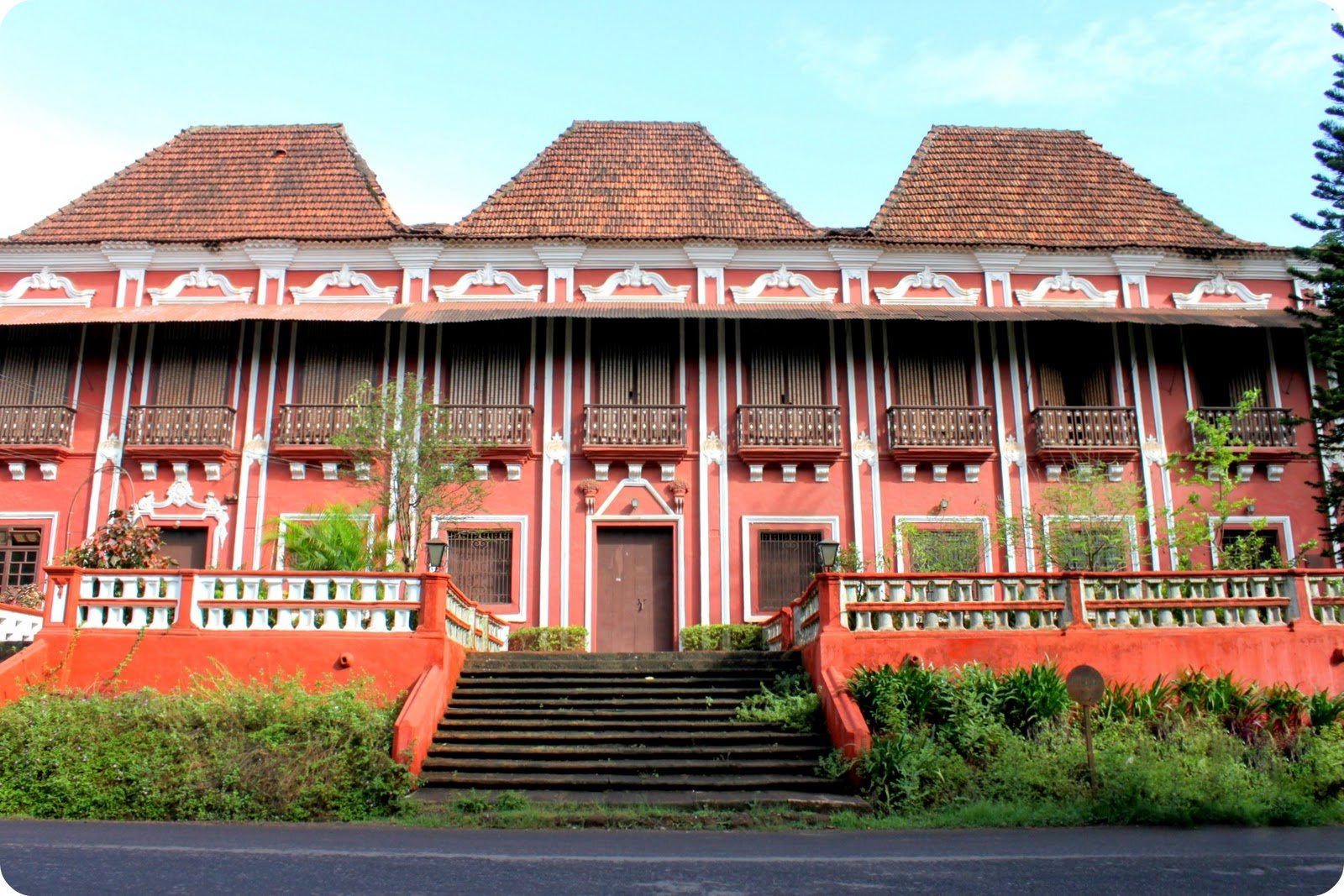
Margao — also written Madgaon — is the commercial and administrative capital of South Goa, and the most Goan of Goa's cities. Where Panaji has government buildings and Vasco has the airport industrial sprawl, Margao has the covered market, the old Catholic quarter, the Saturday bazaar, and the kind of unhurried street life that doesn't particularly cater to tourists.
The old part of town clusters around the Church of the Holy Spirit, a large whitewashed baroque church built in 1675 on the site of a Hindu temple. The surrounding streets have some of the finest 18th-century Portuguese mansions in Goa — big-windowed houses with carved wooden balconies and shell-paned windows. Most are private homes, but the Sat Burzam Ghor (House of Seven Gables), built in 1790, can be visited by arrangement.
The municipal market is the practical heart of the city: a two-storey covered hall selling fish, vegetables, spices, and everything else. The surrounding lanes are crammed with textile shops, bakers, and tea stalls. If you want to understand Goa beyond the beach resorts, an hour in the Margao market tells you more than a week on Palolem.
Margao sits at a convenient crossroads for South Goa. The train station connects to Panaji, Vasco, and the Konkan Railway north to Mumbai and south to Kerala.