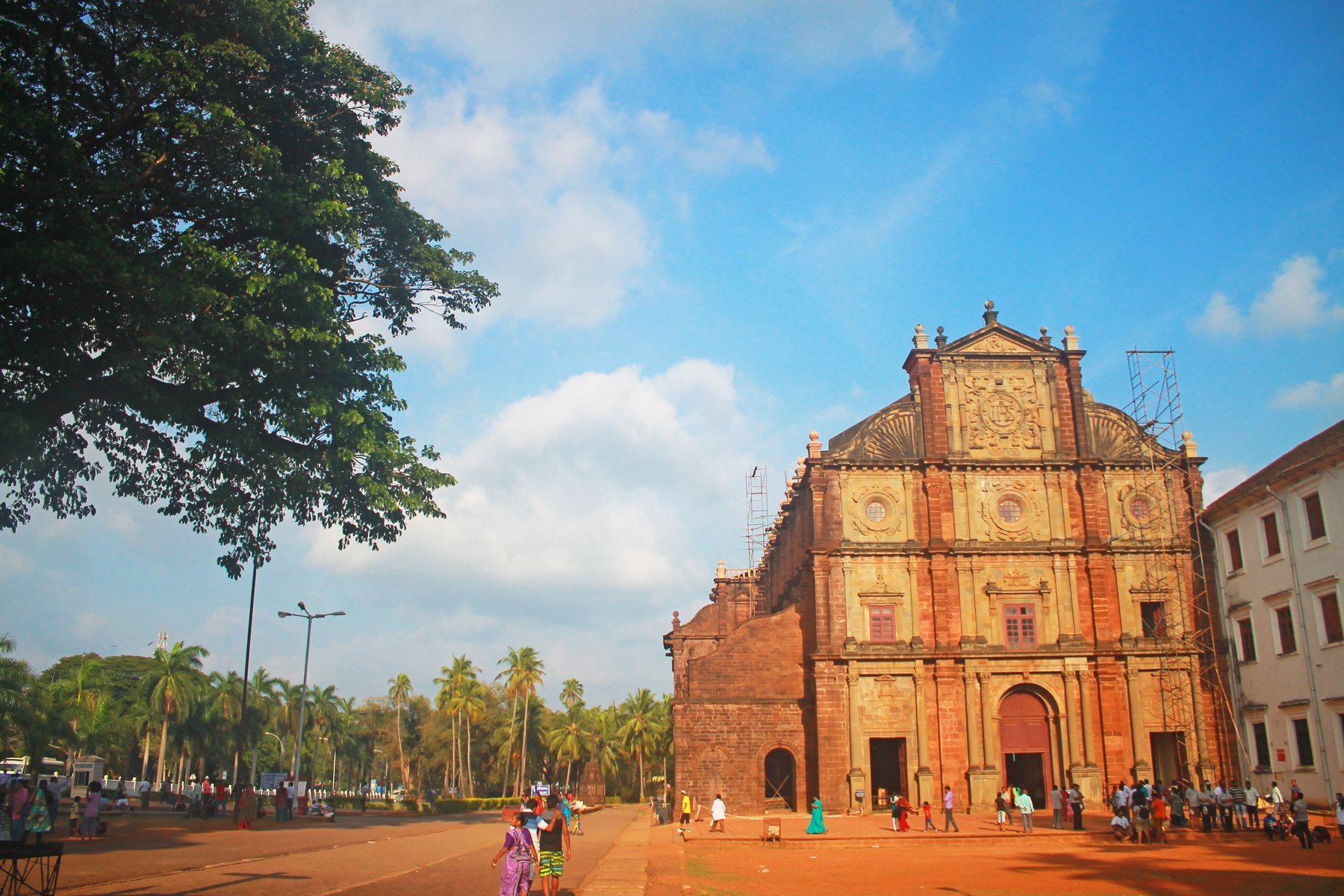
Old Goa (Velha Goa) was the capital of Portuguese India from the early 16th century until disease and decline forced the administration to move to Panjim in the 18th century. At its peak in the 16th century it was one of the largest cities in the world, with a population rivalling Lisbon. What remains today is a remarkable cluster of churches, convents, and ruins — the finest Portuguese colonial architecture in India, and a UNESCO World Heritage Site since 1986.
The Basilica of Bom Jesus, completed in 1605, holds the remains of St Francis Xavier in an ornate silver casket and is the most visited building in Goa. The Se Cathedral nearby is the largest church in Asia, built between 1562 and 1623. On Holy Hill, the Church of St Augustine — now a dramatic ruin — once rivalled the cathedral in scale. The Archaeological Museum in the Convent of St Francis of Assisi has a good collection of sculpture and colonial-era portraits.
Old Goa is the most popular day trip from the beach resorts for visitors looking for culture, and it gets busy — particularly around the feast day of St Francis Xavier in early December, when the saint's relics are displayed and pilgrims come from across India. It is about 10 km east of Panjim — an easy trip by bus, taxi, or auto-rickshaw.