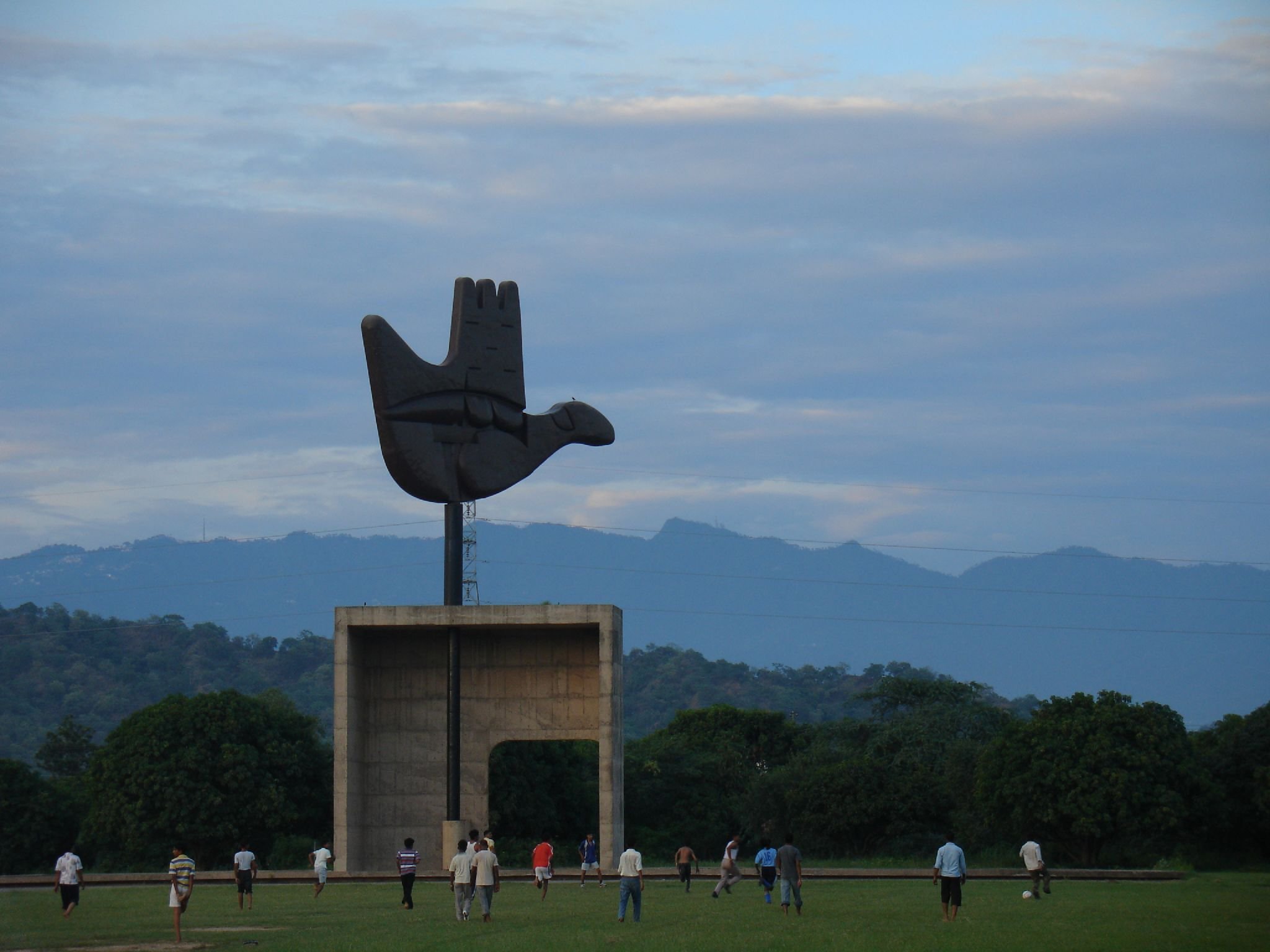
Chandigarh is one of Asia's great experiments in urban planning — a city built from scratch in the early 1950s after Partition left Punjab without a capital. The Indian government commissioned Le Corbusier, who designed its grid of numbered sectors, sweeping Capitol Complex, and open-air plazas that still feel bold seven decades on. The Capitol Complex (a UNESCO World Heritage Site since 2016) groups the High Court, Secretariat and Legislative Assembly into one monumental composition that rewards a slow walk. Beyond the architecture, Chandigarh is notably clean, green and well-provisioned for a North Indian city, with wide cycle paths, a large Rose Garden and the extraordinary Rock Garden — 25 acres of folk-art sculptures assembled from industrial and construction waste by a roads inspector named Nek Chand over twenty years of secret night shifts.
The city sits about 260 km north of Delhi and is often used as an overnight stop on the way to Himachal Pradesh or the mountains around Shimla, but it is worth a proper day or two in its own right. The pedestrian plaza of Sector 17, the boating jetty on Sukhna Lake, and the Gandharan sculpture in the Government Museum all reward a slow afternoon. Chandigarh also serves as the capital of both Punjab and Haryana, making it one of a handful of cities in the world that administers two states simultaneously.