Patan was the capital of Gujarat for nearly six centuries under the Chaulukya (Solanki) dynasty, founded in 745 CE by Vanraj Chavda and later sacked by the Delhi sultans in the late 13th century. What survives is a small town built on the layered debris of a much larger medieval city — and one of the most extraordinary single monuments in India.
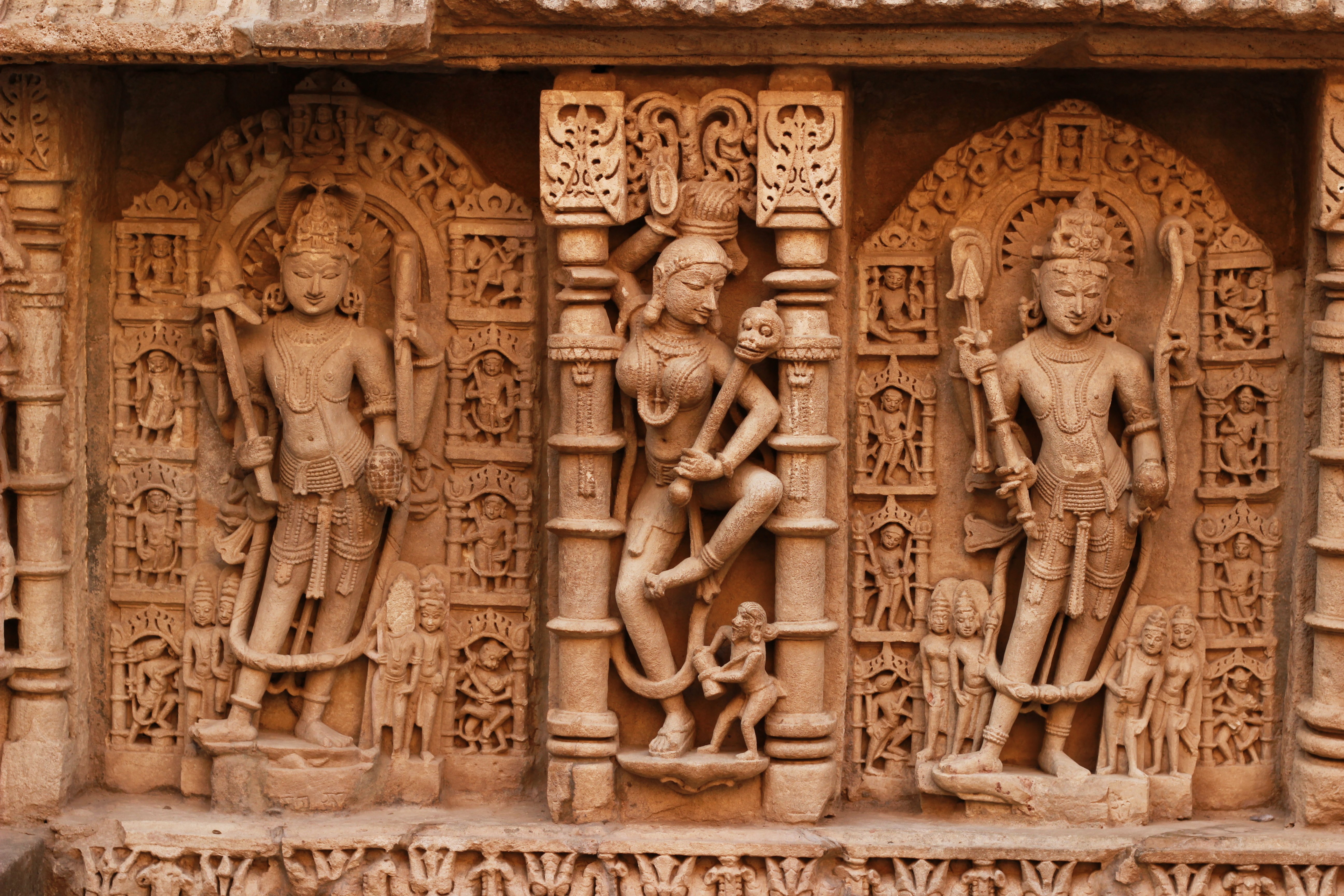
That monument is Rani ki Vav, a stepwell so finely carved that UNESCO listed it in 2014. Built in the 11th century as a memorial by Queen Udayamati for her husband Bhima I, it descends seven stories underground past tier after tier of sculpted gods, river goddesses, and apsaras. Patan's own bank note features it — flip a 100-rupee note and you are looking at the place. It is reason enough on its own to make the detour from Ahmedabad.
The rest of the town pays off if you give it half a day. The Sahasralinga Talav (Lake of a Thousand Lingas) lies a short walk from the stepwell, mostly in ruins but still impressive in scale. A medieval Jain quarter clusters around the Panchasara Parshvanath Temple. And in a few houses on Salvivado lane, the Salvi family still weaves Patola — double-ikat silk saris that cost several lakh rupees apiece and take months to complete. Visitors are welcome to watch.
Patan is dusty, low-rise, and lightly touristed. There are no good hotels and very few foreign visitors. Most people come for the day from Ahmedabad, 130 km south, often combining it with the Sun Temple at Modhera and the riverside ruins at Siddhpur. That is the right way to do it.