Varkala
©
Varkala

Varkala

Kerala cliff-top beach town where Hindu pilgrimage sites share red laterite bluffs above the Arabian Sea

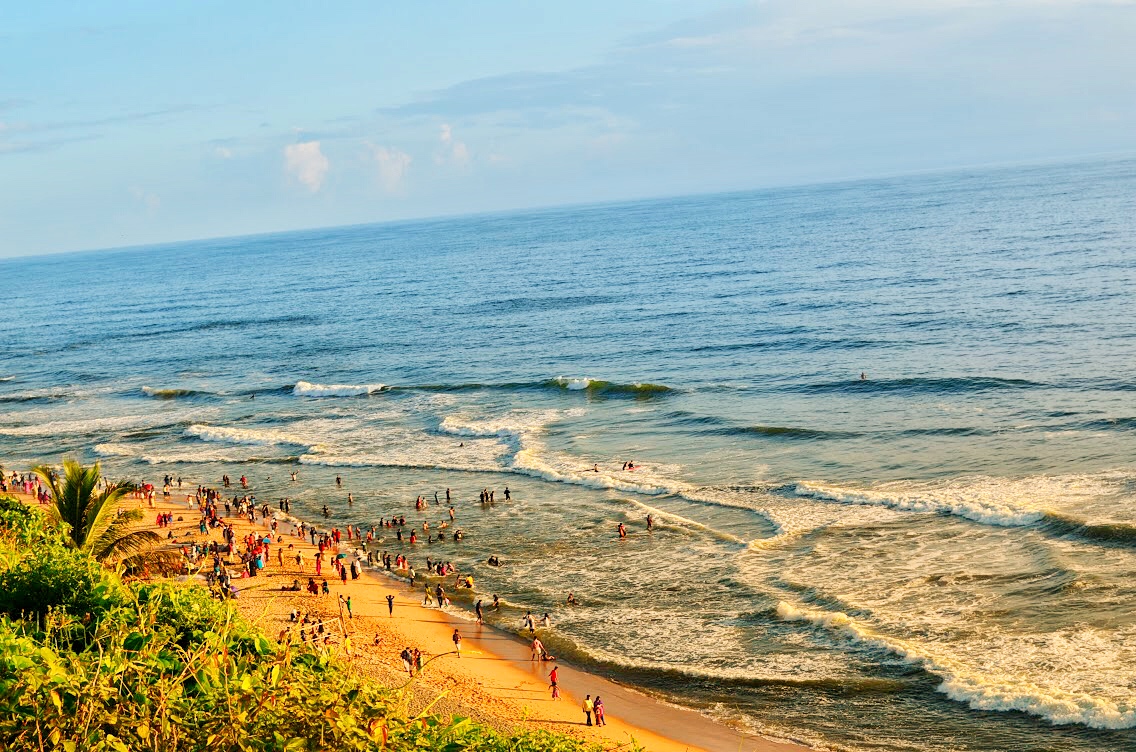
Varkala is Kerala's cliff-top beach town, and it looks like nothing else on this coast. A long laterite cliff drops straight down to the Arabian Sea, its red-brown face lined with coconut palms and topped by a path of restaurants, shops, and guesthouses. The beach below — Papanasam, the "destroyer of sins" — stretches golden and wide beneath the bluff.

The town has been a Hindu pilgrimage site for centuries, centred on the 2,000-year-old Janardhana Swami Temple. That spiritual heritage gives Varkala a different feel from Goa's party beaches: pilgrims performing rituals at the water's edge share the beach with backpackers in swimwear, and somehow it works. About 3 km inland, Sivagiri Mutt — the ashram of the social reformer Sree Narayana Guru — is one of Kerala's most important spiritual sites and draws hundreds of thousands of pilgrims for the December festival.

The North Cliff path is where most visitors spend their time — yoga shalas, Ayurvedic clinics, and cliff-edge restaurants with sunset views. Six kilometres north, Kappil Beach and Lake offers a quieter alternative with backwater boat trips through coconut groves. Varkala is more developed than it used to be, but the dramatic coastline — red cliffs, crashing waves, coconut groves — still delivers.

Guide

Bars and Cafes

Varkala's nightlife is low-key. The cliff-top cafes serve drinks alongside food, and a few places have live music in season. Kerala's alcohol laws are stricter than Goa's — some restaurants serve beer and wine discreetly, while others stick to juices and lassis. The atmosphere is sunset-watching and conversation, not clubbing.

Guide

Beaches

Varkala's beaches sit at the foot of the laterite cliffs that define the town. Papanasam Beach is the main stretch — a wide, golden beach considered sacred by Hindus who come to perform rituals at the water's edge. North of the cliff, the beach continues with fewer crowds. Black Beach to the south is quieter, with dark sand and good swimming when the currents allow it. The sea can be rough, especially during monsoon season, so pay attention to conditions and local advice before swimming.

Guide

Books

The God of Small Things by Arundhati Roy (1997) — Set in the Kerala backwaters and the lives it describes — caste, family, desire, loss — are inseparable from the landscape. Roy's prose captures the texture of Kerala life with a precision that no travel writing quite matches. Essential reading before or during any Kerala visit.

Sree Narayana Guru: A Biography by M.K. Sanoo — The life of the reformer who established Sivagiri Mutt and transformed the social landscape of Kerala. Reading it before visiting the mutt gives the place a very different weight.

Kerala: A Portrait of the Malabar Coast by Roland and Sabrina Michaud — A photographic and narrative account of Kerala's history, cultures, and landscapes. Useful for contextualising what you see in Varkala: the temple, the fishing communities, the backwaters, within the broader story of this unusual state.

Guide

Day Trips

Varkala sits within reach of several worthwhile excursions. Kappil Lake, about six kilometers north, is a peaceful backwater fringed by coconut groves where you can hire a boat and drift through to the sea. Anjengo Fort, a crumbling but atmospheric colonial relic about twelve kilometers south, was one of the earliest English trading posts in Kerala. Kollam, the old port city to the north, is the starting point for backwater cruises through Kerala's famous canal network.

Guide

Eating Out

The cliff path is lined with restaurants, most serving a mix of Kerala seafood, North Indian standards, and Western dishes aimed at tourists. Fresh fish is the highlight — you can often pick your catch and have it grilled or curried. Away from the cliff, cheaper local restaurants serve rice plates and thalis. Kerala's cuisine leans heavily on coconut, tamarind, and curry leaves, and the seafood here is excellent.

Guide

Getting Around

The cliff-top area where most travelers stay is compact and walkable. For trips to the train station, town center, or nearby beaches, auto-rickshaws are plentiful and cheap — just settle the fare before you climb in. Scooter rental is available along the cliff path and gives you the freedom to explore Kappil Lake, Anjengo Fort, and other spots outside the main tourist area.

Guide

Getting There

Varkala has its own railway station on the main Kerala line, making the train the easiest way to arrive. Trains from Thiruvananthapuram (Trivandrum) take about an hour; from Kollam about thirty minutes. Several daily services run in each direction.

By bus, frequent services from Trivandrum take around ninety minutes. An auto-rickshaw or taxi from Trivandrum airport costs more but gets you door to door — agree on the fare before you set off. The nearest airport is Trivandrum International, about fifty kilometers south.

Guide

Shopping

The cliff path doubles as Varkala's shopping strip. Small shops sell clothing, jewelry, spices, and souvenirs — Tibetan shops with silver jewelry sit alongside Kashmiri handicraft stalls and local stores selling coir products and carved horns. Prices are aimed at tourists, so bargaining is expected. The Khadi Store near town is worth a visit for locally made clothing, oils, and honey at fixed prices.

Guide

When to Go

The best time to visit Varkala is October through March, when the weather is warm and dry with comfortable humidity. December and January are peak season — expect higher prices and more crowds on the cliff path. The southwest monsoon hits from June through August, bringing heavy rain and rough seas; many guesthouses and restaurants close during this period.

The Onam harvest festival in August or September is Kerala's biggest celebration, with flower arrangements, feasts, and boat races. If you are in the area during this time, the festivities are worth catching. The annual pilgrimage season at Sivagiri Mutt around late December also draws large crowds.