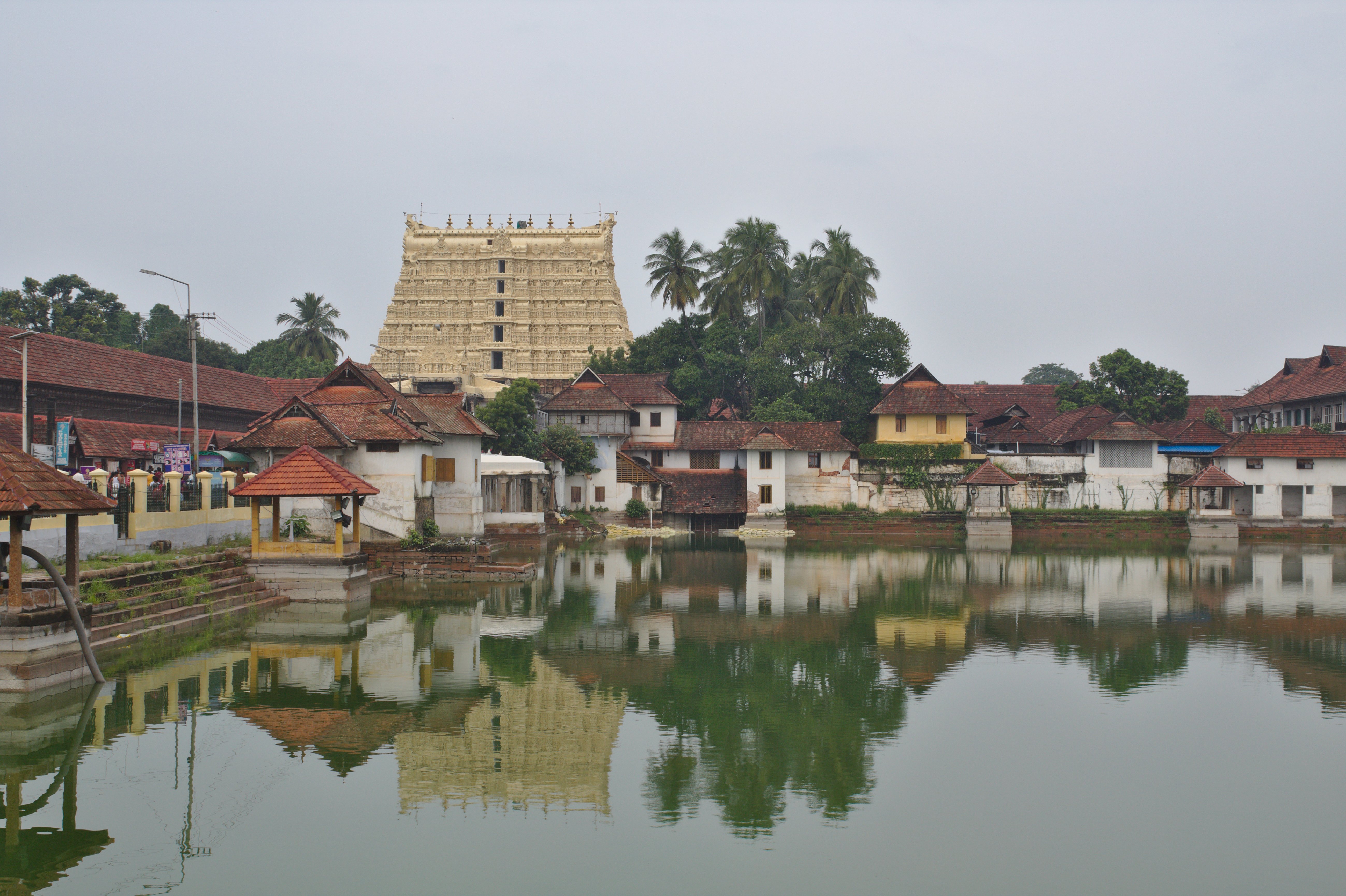
Thiruvananthapuram — still widely known by its colonial name Trivandrum — is the capital of Kerala, perched on a series of hills near the southern tip of India. It is not a city that announces itself loudly, but it rewards close attention. The old city clusters around the Padmanabhaswamy Temple, one of the wealthiest and most important Vaishnava temples in the world, its seven-storey gopuram visible from most of the city centre. Around it spreads a tangle of narrow lanes, pilgrims, flower sellers, and the particular intensity of a sacred place embedded in an active metropolis.
The city has a different character from Kerala's more tourist-oriented towns. It is a government capital, a university city, and an IT hub in the making — pragmatic and ambitious without being overrun. The cultural life is genuinely strong: classical Kathakali and Bharatanatyam performances are regular events, and the Napier Museum in the north of the city houses a good collection of bronzes and temple carvings in a fantastically improbable Indo-Saracenic building. Next door, Sree Chithra Art Gallery displays the Kerala and Tanjore paintings that define the region's visual tradition.
The beach at Kovalam is about 16 km south and is the reason many travellers stop here at all. But the city itself deserves at least a day, and the Thiruvananthapuram Zoo — one of India's best, set in spacious grounds in the museum compound — is genuinely excellent if you have any interest in wildlife. The hilltop fort area, the old stone streets around the temple, and the evening light on the Arabian Sea from Shankumugham Beach make the city worth time in its own right.