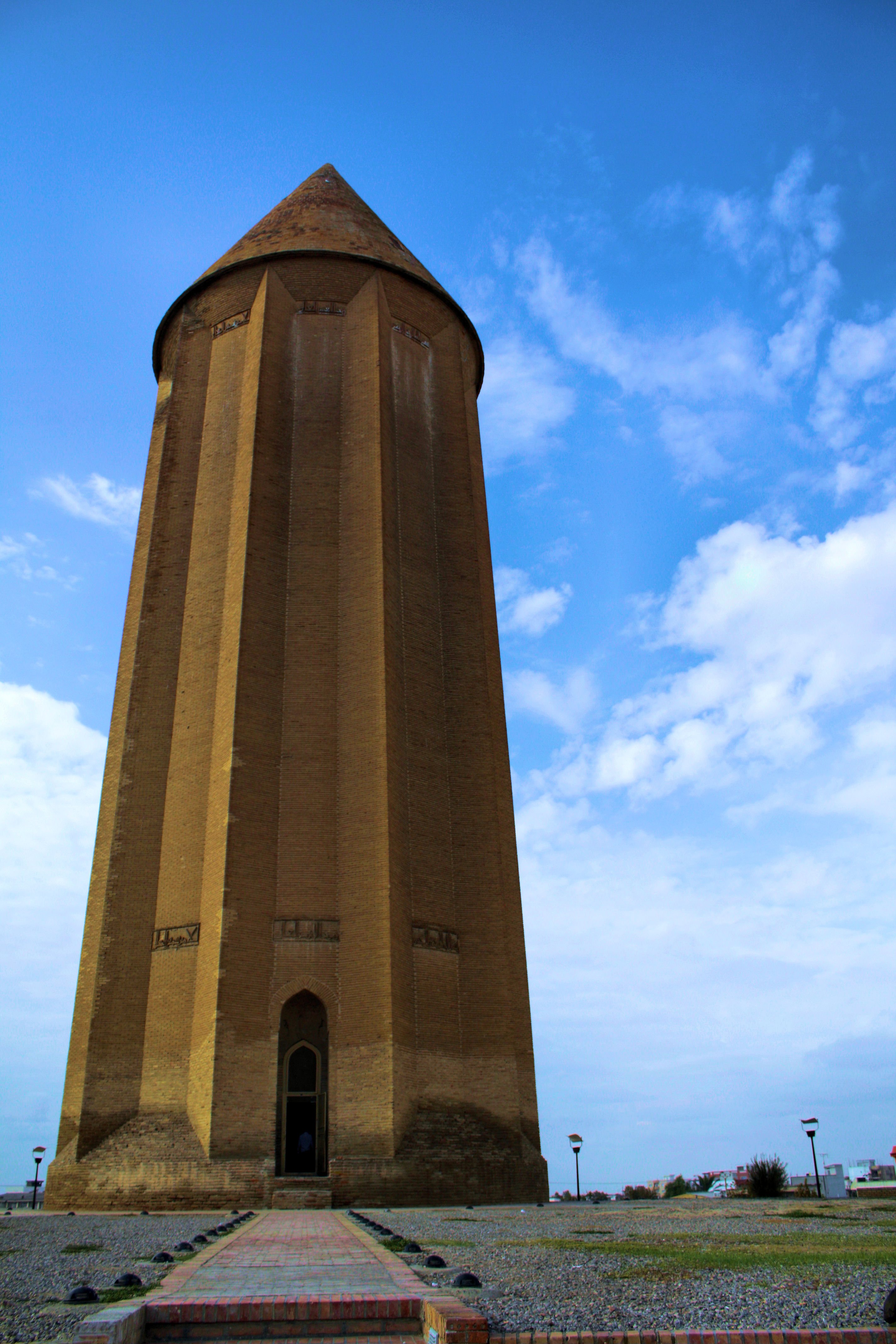
Gonbad-e Kavus is a city in northeastern Iran's Golestan province, close to the Turkmenistan border. The majority of the population is Turkmen, giving the city a distinctly different character from most Iranian cities. Its remarkable Gonbad-e Qabus Tower is a UNESCO World Heritage Site: an extraordinary fired-brick tomb built in 1006 AD, rising 53 metres on a 15-metre mound and considered by many engineers to be one of the most accomplished pre-modern brick structures ever built. The tower tapers to a conical point and is visible for kilometres across the flat plain.
Beyond the tower, the city is the gateway to the Turkmen Sahra — the grasslands stretching north to the border, home to the Akhal-Teke horses and the felt-rug Turkmen culture that gives this corner of Iran its distinct flavour. Day trips reach the strange standing-stone Khaled Nabi cemetery and the forests of Golestan National Park, one of the last refuges of the Persian leopard. The town itself is a working agricultural centre with little to detain a visitor beyond the tower, but the surrounding countryside is one of Iran's least-touristed corners.