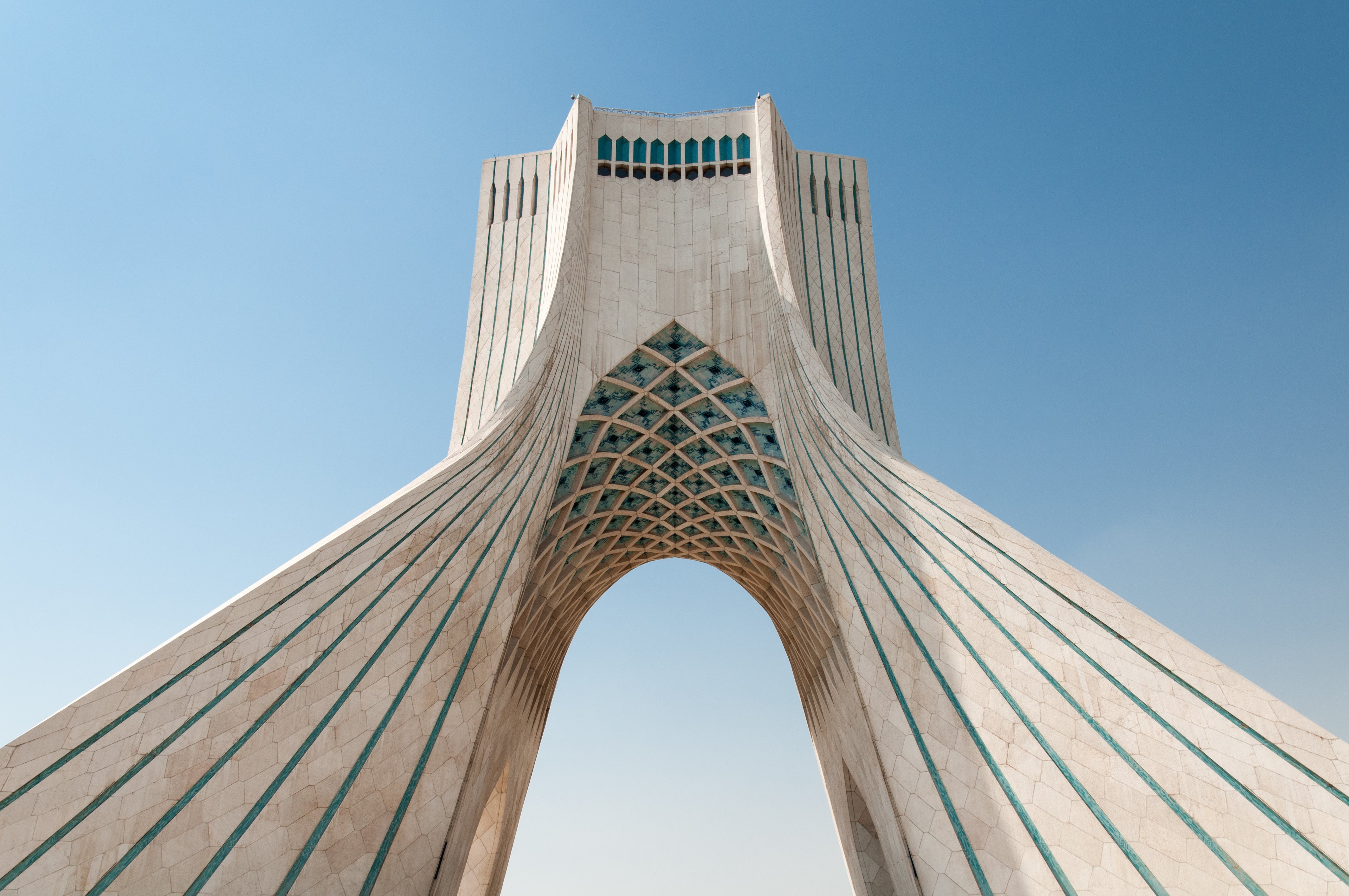
Tehran is the capital of Iran and, with a metropolitan population of around 15 million, one of the largest cities in the Middle East. It sits on a high plateau at about 1,200 metres, backed by the enormous snow-capped Alborz range — the 5,671-metre peak of Mount Damavand, Iran's highest mountain, is just 60 km north of the city. The physical setting is extraordinary; the city itself is not. Tehran grew dramatically in the 20th century from a provincial town into a sprawling modern capital, and it looks it. Heavy traffic, air pollution, and a mostly 1960s–70s concrete skyline are what first-time visitors notice. The charm of Iran — the exquisite blue-tiled mosques and covered bazaars of Isfahan, Shiraz and Yazd — is not really to be found here.
What Tehran has instead is a handful of genuinely extraordinary sights and the unique privilege of being the place where modern Iranian life is actually lived. The Golestan Palace, the 19th-century Qajar-dynasty residence with its mirrored halls and tiled outer walls, is a UNESCO World Heritage Site and the best glimpse of pre-revolutionary royal Iran. The adjacent Grand Bazaar is one of the largest covered markets in the world, a 10-kilometre labyrinth of alleys still structured by trade. The National Museum of Iran holds the finest collection of Persian antiquities anywhere, including pieces from Persepolis and the extraordinary salt mummies of Zanjan. The Treasury of National Jewels, in the vaults of the Central Bank of Iran, displays some of the most spectacular crown jewels on earth — the Peacock Throne, the 182-carat Sea of Light (Darya-ye Noor) pink diamond, and a jewel-encrusted globe made from 51,000 individual gemstones. The Carpet Museum is surprisingly excellent. And the former US Embassy, now the Museum of the Den of Espionage, is a piece of history all its own: it is where the 1979 hostage crisis began, and its walls are still covered in the anti-American murals that became the defining visual of the revolution.
Most visitors to Iran spend only a day or two here, using Tehran as the arrival and departure point for the rest of the country. The northern suburbs — Darband, Tajrish, Darakeh — are noticeably cooler, greener, and more affluent, with tea houses along mountain streams and hiking trails into the Alborz starting directly from the metro stops. Three major ski resorts — Dizin, Shemshak, and Tochal — are within two hours' drive, and the closest of them (Tochal) is reachable by cable car from inside the city itself. Come to Iran for Isfahan and Persepolis; but give Tehran two full days. Check current travel advisories and visa requirements, which have been unpredictable for foreign visitors in recent years.