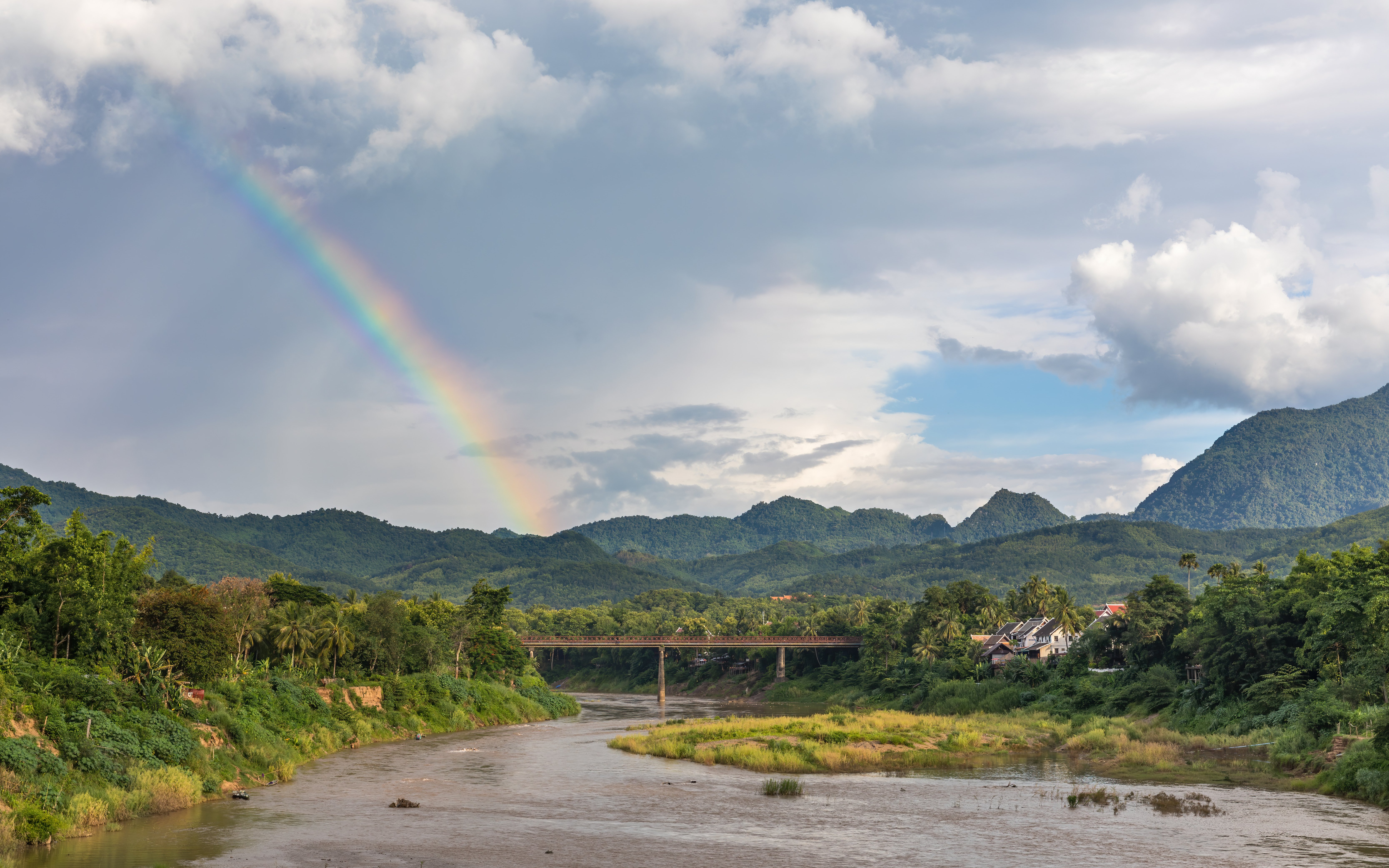
Luang Prabang is quite possibly the most beautiful small city in Southeast Asia. Set on a peninsula where the Nam Khan meets the Mekong, the UNESCO World Heritage old town is a tapestry of gilded temples, French colonial buildings, and traditional wooden houses shaded by frangipani trees.
The city was the capital of the Lan Xang kingdom from 1354 until the court moved to Vientiane in 1560. It remained the royal seat and spiritual heart of Laos until the monarchy was abolished in 1975. The city takes its name from the Phra Bang, a sacred gold Buddha image that is Laos's most revered religious object, now housed in the Royal Palace Museum.
Every morning at dawn, hundreds of monks in saffron robes walk through the streets collecting alms from kneeling residents — tak bat, a ritual that has continued for centuries and remains deeply moving to witness. Please observe respectfully and at a distance.
The Royal Palace Museum gives a window into pre-revolutionary Laos. Mount Phou Si, at the center of the peninsula, offers a panoramic view of the town, the rivers, and the surrounding mountains — climb the 300-plus steps for sunset. Dozens of temples are scattered through the old town; Wat Xieng Thong, with its sweeping rooflines and intricate mosaics, is the most beautiful.
Outside the city, the turquoise cascades of Kuang Si Falls are 30 kilometres to the south. The Pak Ou Caves, stuffed with thousands of Buddha statues, are a scenic boat ride up the Mekong. And the weavers' village of Ban Phanom is a short bike ride east of town.
The night market along the main street is excellent for textiles, paper lanterns, and mulberry bark goods. The food scene is strong, from Lao street food to French-influenced bistros.