Jabrin
©
Jabrin

Jabrin

Small Omani oasis town known for its richly decorated 17th-century fort and surrounding date palms.

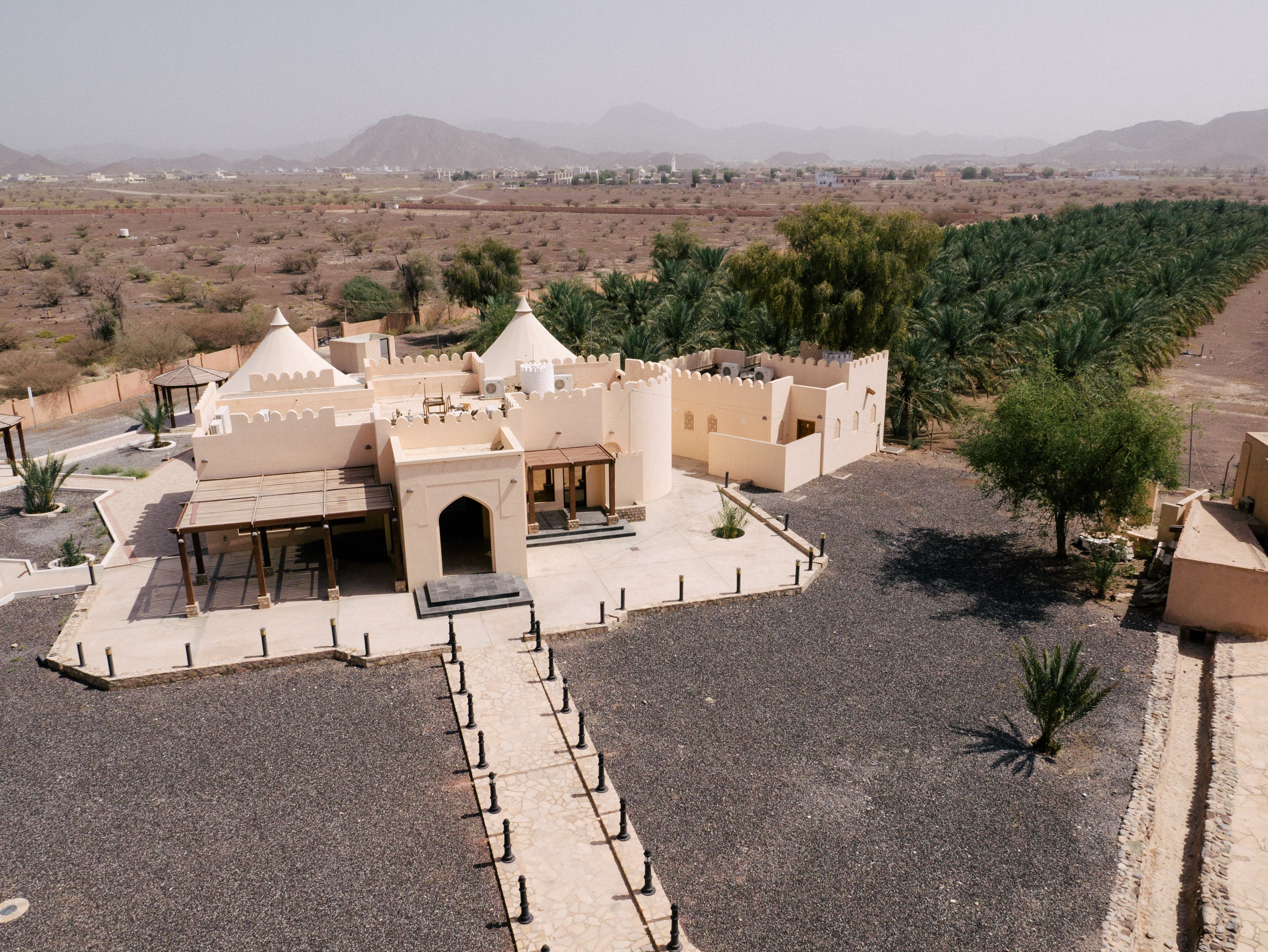
Jabrin is a small oasis town in the interior of Oman, about 45 kilometres southwest of Nizwa, best known for its 17th-century fort — one of the most impressive in the country. Built by Imam Bil'arab bin Sultan in the 1670s, Jabrin Fort served as both a royal palace and a centre of Islamic learning. Unlike the more military forts at Nizwa and Bahla, Jabrin has elaborately painted ceilings, carved stucco, and rooms that feel like they were actually lived in. Entrance costs 0.5 Rial and on most days you can wander the chambers and rooftop largely on your own. The surrounding date palm oasis is irrigated by a UNESCO-listed falaj water system.

Getting here without your own transport requires some effort. Buses to Nizwa drop you at the junction, leaving another 8 kilometres to cover to reach the fort. A taxi from Nizwa is the most straightforward option; otherwise, locals along this route are generally willing to offer a lift.

Guide

Getting There

Jabrin lies about 45 kilometres southwest of Nizwa. The road from Nizwa to Jabrin is good, surfaced, and well signposted; by car the journey takes around 40 minutes. From Muscat, allow about two and a half hours.

Public transport is limited. Buses from Muscat and Salalah pass through Nizwa, but there is no direct public service to Jabrin. From Nizwa, a shared taxi or rental car covers the remaining distance; taxis from Nizwa to the fort and back (with waiting time) can be arranged for a reasonable fixed fare. Hitchhiking is also common in the Oman interior and usually effective.

A rental car from Muscat is by far the most convenient approach, particularly if you plan to visit Bahla and other sites in the Interior on the same day. The road between Nizwa and Jabrin passes through the village of Bahla, whose own UNESCO-listed fort is worth a stop.

Guide

Things to Do in Jabrin

Jabrin is a small village with essentially one major sight, but that sight — Jabrin Fort — justifies the detour from Nizwa. Plan to spend an hour inside the fort and another half-hour walking through the surrounding date palm oasis, which is irrigated by a UNESCO-listed falaj water system.

Most visitors combine Jabrin with Nizwa (45 km northeast) and Bahla (midway between the two), making a half-day circuit of the Oman Interior's most important historical sites. The three together — Nizwa's great round tower, Bahla's vast mudbrick fort, and Jabrin's intimate palace interior — give a comprehensive picture of Omani architecture and history across several centuries.

Guide

When to Go

The Omani interior is brutal in summer. From May through September, temperatures in the Ad Dakhiliyah Governorate regularly exceed 40°C, and the midday heat makes any outdoor activity miserable. The fort itself is cool inside — the thick walls and deep rooms keep the temperature down — but the walk from the car park and the exploration of the rooftop terraces are uncomfortable in high summer.

The best months to visit Jabrin are October through March, when temperatures are warm but manageable (20–30°C during the day, cooler at night). November through February is the most pleasant period. The date harvest runs from late summer into autumn, when the oasis is most productive and the falaj channels are in full flow.

Jabrin can be combined with Nizwa and Bahla as a day trip from Muscat, or as part of a longer tour of the Oman interior. Most visitors come as part of the Nizwa–Bahla–Jabrin circuit, which takes a full day if done properly.