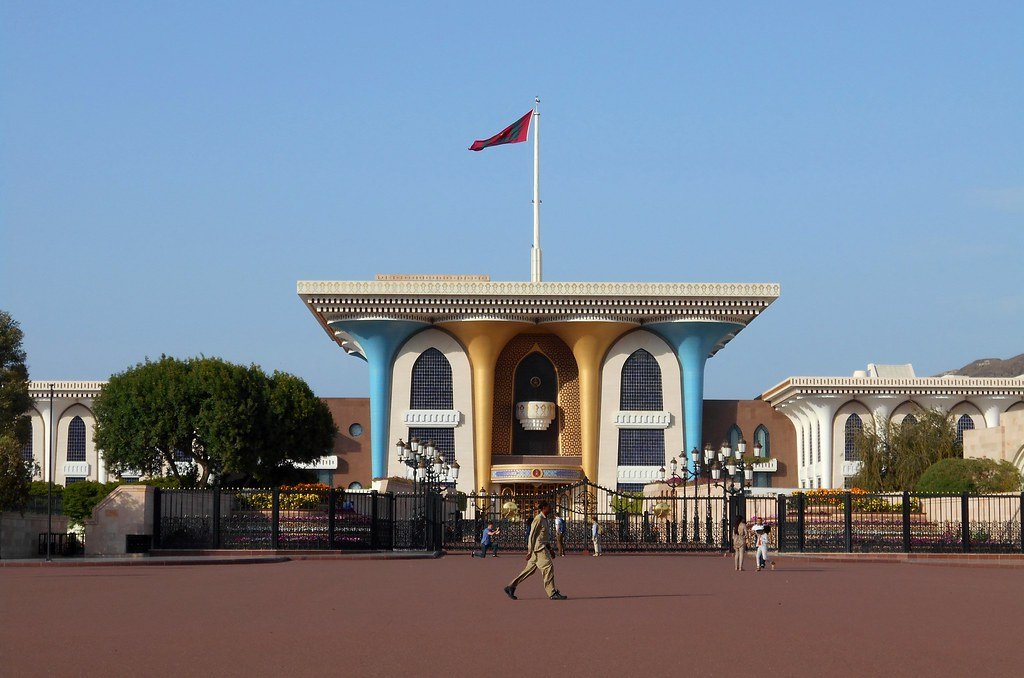
Muscat is the capital of Oman, strung along forty kilometres of coast between the Gulf of Oman and a wall of bare, dramatic mountains. It is not a single centre but a chain of quarters — Old Muscat, Muttrah, Ruwi, Qurum, Shatti Al Qurum, Al Khuwair — each separated from the next by a mountain spur. The result is a city that feels smaller and more villagey than its 1.5 million people would suggest, punctuated by white low-rise architecture that the government requires by planning law.
Old Muscat, the original walled quarter, is where the Al Alam Palace sits between the Portuguese-built Al Jalali and Al Mirani forts, with the excellent National Museum and a cluster of smaller cultural museums just behind. A short drive west, the Mutrah Corniche curves around one of the most picturesque harbours on the Arabian Peninsula — old merchants' houses on one side, moored dhows on the other, and the labyrinthine Mutrah Souk tucked in behind. Further west again, the Sultan Qaboos Grand Mosque and the Royal Opera House are the two great modern set pieces: contemporary buildings in the Omani idiom, clad in pale local stone and built to last centuries.
Muscat is a remarkably easy introduction to the Gulf. It is clean, safe, unhurried, and conservative without being restrictive. Omanis are openly friendly and genuinely pleased to have visitors, which is not always the case in neighbouring countries. The city rewards slow exploration — a morning in the mosque, a walk along the corniche at sunset, an evening at the opera — and makes a natural base for trips inland to the forts at Nizwa, the mountain villages of Jebel Akhdar, or the red dunes of the Wahiba Sands.