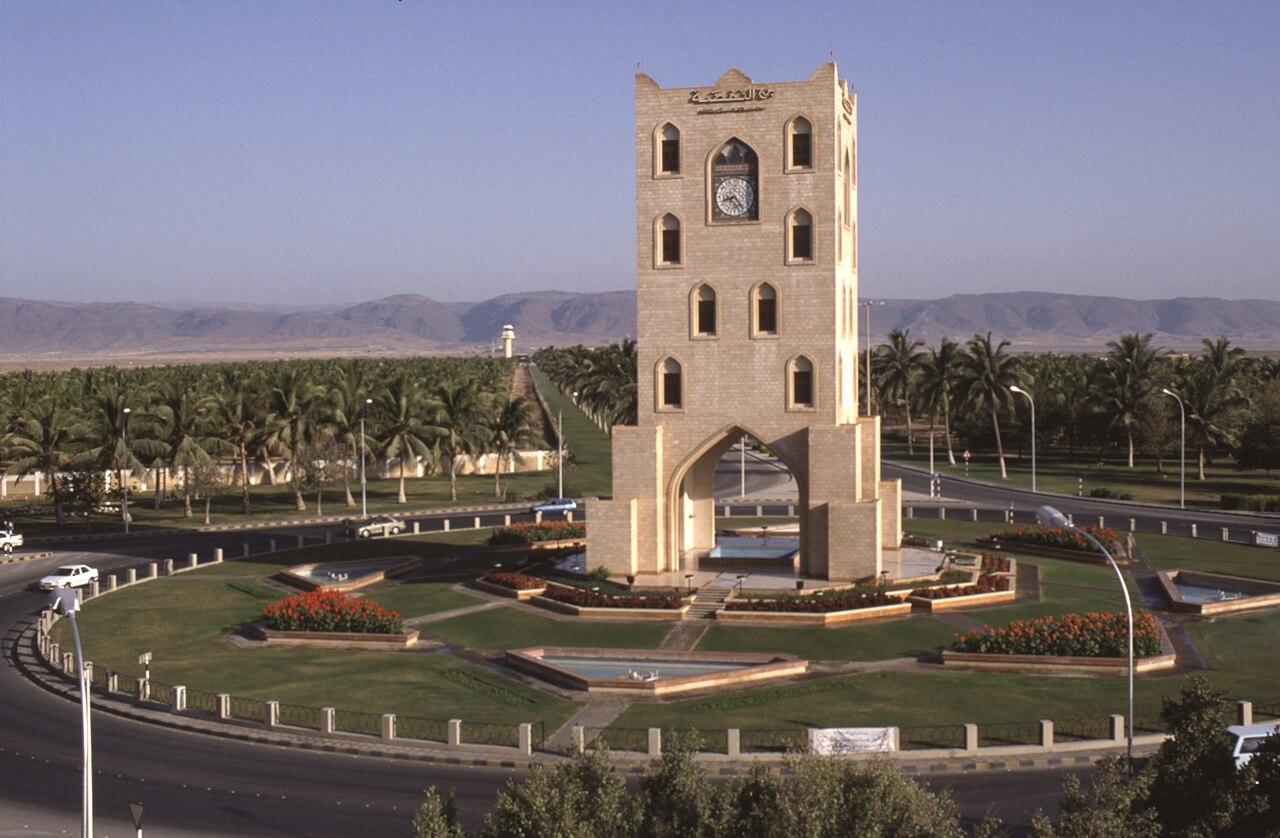
Salalah is about as far from the rest of Oman as you can get — a twelve-hour drive or a ninety-minute flight from Muscat, deep in the southern province of Dhofar. It is a different country in almost every respect. Where the north is desert, Dhofar is subtropical. The Indian Ocean monsoon — the khareef — rolls in every June and soaks the hills in mist and rain until September. The landscape turns an almost improbable green. Waterfalls run in the limestone hills. Cattle stand in meadows. It feels more like East Africa than Arabia, which is historically accurate: Oman's sultans ruled Zanzibar for two centuries, and the cultural exchange ran in both directions.
Outside the khareef, Salalah is warm and dry, the beaches long and mostly empty. The city itself is low-key and spread out, with a pleasant waterfront and a lively Haffa Souq selling frankincense (Dhofar produces most of the world's supply) and dried fish. The ruins of Al-Baleed — the medieval port city that preceded modern Salalah, and now a UNESCO World Heritage Site — are on the eastern edge of town with an excellent museum.
Beyond the city, Wadi Darbat fills with waterfalls in monsoon season; Mughsail Beach has dramatic blowholes and empty sand; and the fishing town of Mirbat has old merchant architecture and the site of the famous 1972 SAS battle. The Tomb of the Prophet Job (Nabi Ayub) west of the city offers panoramic views and draws pilgrims of all three Abrahamic faiths.
The khareef (June–September) is when most Gulf tourists come. If you want the green hills and waterfalls, that's your window. The rest of the year the weather is good and the crowds thinner.