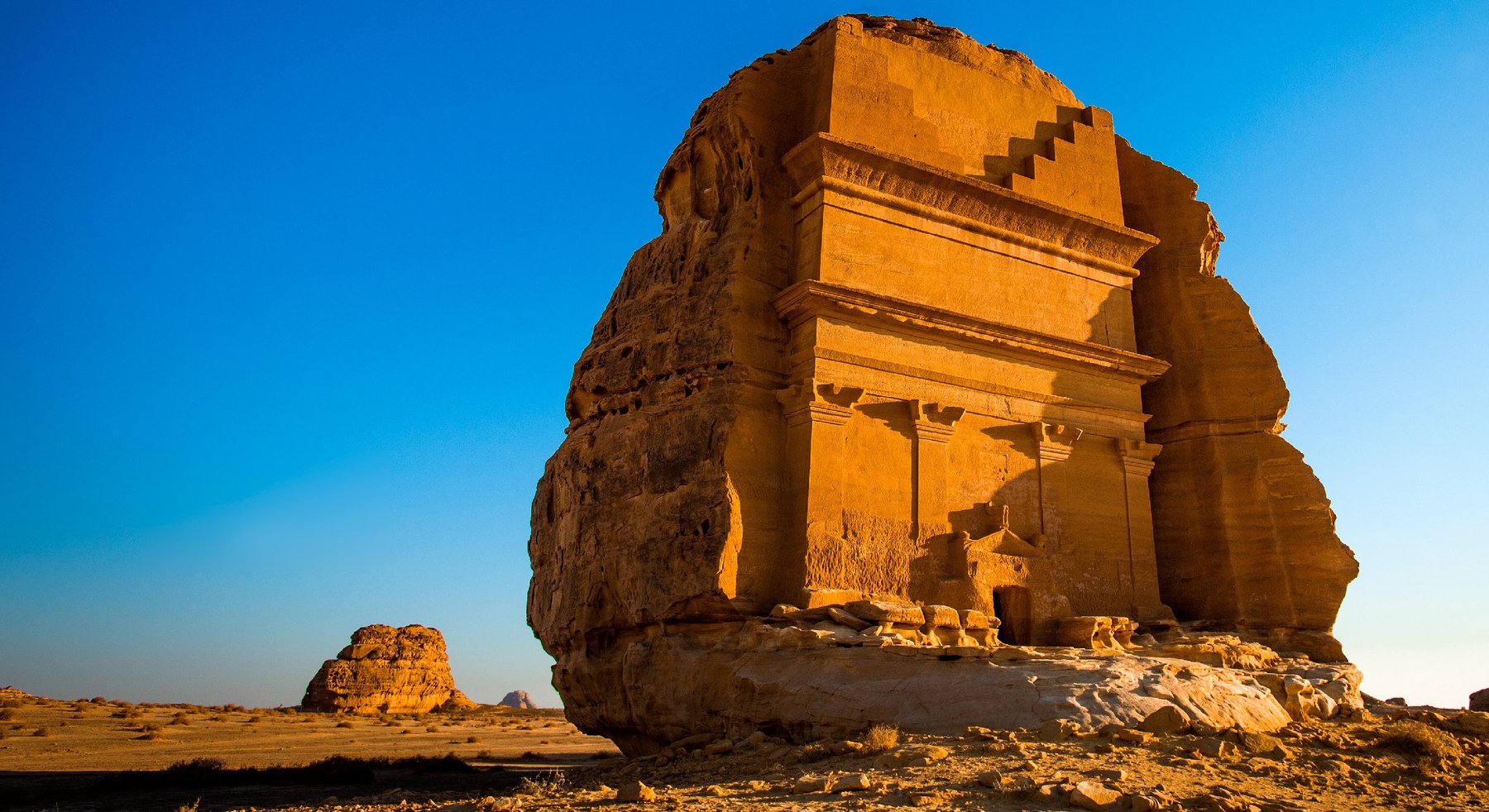
Mada'in Salih, officially known as Hegra, is Saudi Arabia's most spectacular ancient site and the country's first UNESCO World Heritage listing (2008). Located in the Al-Ula region of the northwest, it was the southern capital of the Nabataean kingdom — the same civilization that built Petra in Jordan.
More than 100 monumental rock-cut tombs are carved into isolated sandstone outcrops across a broad desert plain. The facades are elaborate, with carved eagles, friezes, and Nabataean inscriptions still sharply legible after two thousand years. Unlike Petra, which can feel overrun, Hegra remains quiet. Walking through the site in the early morning or late afternoon, with the sandstone glowing orange and the desert stretching in all directions, is genuinely memorable.
The site is managed through the broader AlUla tourism development, which also includes the nearby old town of AlUla (a mud-brick historic settlement), the Dadan ancient ruins, and the dramatic Elephant Rock formation. Access is via organized tours from AlUla or by hiring a car — the site is about 22km from AlUla town. Book tickets in advance through the Experience AlUla website, especially in the cooler months when it fills up.
The best time to visit is October through March. Summer temperatures here exceed 40°C.