Jeddah is the gateway to Mecca and Medina and the most cosmopolitan city in Saudi Arabia. For 1,400 years it has been the port of arrival for pilgrims by sea, and the merchant families that grew rich on the hajj trade built tall coral-stone houses, intricate wooden screens, and the most distinctive vernacular architecture in Arabia. Their old town — Al Balad — is the only Saudi city to make UNESCO's World Heritage list.
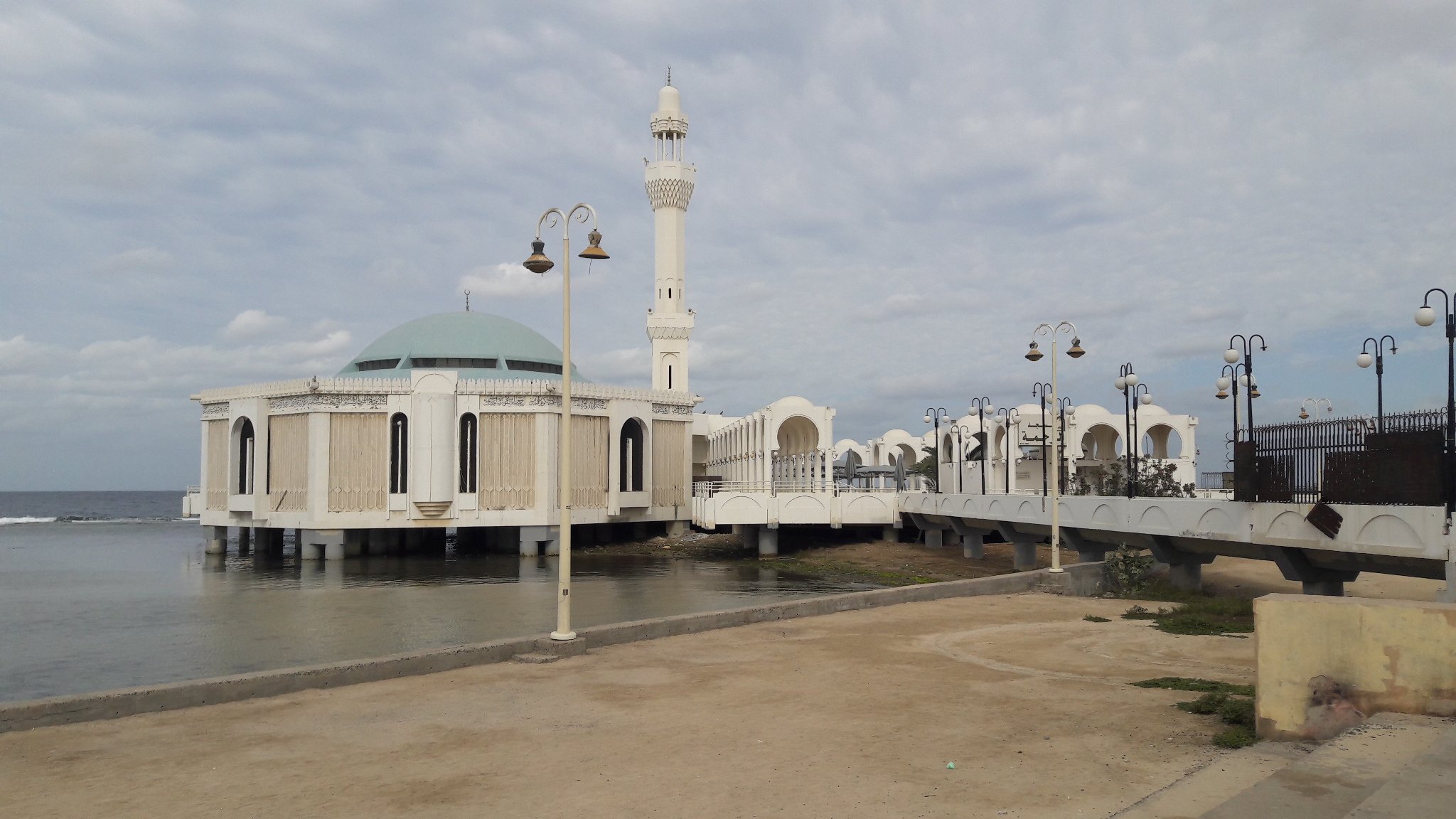
Beyond the old city, modern Jeddah sprawls 25 km along the Red Sea coast. The Corniche is the city's living room — paved walkways, open-air sculptures by Henry Moore and Joan Miró, the world's tallest fountain throwing 300 metres of seawater into the night sky, and the marble curves of the Al Rahmah floating mosque where it meets the water. Until the 1980s most foreign embassies were here; they have moved to Riyadh but Jeddah remains the kingdom's commercial heart.
The cooking is broader than anywhere else in Saudi Arabia, drawing on the cultures that have passed through the port for centuries — Yemeni, Hadhrami, Hijazi, Indian, East African. The reefs offshore are some of the best diving on the planet. The temperature, year-round, is the chief enemy.
Since the 2019 tourism reforms a non-Muslim visitor can now apply for an e-visa, stay in Al Balad's restored merchant houses, drive themselves down the Corniche, and eat dinner in the company of unrelated Saudi women. The city is changing fast. Come now, before it changes more.