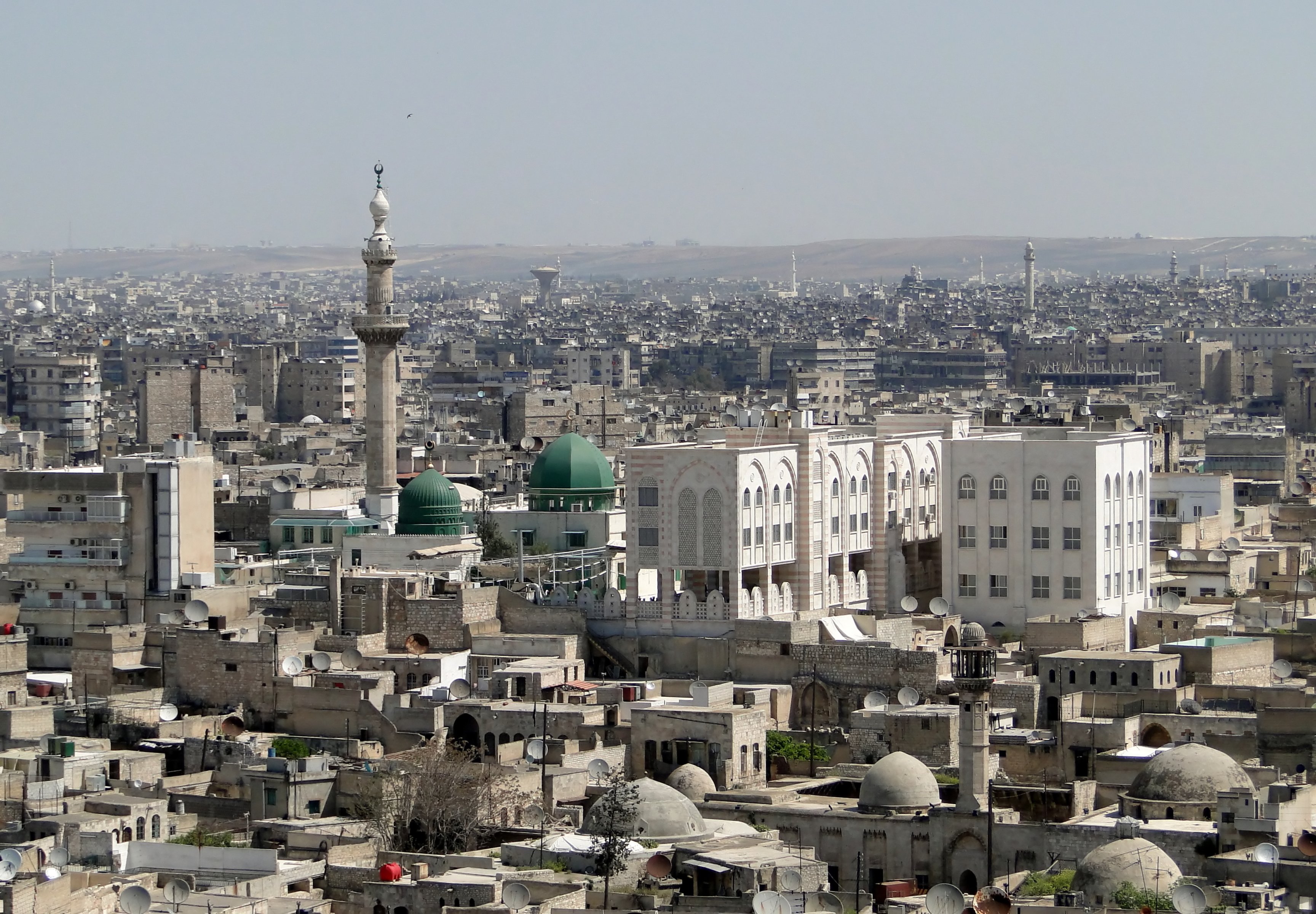
Aleppo is one of the oldest continuously inhabited cities in the world, with roots stretching back at least eight thousand years. Before the war, it was Syria's largest city and its commercial heart — a place where Ottoman merchants, Armenian craftsmen, and Bedouin traders had done business for centuries in the same covered souks. Then came the siege of 2012–2016, and much of the old city was reduced to rubble.
The destruction was staggering. The minaret of the Great Mosque, standing since the eleventh century, was destroyed in 2013. Entire neighborhoods of the UNESCO-listed old city were flattened. The covered souks — the longest covered market in the world — burned. The Citadel, remarkably, survived largely intact, its massive glacis too solid for the fighting around it.
Since the fall of the Assad regime in late 2024, Aleppo has been slowly coming back to life. Parts of the old city are being rebuilt. Some souks have reopened. The Citadel is accessible again. But this is not restoration to some pre-war state — it is a city remaking itself, and the scars are everywhere. Entire districts remain in ruins. You will walk through streets where one side is rebuilt and the other is still a shell.
What makes Aleppo worth the difficulty of visiting is the sheer depth of the place. The Citadel has been fortified since the third millennium BC. The Christian quarter of Jdeide has churches and courtyard houses dating to the fifteenth century. The food — Aleppo is considered the culinary capital of the Levant — is legendary, and the local cuisine has survived the war intact even if many of the old restaurants have not. At the foot of the Citadel, the Hammam Yalbugha, a magnificent Mamluk bathhouse from 1491, stands as a reminder of the extraordinary urban civilization this city once was.
Come with your eyes open. This is a city that has been through something terrible and is rebuilding with extraordinary determination. It deserves visitors who are willing to see both what was lost and what remains.