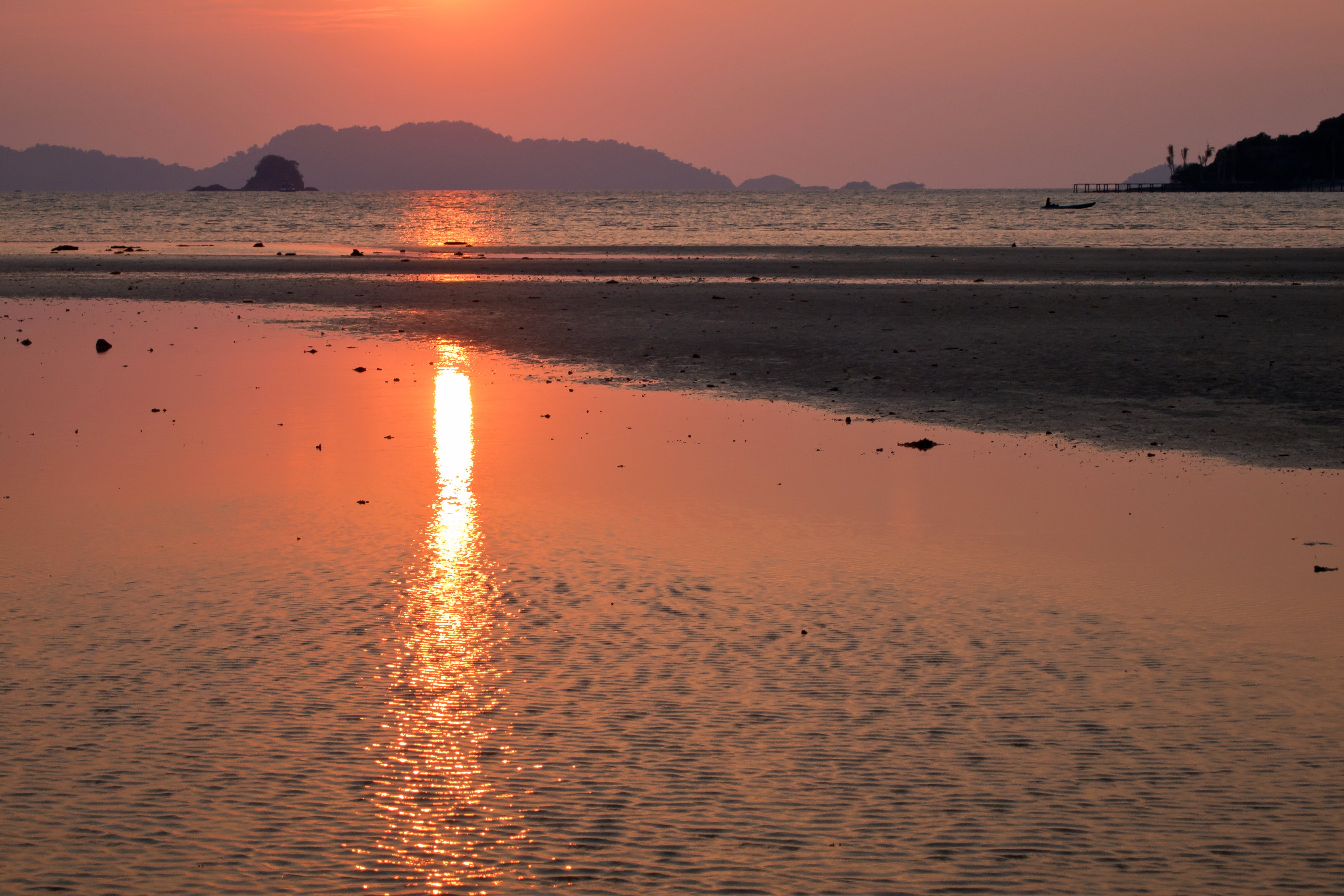
Quiet Gulf of Thailand island with low-key beaches, coconut plantations, and bicycle-friendly roads.
Koh Mak is a small, quiet island in the Gulf of Thailand, between the better-known islands of Koh Chang and Koh Kood. Most of the island is still owned by five families who have lived here for generations, and development has been deliberately kept small-scale — about 20 low-key resorts are spread along the four main beaches.
The island is flat enough to explore by bicycle, and the interior is mostly coconut and rubber plantations. The beaches — Ao Kao on the south-west and Ao Suan Yai on the north-west are the longest — are uncrowded and the water is calm and clear. There is no real nightlife, which is exactly the point.
Offshore, the tiny islet of Koh Kham has the best snorkelling and the dive sites south of the island, including the wreck of the HTMS Chang, are among the best in eastern Thailand.
Speedboats run from Laem Ngop pier near Trat and take 45-60 minutes. There are also connections from Koh Chang and Koh Kood.
Guide
Getting There
Koh Mak is reached by boat from the mainland or from neighbouring islands. There is no airport — the nearest is at Trat, about 40 km away, with a few daily flights from Bangkok.
Speedboats leave from Krom Luang pier in Laem Ngop near Trat. The crossing takes 45–60 minutes and costs around 450 baht. Leelawadee and Boonsiri are the main operators; both have two or three daily departures in season.
Slow ferries are cheaper (around 200 baht) but take three hours and run only once or twice a day. They are a relaxed way to arrive if you are not in a hurry.
There are also direct speedboat connections from Koh Chang and Koh Kood, useful if you are island-hopping. Most resorts can arrange the transfer as part of your booking.
Guide
When to Go
The dry season runs from November to April, with the best weather between December and February — calm seas, low humidity, and reliable sunshine. This is when most resorts are open and boat connections are at their fullest.
May to October is the southwest monsoon. Rain comes in heavy bursts rather than continuous drizzle, but the seas can get rough and many resorts close from mid-May to mid-October. The dive boats stop running in this period because visibility drops sharply.
If you want to see whale sharks at the dive sites south of the island, March and April are the months to come.