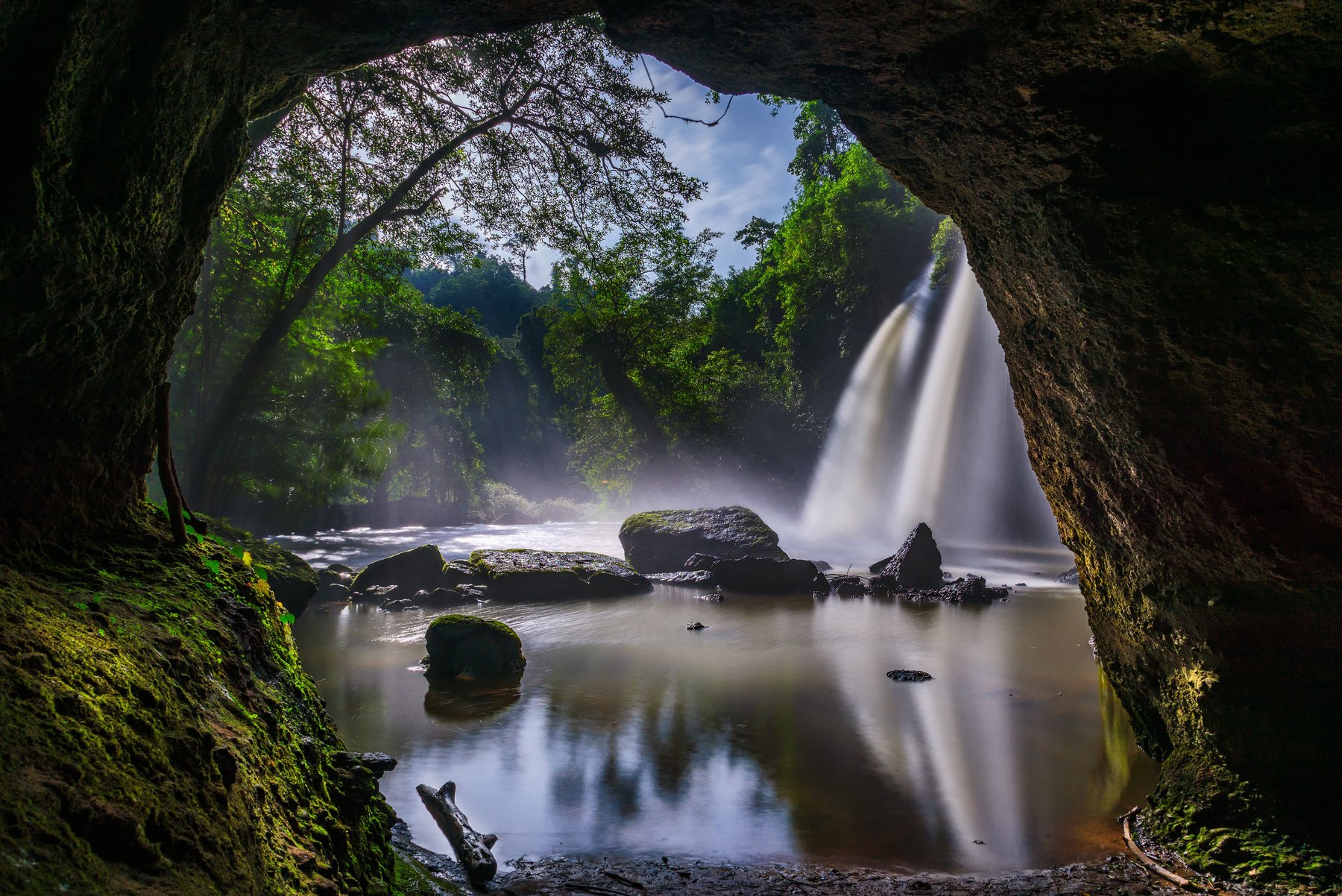
Khao Yai National Park
©
Khao Yai National Park

Khao Yai National Park

Thailand's oldest national park, protecting forest, grassland, waterfalls, elephants, gibbons, and hornbills northeast of Bangkok.

Khao Yai is Thailand's oldest national park and one of its best. It covers 2,168 square kilometres of forest and grassland across four provinces about 200 kilometres northeast of Bangkok, straddling an important watershed in the Dangrek mountain range. In 2005, it was declared a UNESCO World Heritage Site as part of the larger Dong Phayayen–Khao Yai Forest Complex.

The park is exceptional for wildlife. Elephants, gibbons, macaques, gaur, and sambar deer are all present in reasonably good numbers, and the birding is outstanding — more than 300 species have been recorded, including four kinds of hornbill. Leopards and tigers are officially resident too, though sightings are rare. Night safaris along the park roads give good chances of seeing civets, porcupines, and other nocturnal animals caught in the spotlights.

Trails vary from easy riverside walks to full-day jungle hikes. The waterfalls — Haew Narok is the largest — are impressive in the wet season and worth the longer walks to reach them. The park is busy with Bangkok weekenders at weekends; come midweek if you want quieter trails.

Guide

Getting There

The easiest way is by a tour operator. If you want to go on your own there are frequent busses from Bangkok leaving from the northern bus station to Pak Chong, from where you can take a songthaew to the park gates.

From Khorat take a Bangkok-bound bus and get off in Pak Chong. Trains leave from Bangkok or Aythaya. The ordinary train takes around four and half hours from Bangkok. Some people prefer even hitchhiking.

Guide

Things to Do

Khao Yai rewards active visitors. Hiking trails range from short riverside walks to full-day treks through jungle and grassland, and the birding is among the best in Thailand — bring binoculars even for a short walk, with a good chance of spotting several of the park's four hornbill species. Night safaris along the park roads give the best odds of seeing civets, porcupines, and other nocturnal wildlife, and occasionally an elephant caught in the spotlight. The waterfalls are a highlight too — Krok E Dok on the western side of the park is a demanding rainy-season hike, at its best when the trail is muddy and the cascades are running strong.

Trails aren't always clearly marked, so a guide is worth it for anyone serious about wildlife-spotting rather than just a walk in the woods — several Bangkok- and Pak Chong-based operators run day and multi-day hiking, birding, and photography tours into the park.