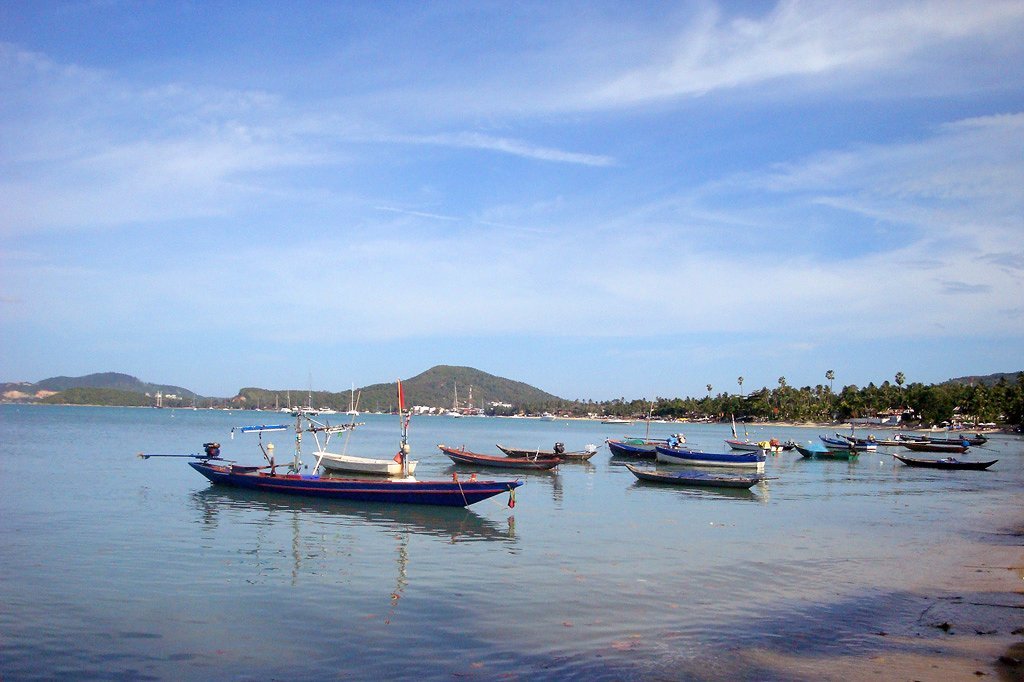
Koh Samui is Thailand’s third-largest island, with coral-sand beaches around a forested Gulf interior.
Koh Samui is Thailand's third-largest island, a ring of coral-sand beaches around a forested interior, sitting in the Gulf of Thailand about 500 kilometres south of Bangkok. For decades it had a backpacker's reputation — bungalows on the sand, full-moon parties on the neighbouring island of Koh Phangan — but the arrival of the airport in 1989 changed it. Today it sits somewhere between mass tourism and the Thailand of twenty years ago: big resorts on the main beaches, quieter coves just around the headland, a strong live-in expat community, and prices that range from backpacker-cheap to Bali-villa-pricey depending on where you land.
Chaweng Beach on the east coast is the main resort strip — long, golden, loud at night. Lamai just south is smaller and slightly cheaper. The north coast villages of Bophut and Mae Nam are quieter and keep more of the old Samui character. The west coast faces the mainland and the ferries; Nathon Town is the administrative centre.
You do not come to Samui for the sights — you come for the beaches, the food, and the short boat rides out to the islands nearby. Ang Thong Marine Park, a forty-two-island archipelago an hour off the west coast, is the must-do day trip: the hidden green saltwater lake on Koh Mae Ko inspired the novel The Beach. Koh Phangan and its famous full moon parties are a half-hour ferry north; Koh Tao, Thailand's best budget diving destination, another hour beyond.
High season runs December through February, when the weather is driest and coolest. March through June is hot; October and November bring the worst of the monsoon rains, when boat trips to the outer islands are often cancelled.
Guide
Beaches
Koh Samui's coastline offers a beach for every mood. Chaweng is the longest and busiest — a wide strip of white sand backed by restaurants, bars, and shops. It's where the action is, for better or worse.
Lamai, the next beach south, is a step quieter with a more laid-back vibe and good swimming. Bophut on the north coast has a charming old fisherman's village at one end, with boutique hotels and low-key restaurants along the sand. Big Buddha Beach nearby is named for the 12-metre golden Buddha statue at its eastern end.
For real quiet, head to the less-developed south and west coasts. Taling Ngam and Lipa Noi see a fraction of the crowds and have some of the best sunset views on the island. Most beaches are swimmable year-round, though the Gulf side can get rough during the monsoon months of November and December.
Guide
Eating Out
Koh Samui's dining ranges from beachfront seafood shacks to resort restaurants with serious kitchens. Most of the better places are attached to hotels and open to non-guests, and a hillside or beachfront table with a sunset view is easy to find if you book ahead.
26th Degree, on a steep hillside above Chaweng at the Kala Samui resort, pairs sweeping bay views with Thai-inflected international cooking; ask about the private dinner setting away from the main restaurant, which needs a day's notice. Daaraadat, part of the Punnpreeda Hip resort on Bang Rak beach near Bophut, is a quieter, more romantic spot for Thai and seafood dishes such as gang phed ped yang (roast duck red curry) — tell your server how much spice you can handle. Sankala Fine Cuisine at the Kirikayan resort on Mae Nam beach does affordable fine dining in a tropical garden setting, with a seafood salad and a well-stocked wine cellar.
For something more casual, Chailay Seafood Restaurant & Beach Bar sits directly on Big Buddha Beach with views across the bay to Koh Phangan — a good spot for grilled seafood and a cold drink as the sun goes down.
Guide
Getting Around
Songthaews — shared pickup trucks with two benches in the back — are the cheapest way to get around Koh Samui, running fixed routes along the ring road between the main beaches. Flag one down, tell the driver where you're going, and pay a small flat fare when you get off; agree the price up front for anything off the main route.
Taxis are widely available but mostly unmetered, so agree a fare before you get in — drivers around Chaweng and the airport quote high to tourists as a matter of course. Rental scooters and cars are the most flexible option for exploring the interior and the quieter beaches, though the ring road has fast traffic and side roads can be steep.
To reach Koh Phangan, Koh Tao, or the mainland, ferries leave from several piers around the island — Na Thon on the west coast is the main one, with Bophut and Mae Nam also serving some routes. Boats to the outer islands and to Ang Thong Marine Park can be arranged through tour operators on any of the main beaches.
Guide
Shopping
Koh Samui's shopping is spread across its main beach towns rather than concentrated in one place. Bophut Plaza, which opens around 6pm at Bophut Beach, is the best general market for souvenirs — fake designer goods, handicrafts, and cheap clothing, all open to bargaining. Chaweng's beach road has a similar strip of stalls, and the fresh market at Lamai is worth a look for local produce and food alongside the usual souvenirs.
For anything more conventional, Chaweng has both a Lotus's and a Big C, the two big malls on the island, with clothing, electronics, and a scattering of restaurants and a cinema inside. Bophut's old town has the more upmarket end of things — boutiques like Siddharta sell beachwear and dresses, and Chaweng's Beach Road has a handful of fashion boutiques as well.
Jewellery shoppers have real choice: My Jewel International in Nathon is good value, Classic Gems near Chaweng's Centara resort has a large selection and does custom pieces, and Silvermania at Lamai specialises in silverware. For handicrafts, About Arts and Crafts on Chonwithee Road in Nathon sells handmade ceramics and watercolours from a small shopfront café.