Tutuila
©
Tutuila

Tutuila

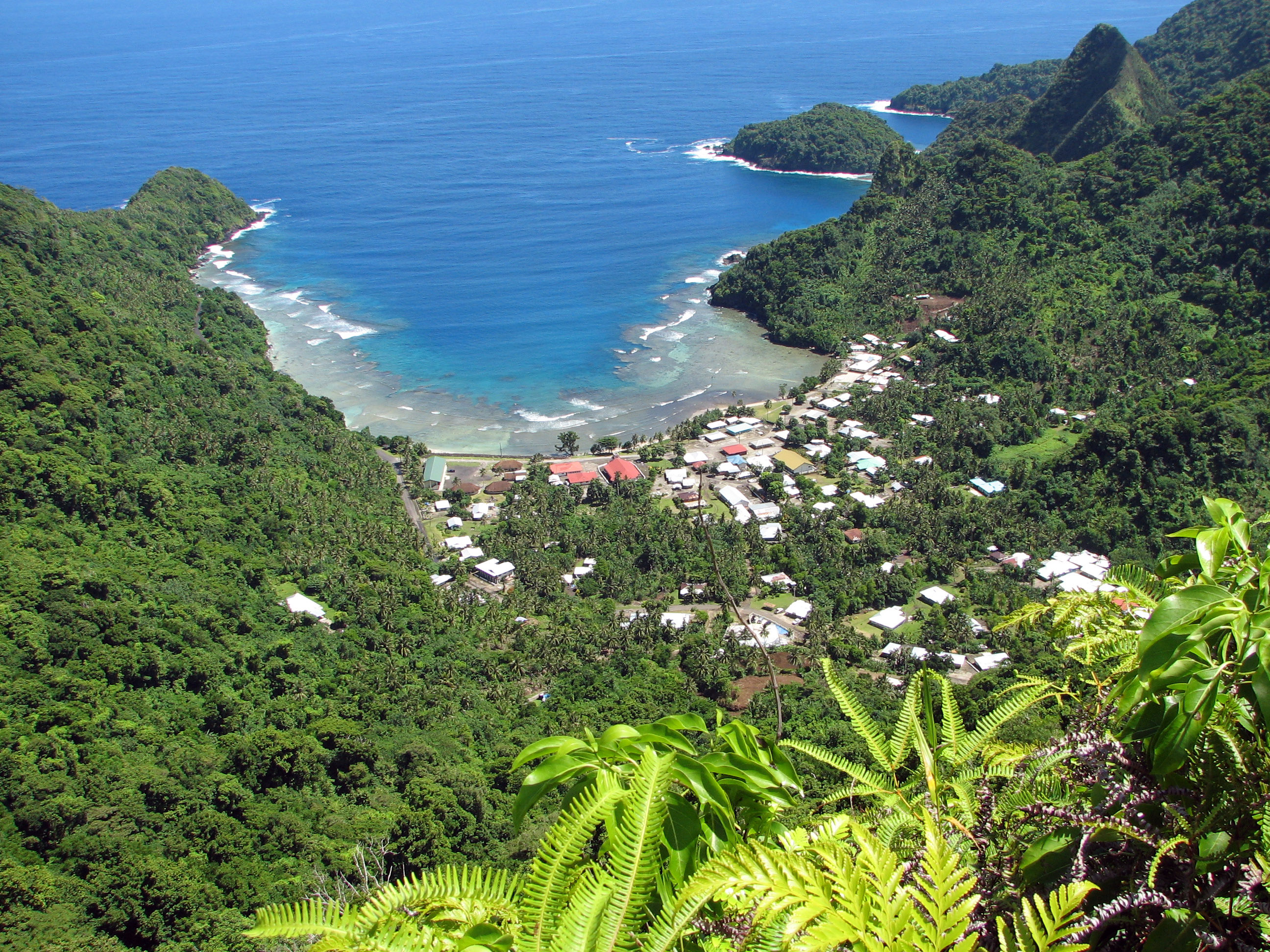
Main American Samoa island with Pago Pago's caldera harbour and rainforest protected by the national park.

Tutuila is the largest of American Samoa's seven islands and the main base for travelers. Nearly all flights arrive here, and Pago Pago — the capital — is on Tutuila's south coast, inside the deep harbor carved by a collapsed volcanic caldera.

The National Park of American Samoa covers a significant portion of the island's northern coast, protecting one of the last intact tropical rainforests in the American territories. Start at the visitor centre in Fagatogo before heading out. A scenic road runs from Pago Pago over to the north coast — allow a few hours, including stops at the viewpoints along Afono Pass. The Amalau Valley is one of the better spots to watch for flying foxes gliding above the canopy.

From the village of Vatia on the north coast, a trail leads toward the sea cliffs overlooking Pola Island. It's a short walk with dramatic views.

The Mount 'Alava trail follows a maintenance road to a 491-metre summit with panoramic views over the harbour and north coast. The trailhead is at Fagasa Pass, a short drive from town. For history, the Jean P. Haydon Museum in Fagatogo covers Samoan culture and the naval period, and Massacre Bay on the northwest coast marks the site of a deadly 1787 encounter between French explorers and local islanders.

Guide

Getting There

Nearly all flights to American Samoa arrive at Pago Pago International Airport (IATA: PPG), which sits on the south coast of Tutuila near Tafuna. Hawaiian Airlines runs direct flights from Honolulu; the flight takes around five and a half hours. Samoa Airways connects Tutuila to Apia in independent Samoa, a short hop of around 30 minutes.

There are no direct flights from Australia or New Zealand — travellers from the southern hemisphere typically connect through Apia or Honolulu. Cruises occasionally call at Pago Pago, taking advantage of the deep natural harbour.

Guide

Things to Do

The National Park of American Samoa on Tutuila's north coast is the main draw for most visitors — a rare piece of protected tropical rainforest that you can walk through without a guide. The trailhead for Mount 'Alava is at Fagasa Pass, a short drive from Pago Pago.

Pago Pago Harbor is one of the finest natural harbours in the Pacific — a deep volcanic caldera that provides almost complete shelter. The Jean P. Haydon Museum in Fagatogo covers American Samoan history and traditional culture. Massacre Bay commemorates the 1787 death of French sailors from the La Pérouse expedition — an unusual piece of Pacific history.

For those interested in WWII history, the Blunts Point Battery overlooking the harbour preserves guns installed during the American military build-up in the early 1940s.

Guide

When to Go

Tutuila has a tropical climate with two seasons. The dry season runs roughly from May to October, with lower humidity, less rainfall, and temperatures typically in the mid-20s Celsius. This is the better time to visit for hiking and outdoor activity.

The wet season runs from November to April, with heavy rain, high humidity, and the risk of tropical cyclones. December to February is the peak cyclone period. Hurricane Val in 1991 caused severe damage and killed several people on the island; the 2009 tsunami caused significant casualties and destruction on the south coast. The wet season is not unvisitable, but plan activities knowing that mornings are often clear and afternoons frequently bring downpours.

The Rose of Samoa pageant and various cultural festivals take place in late April and early May, coinciding with Flag Day (April 17), which marks the date in 1900 when the United States formally took control of the island.