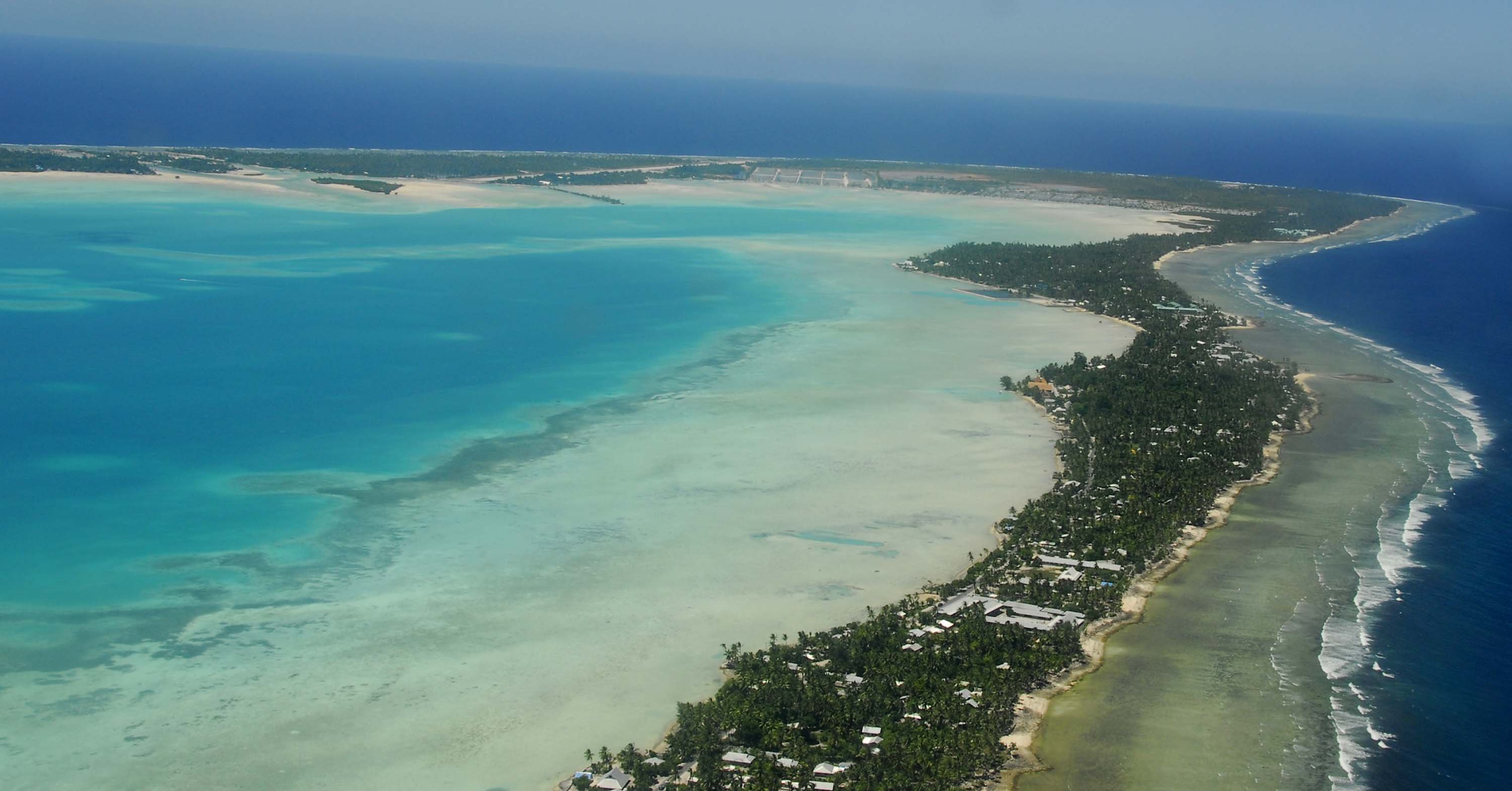
Kiribati capital atoll where crowded South Tarawa stretches along causeways beside a turquoise lagoon.
Australia and Pacific > Kiribati > Tarawa
Tarawa is the capital atoll of Kiribati and the country's political, economic, and social center. South Tarawa, a narrow ribbon of islets connected by causeways, is home to roughly half of Kiribati's entire population, making it one of the most densely populated places in the Pacific. The contrast between the turquoise lagoon and the crowded, often chaotic settlements along the road is striking and honest: this is a place of real beauty and real pressure, where rising seas and a growing population compete for a sliver of coral land barely three meters above the waterline.
Tarawa is best known internationally for the brutal Battle of Tarawa in November 1943, one of the bloodiest engagements in the Pacific War. Over three days of fighting on the tiny islet of Betio, more than a thousand US Marines and nearly five thousand Japanese defenders were killed. The battle shocked the American public and changed how amphibious assaults were planned for the rest of the war. Today Betio still holds rusting gun emplacements, bunkers, and the occasional piece of wreckage along its shores, making it a sobering and fascinating place to walk through.
Beyond the war history, Tarawa offers a window into contemporary Pacific life that few travelers ever see. The Betio port and market sell fresh fish and imported rice, maneabas (traditional meeting houses) host community gatherings, and the lagoon side of the atoll is good for swimming once you find a clean stretch. The national parliament — the Maneaba ni Maungatabu — is itself built in the form of a traditional meeting house. There is a small diving scene in North Tarawa, where the reef is healthier and the crowds thin out. Getting here means flying through Fiji or the Marshall Islands on limited schedules, so plan well ahead and bring patience.
Guide
Getting Around
South Tarawa is essentially one long road running from Bonriki airport in the east, through Bikenibeu, Eita, Bairiki, and across the causeway to Betio at the western tip. Most travel is along this road.
Minibuses run almost continuously up and down the strip during the day. Flag one down, get on, hand the driver a coin or two when you get off. They are cheap, crowded, and the easiest way to cover distance.
Taxis are available in the main settlements but are not metered — agree the fare before you set off. Hotels can arrange a car and driver for the day if you want to do the battlefield sites without rushing.
To reach North Tarawa you take the road to Buota, then either wade across at low tide or hire a local boat. There is no causeway beyond that point and no scheduled transport, so plan accordingly and bring water and sun protection for the crossing.
Guide
Getting There
Getting to Tarawa is the first real travel challenge. Bonriki International Airport (TRW) is the only international gateway and is served by a small handful of flights, all of them subject to change at short notice.
Fiji Airways flies from Nadi (Fiji) via either Funafuti (Tuvalu) or Honiara (Solomon Islands), typically a couple of times per week. Nauru Airlines runs a "island hopper" link from Brisbane via Nauru, Honiara, and Tarawa. There are also internal flights operated by Air Kiribati connecting Tarawa with the outer islands and with Kiritimati (Christmas Island) far to the east.
Schedules are sparse and cancellations or weather-related delays are common. Build a couple of extra days into either end of your itinerary and do not book onward connections too tight. Confirm reservations directly with the airline before you fly — the published schedules are not always current.
Guide
When to Go
Tarawa sits one degree north of the equator, so the climate is hot and humid all year round — daytime highs in the low thirties Celsius, nights barely cooler, and the sea always warm. There is no real "high season" in the tourist sense; you go when you can get a flight.
The drier months run roughly May to November, with steadier trade winds and slightly less rain. December to April is the wet season — heavier downpours, more humidity, occasional periods of very high tides ("king tides") that wash across parts of the road. El Niño years can shift this pattern significantly; check current conditions before you book.
If you want to time a visit around an event, Independence Day on 12 July is the largest national celebration of the year and brings dance, sport, and a festive atmosphere to South Tarawa for several days.