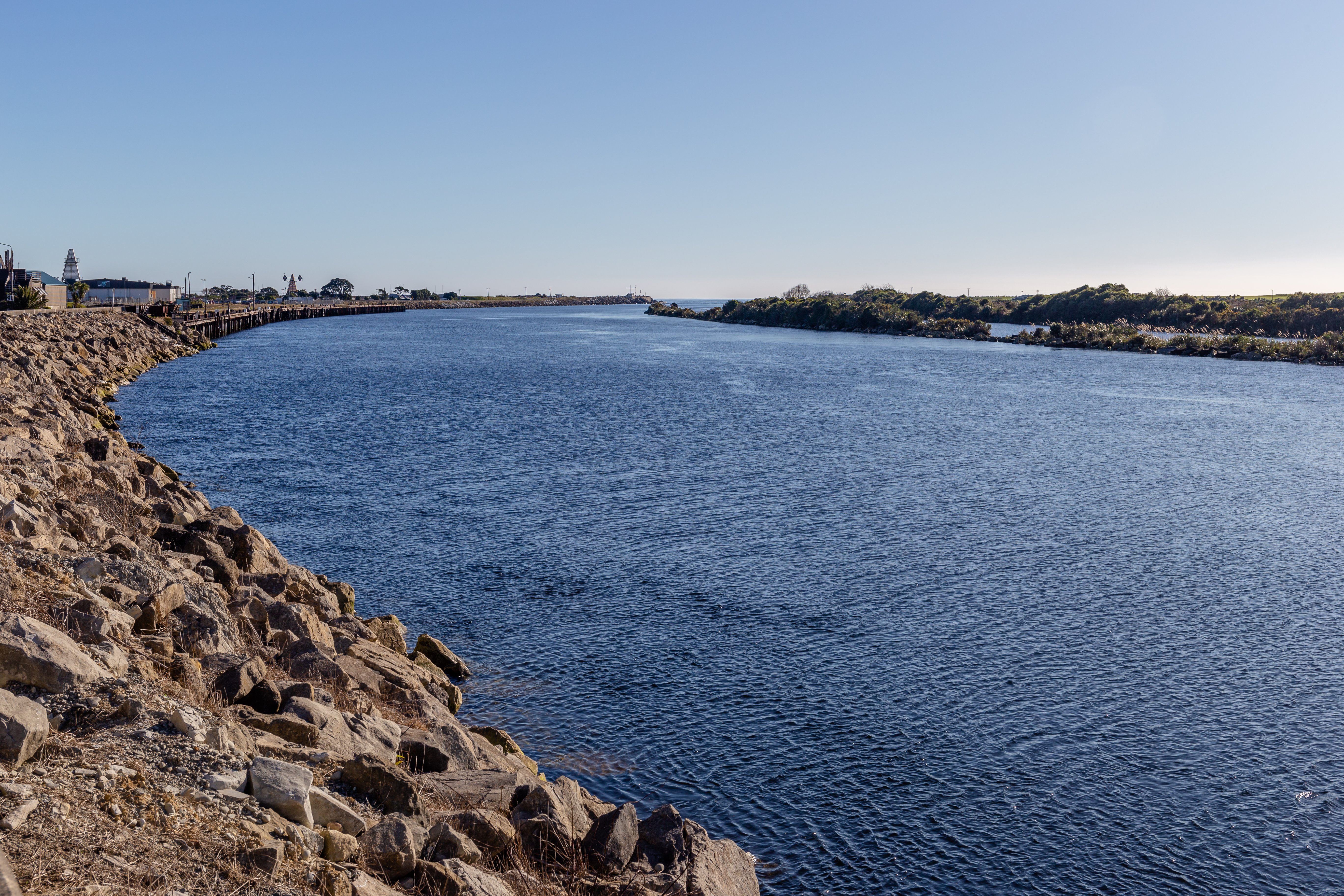
Greymouth is the largest town on New Zealand's West Coast — about 13,000 people strung along the mouth of the Grey River, at the foot of the Paparoa Range. It is a working town, built on coal and gold and now leaning on tourism, with the wide grey Tasman Sea on one side and a wall of bush-covered hills on the other. The weather is famously wet; "the Coast" has its own rainfall figures that bear no relation to the rest of the country.
The town's main role for travellers is as a transport hub. The TranzAlpine — widely regarded as one of the great train journeys of the world — terminates here after a four-hour run across the Southern Alps from Christchurch. The West Coast Wilderness Trail, a 132-kilometre cycle route, starts at the railway station and runs south through bush, wetland, and old gold-mining country to Ross. Greymouth is also the northern gateway to Hokitika and the glacier country further south.
Spend an afternoon walking the floodwall along the riverfront — built after the 1988 flood that put the central business district underwater — and the small but well-curated History House Museum on Gresson Street. Mawhera Quay, the original wharf street, has a couple of decent cafes; Monteith's Brewery Tour is the standard wet-weather indoor activity. The town does not detain most visitors for long, but it is the natural overnight stop between Christchurch and the glaciers.