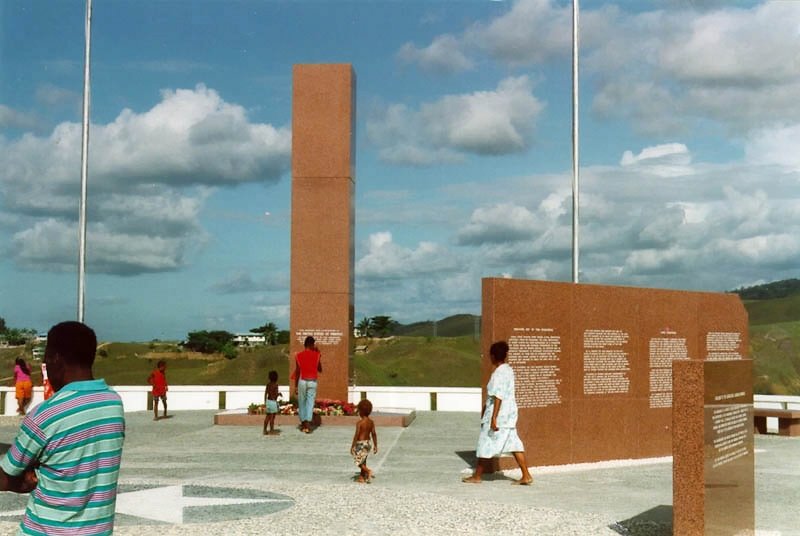
The largest island in the Solomon Islands, Guadalcanal is best known for the brutal six-month campaign fought here during World War II. The name alone carries weight — it was the first major Allied offensive against Japan in the Pacific, and the island's jungles, ridges, and surrounding waters saw some of the war's fiercest fighting. Today, rusting tanks, crashed aircraft, and scattered memorials mark the landscape, and the waters offshore in Iron Bottom Sound hold the wrecks of dozens of warships.
Honiara, the national capital, sits on Guadalcanal's northern coast where the American forces came ashore in August 1942. It is the only real town on the island, and the gateway to everything else in the Solomons. Beyond Honiara, Guadalcanal is mountainous, thickly forested, and sparsely populated. Mount Popomanaseu, at 2,335 metres, is the highest peak in the archipelago. Rivers cut deep valleys through the interior, and the southern coast — the Weather Coast — is remote, rugged, and reachable only by boat or a demanding overland trek.
For most visitors, the draw is the war history. The open-air war museum near the airport has artillery pieces and aircraft engines. Red Beach, where the Marines landed, is an easy drive east of Honiara. Bloody Ridge, Edson's Ridge, and Henderson Field (now the international airport) are all accessible. Dive operators run trips to the wrecks in Iron Bottom Sound, where visibility is often excellent and the scale of the sunken fleet is staggering.
Beyond the battlefields, Guadalcanal offers rewarding hiking through its mountainous interior and along the Weather Coast, where traditional village life continues largely unchanged. The island is not set up for casual tourism — expect basic accommodation outside Honiara, limited transport, and the need to arrange things through local contacts. That is precisely what makes it worth the effort.