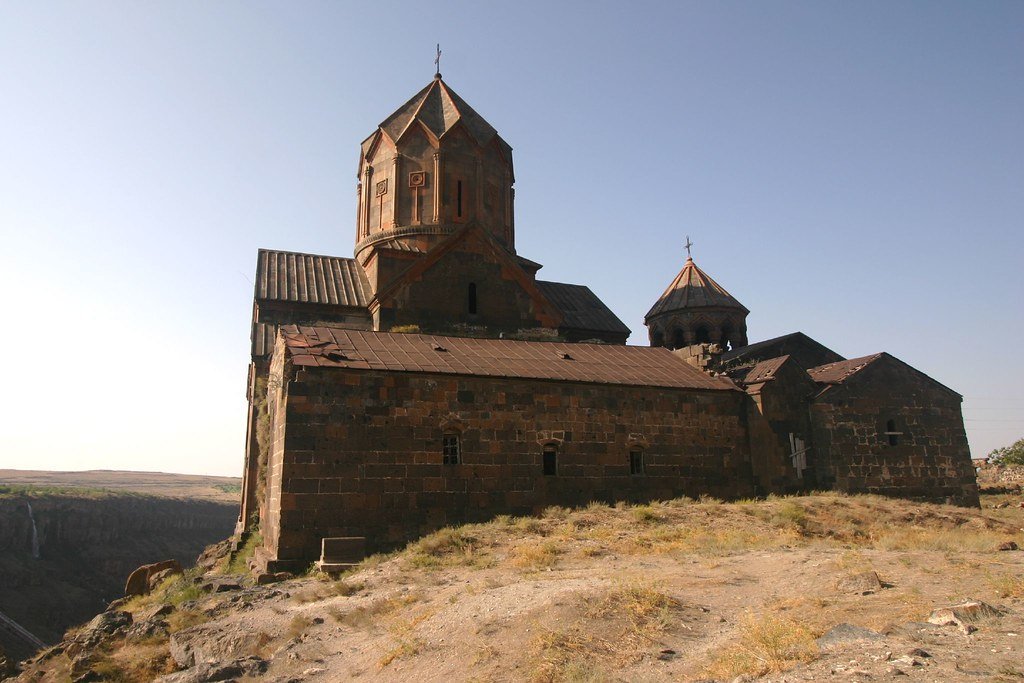
Aragatsotn is dominated by the massive volcanic shield of Mount Aragats, Armenia's highest peak at 4,090 metres. The region stretches from the cool highland pastures where Yezidi shepherds graze their flocks in summer down to the deep Kasagh river gorge lined with medieval monasteries. It is close enough to Yerevan for a day trip, but rich enough to reward a longer stay.
The southern slopes of Aragats are popular with Yerevantsis who keep summer cottages here for the cool climate and clean air. The ascent of the south peak (3,879m) is the most accessible summit hike — start from the lake by the Cosmic Ray Institute above Amberd, ideally at 5am before the clouds roll in. The climb takes less than two hours but dress warm; it is always cold up top. The views of the Ararat Valley on a clear morning are unforgettable.
The eastern side of the region follows the Kasagh gorge, where Hovhannavank and Saghmosavank monasteries perch dramatically on the cliff edge. Both are photogenic, both are ancient, and both look across the gorge toward Mount Ara. Further west, the medieval fortress of Amberd and its adjoining church sit in splendid isolation on the mountainside — accessible once the snows melt in May.
The small town of Ashtarak, the region's only real urban centre, makes a good base. Its cluster of churches along the gorge — including the tiny 7th-century Karmravor, which somehow looks like a watercolour painting in every photograph — is worth an afternoon. The Ashtaraki Dzor restaurant complex nearby is a local institution, especially at night.
Other highlights scattered across the region include Byurakan Observatory, where important astrophysics research continues and night-time stargazing tours are sometimes available; the Armenian Alphabet Monument, with oversized stone letters laid out on a hillside; Aruch Cathedral (built in 666) with remnants of massive frescoes including a seven-metre-high Christ; and the 4th-century Kasagh Basilica, one of the earliest Christian churches in Armenia.