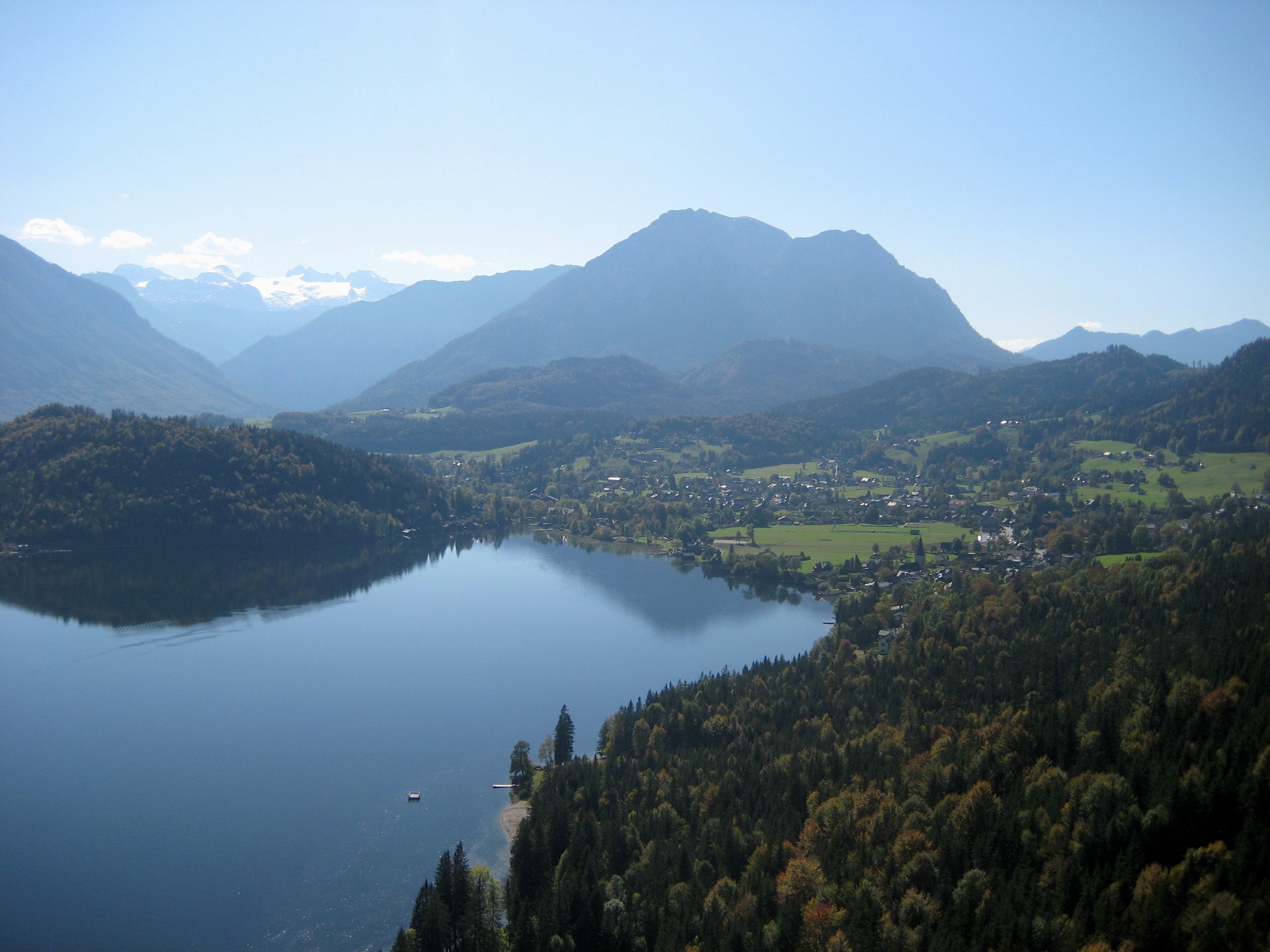
The Salzkammergut — Salt Chamber Estate — is the lake district of central Austria, a landscape of deep blue lakes, white-walled mountains, and dark coniferous forests that stretches east from Salzburg into the states of Upper Austria and Styria. The name comes from the salt that made this region wealthy for thousands of years: the mines beneath the mountains around Hallstatt were producing salt when the pharaohs were building pyramids, and the salt trade funded the Iron Age culture that archaeologists call Hallstatt, spread across half of Europe.
The lakes are what most visitors come for today. There are over 70 of them, ranging from the famous — the Hallstätter See with its mirror-perfect reflections and impossible village — to quiet swimming lakes that barely appear on maps. The Wolfgangsee, the Mondsee, and the Attersee are the largest; the Attersee, particularly, draws sailing enthusiasts and was a favourite retreat of Gustav Klimt, who spent summers here painting the lake's particular shade of green. The mountains above are limestone — the Dachstein is the dominant massif, with a summit glacier and ice caves that are visited from below.
Bad Ischl is the hub town, its imperial credentials earned by the summer residency of Emperor Franz Joseph I, who arrived every August from 1849 until his death. The town still has its Habsburg-era pastry shops, thermal baths, and the Kaiservilla — the villa where the emperor signed the 1914 declaration of war that started the First World War. Around it cluster smaller places: Altaussee for quiet sophistication, Hallstatt for prehistoric drama and Instagrammable views, St. Wolfgang for the pilgrimage church and lakeside charm. The Salzkammergutbahn narrow-gauge railway once connected most of these towns; only the Ischl Valley section remains as a summer tourist railway.
This is walking and cycling country in summer, skiing country in winter. The Dachstein offers year-round glacier skiing. The Gosauseen — a group of cirque lakes beneath the Dachstein walls — rank among the finest mountain views in Austria. Come in shoulder season if you can: the summer crowds at Hallstatt in particular are extraordinary, and the place is better understood in October rain than in July sunshine.