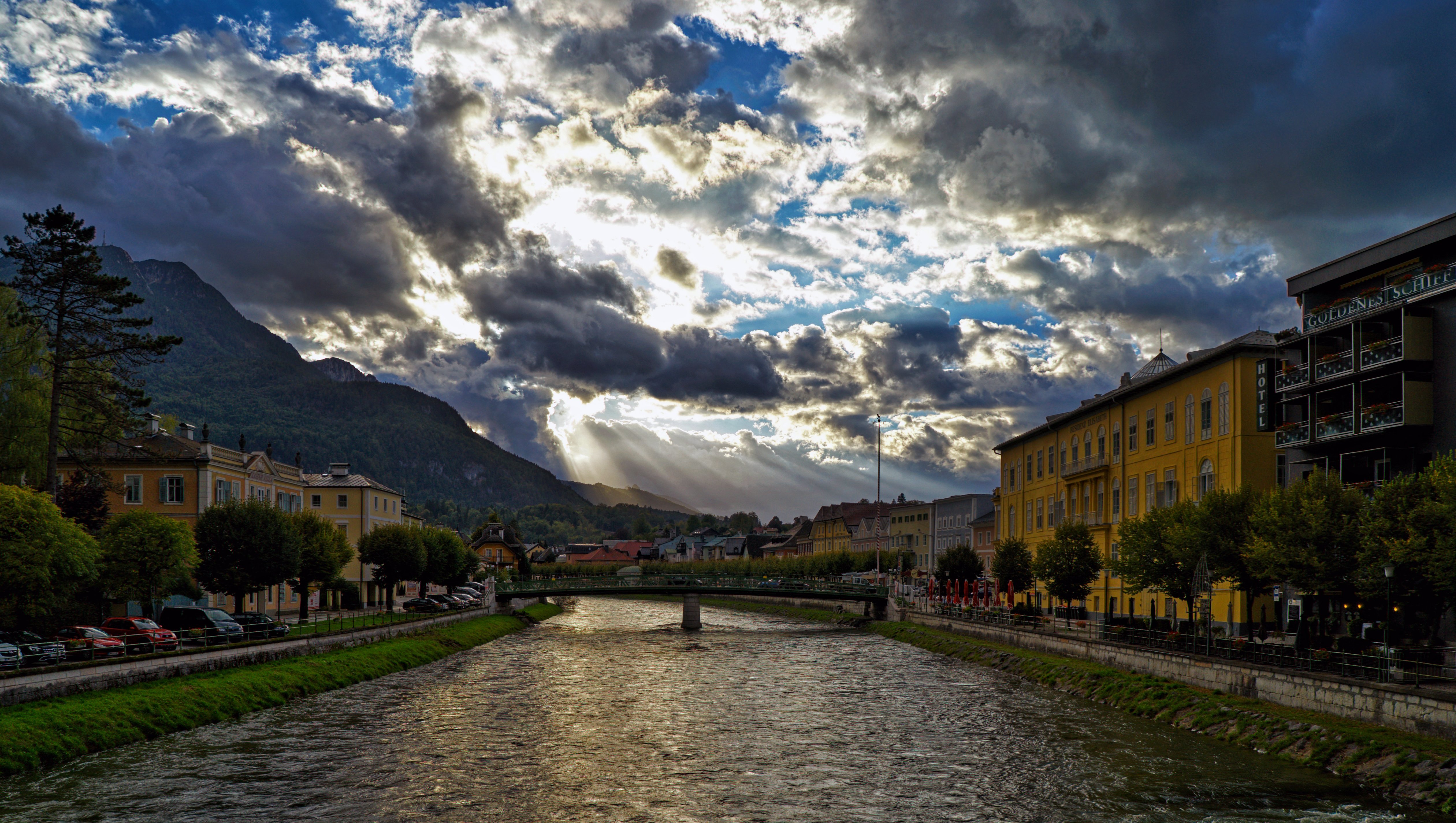
Bad Ischl is the social and geographic heart of the Salzkammergut, the lake district of Upper Austria that stretches east from Salzburg. It sits at the confluence of the Traun and Ischl rivers, hemmed in by steep forested hills, and for most of the nineteenth century it was one of the most important towns in the Habsburg Empire — not because of any political significance, but because the emperor came here every summer.
Emperor Franz Joseph I spent his summers in Bad Ischl from 1849 until his death in 1916, and the town arranged its entire existence around the imperial calendar. The Kaiservilla, a neo-classical villa set in parkland above the town, is preserved almost exactly as he left it: hunting trophies, personal effects, the desk where he signed the declaration of war in 1914 that set the First World War in motion. His presence attracted the Viennese aristocracy and a remarkable concentration of artists and musicians. Composer Franz Lehár lived and worked here, and his summer home — the Lehár Villa — is now a museum. The Lehartheater continues to stage his operettas each summer.
The salt mines that gave the region its name were the original reason for the town's wealth. Bad Ischl's reputation as a health resort was built on brine baths — local doctors promoted the therapeutic properties of the salt-rich water, and the town drew aristocratic invalids long before the emperor arrived. The spa tradition continues in a modern form at the Kaiser Therme.
Today Bad Ischl is a pleasant, well-preserved small town, good for a day or two as a base for the lakes and mountains around it. The Rettenbachklamm gorge provides an easy half-day walk. The pastry shop Konditorei Zauner, on the main promenade, has been making the same regional cakes since 1832. The town is 55 km from Salzburg and well connected by bus.