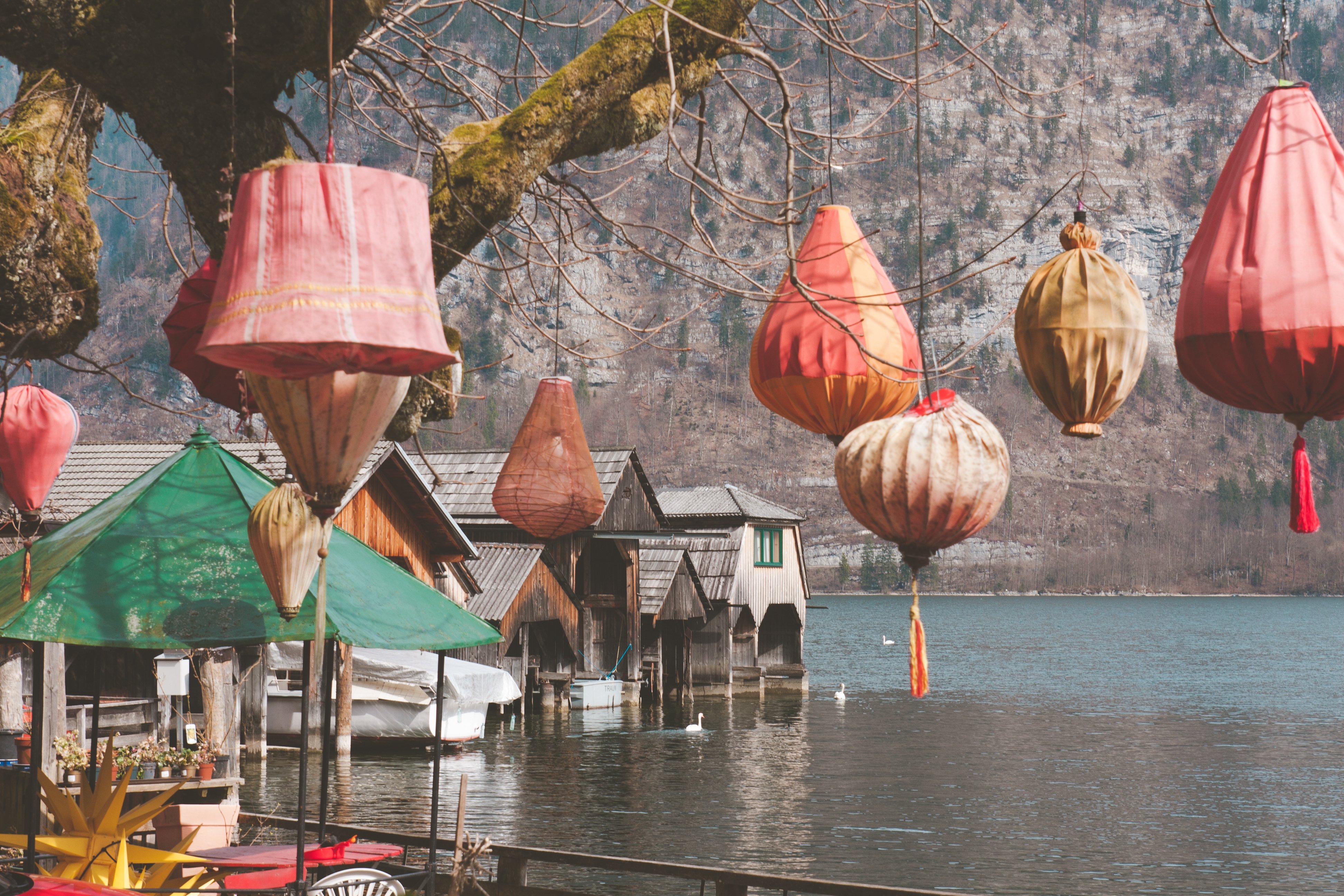
Hallstatt is a small lakeside village in the Salzkammergut region of Upper Austria, dramatically situated between the Hallstätter See and the sheer walls of the Dachstein massif. It is one of the oldest continuously inhabited settlements in Europe — humans have lived and mined salt here for at least 7,000 years — and that prehistoric legacy gives the area its name, Hallstatt being the term archaeologists use to describe the early Iron Age culture centred here.
The village itself is extraordinarily picturesque: coloured houses stack up the hillside above the lake, connected by narrow lanes barely wide enough for two people to pass. The market square, with its Gothic parish church, opens directly onto the water. Above the village, the Salzbergwerk (salt mine) can be visited; the oldest salt mine in the world still in operation, with wooden slides used by miners for centuries to move between levels. The Hallstatt Museum in the market square holds the remarkable grave goods excavated from the prehistoric cemetery.
Hallstatt has become heavily visited, with tour groups — particularly from Asia — arriving by the busload. Come early in the morning or stay overnight to see the place at its best.