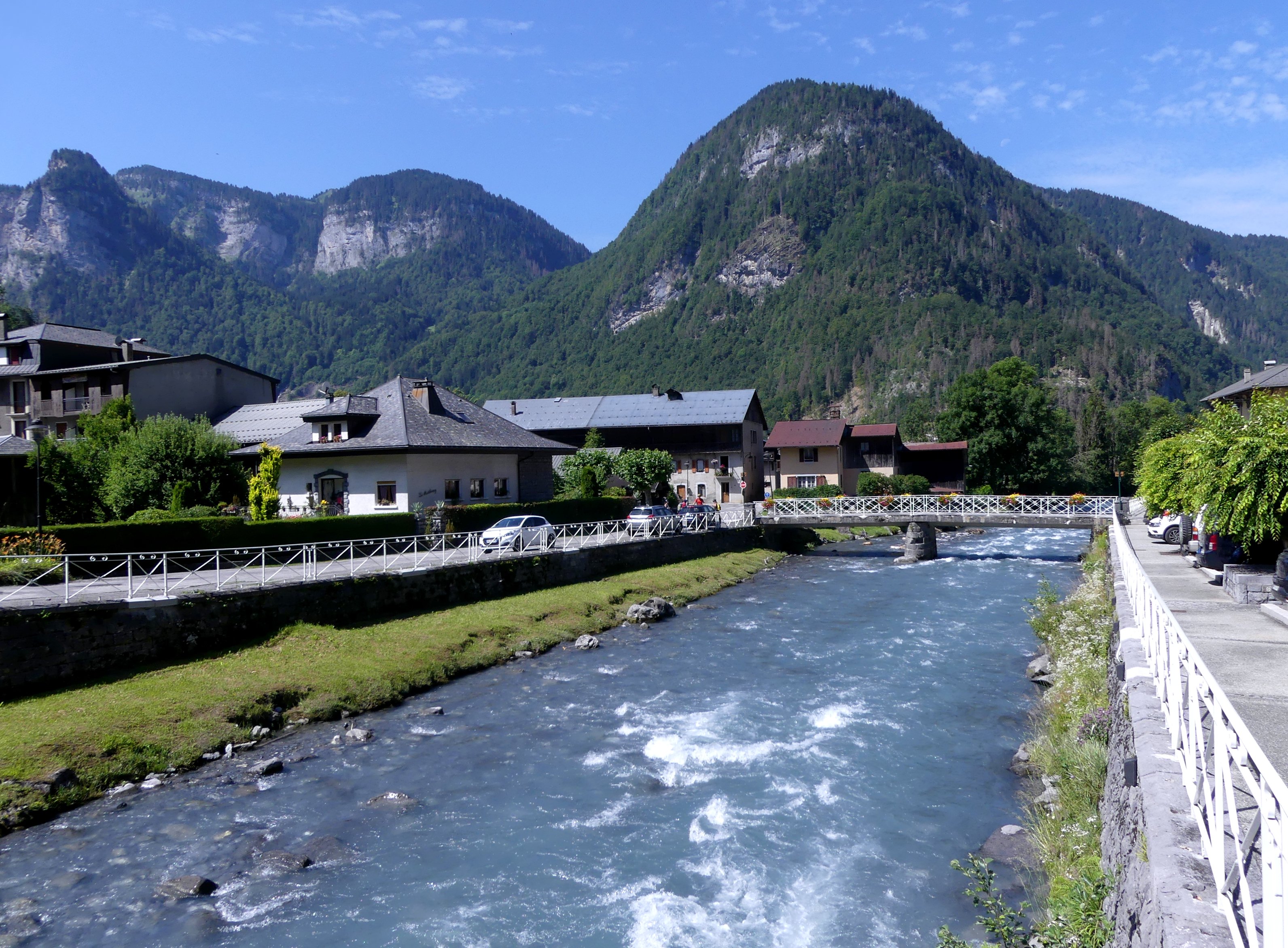
Sixt-Fer-à-Cheval sits at the dead end of a long valley road through Samoëns, deep in the Haute-Savoie — close to Chamonix as the crow flies but a world away in atmosphere. Mont Blanc is visible from a tent pitched here, yet the crowds are not. That contrast is precisely the point.
The Fer-à-Cheval — horseshoe — part of the name comes from the cirque at the valley's end: a vast semicircle of cliffs up to 700 metres high, ringed by some thirty waterfalls that thunder down when the snowmelt begins in spring. Classified as a Grand Site de France and drawing around half a million visitors a year, it is one of the largest cirques in Europe and the centrepiece of the Réserve Naturelle du Sixt Fer-à-Cheval, which protects more than three-quarters of the commune's 11,200 hectares.
The village itself is small and quiet — a medieval abbey, a handful of farms, some gîtes d'étape — but that modesty is part of its appeal. Hikers come for long days into the high alpine meadows; in winter the same mountains feed the Grand Massif ski area, one of the largest in France. The Cascade du Rouget — nicknamed the Queen of the Alps — is forty minutes on foot from the village, and the summit of Mont Buet at 3,096 metres is a full-day mountain objective with views across to the whole Mont Blanc massif.
A few nights here makes for an excellent base. Drive over to Chamonix for the Aiguille du Midi cable car one day; the next, walk to a high lake without meeting another soul. The contrast in scale — one of Europe's great mountain spectacles on one side, utter quiet on the other — is hard to find anywhere else in the Alps.