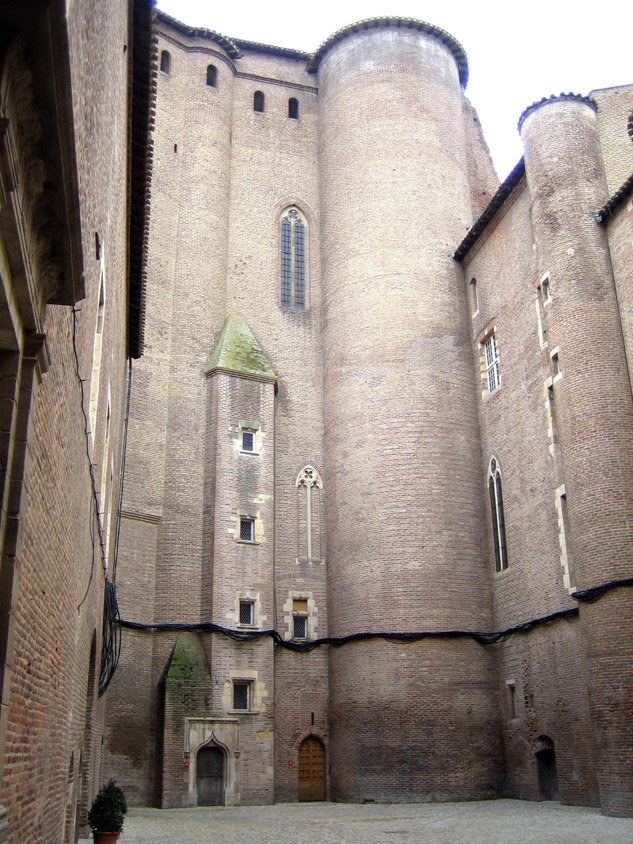
Albi is a small city in the Tarn department that contains two of the most remarkable buildings in southern France, both of which it carries with remarkable composure. The Cathédrale Sainte-Cécile — the largest brick Gothic cathedral in the world — rises from the hilltop above the Tarn river in warm red-brown brick, and it is genuinely astonishing: the walls are so thick and so tall that from outside it looks more like a fortress than a church, which is precisely what it was designed to be. Next door, the Palais de la Berbie houses the Musée Toulouse-Lautrec, the world's largest collection of work by Henri de Toulouse-Lautrec, who was born in Albi in 1864.
Both buildings are part of the UNESCO-listed Episcopal City of Albi, a concentration of medieval and episcopal architecture around the cathedral close that is among the best-preserved in France. The ensemble — the cathedral, the palace, the bishop's gardens overlooking the Tarn, and the old town's narrow brick streets below — can occupy the better part of a day.
The old town between the cathedral and the river is worth wandering for its own sake. Albi was prosperous in the medieval period thanks to the pastel trade — a blue dye extracted from the woad plant that was as valuable as gold before indigo arrived from the Americas. The handsome merchant houses along the Rue de l'Hôtel de Ville and the streets around the Collégiale Saint-Salvy date from this period of wealth.
Albi also gave its name to one of the darkest episodes in medieval French history: the Albigensian Crusade of 1209–1229, launched by Pope Innocent III against the Cathar heresy that had taken root in the region. The cathedral itself was built as a symbol of restored Catholic authority, its massive walls and single entrance designed to communicate both permanence and control.