Montpellier is a lively, walkable Mediterranean city of around 300,000 that punches well above its weight. The university here — founded in 1220 and the oldest continuously operating medical faculty in the Western world — still shapes the city: roughly a quarter of the population are students, which gives the old town its year-round energy, cheap bars, and late-night crowds.
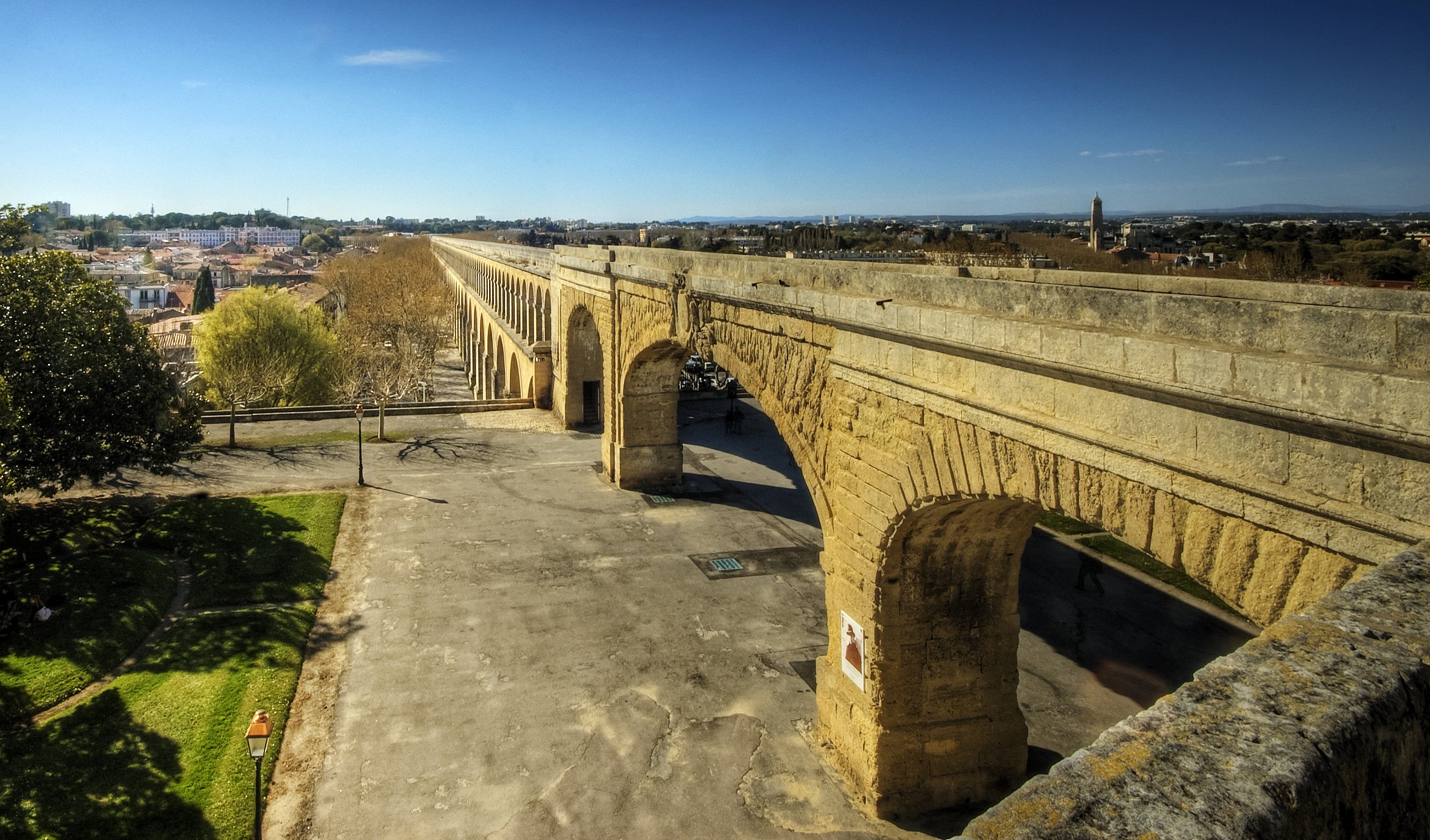
The historic centre, the Écusson, is a shield-shaped tangle of honey-coloured medieval lanes where nearly everything is pedestrianised. The vast Place de la Comédie — nicknamed "the egg" for its oval shape — sits at one end, paved in white and surrounded by belle époque cafés. From there you can walk the Rue Foch up to the Promenade du Peyrou, a formal esplanade with a water tower and a Roman-style aqueduct that once supplied the city. Tucked into the lanes are the Musée Fabre, one of the finest provincial art museums in France, and the St-Pierre cathedral with its extraordinary fortified porch on two massive stone pillars. South of the Écusson, Ricardo Bofill's monumental 1980s Antigone development is a striking bit of postmodern urban planning that Montpellier visitors either love or can't understand.
The sea is fifteen minutes away by car or tram — the long flat Mediterranean beaches of Palavas, La Grande-Motte (all pyramid hotels from the 1960s), and Carnon. Inland, the dramatic limestone country of the Cévennes and the circuses of Navacelles and Mourèze make easy day trips.