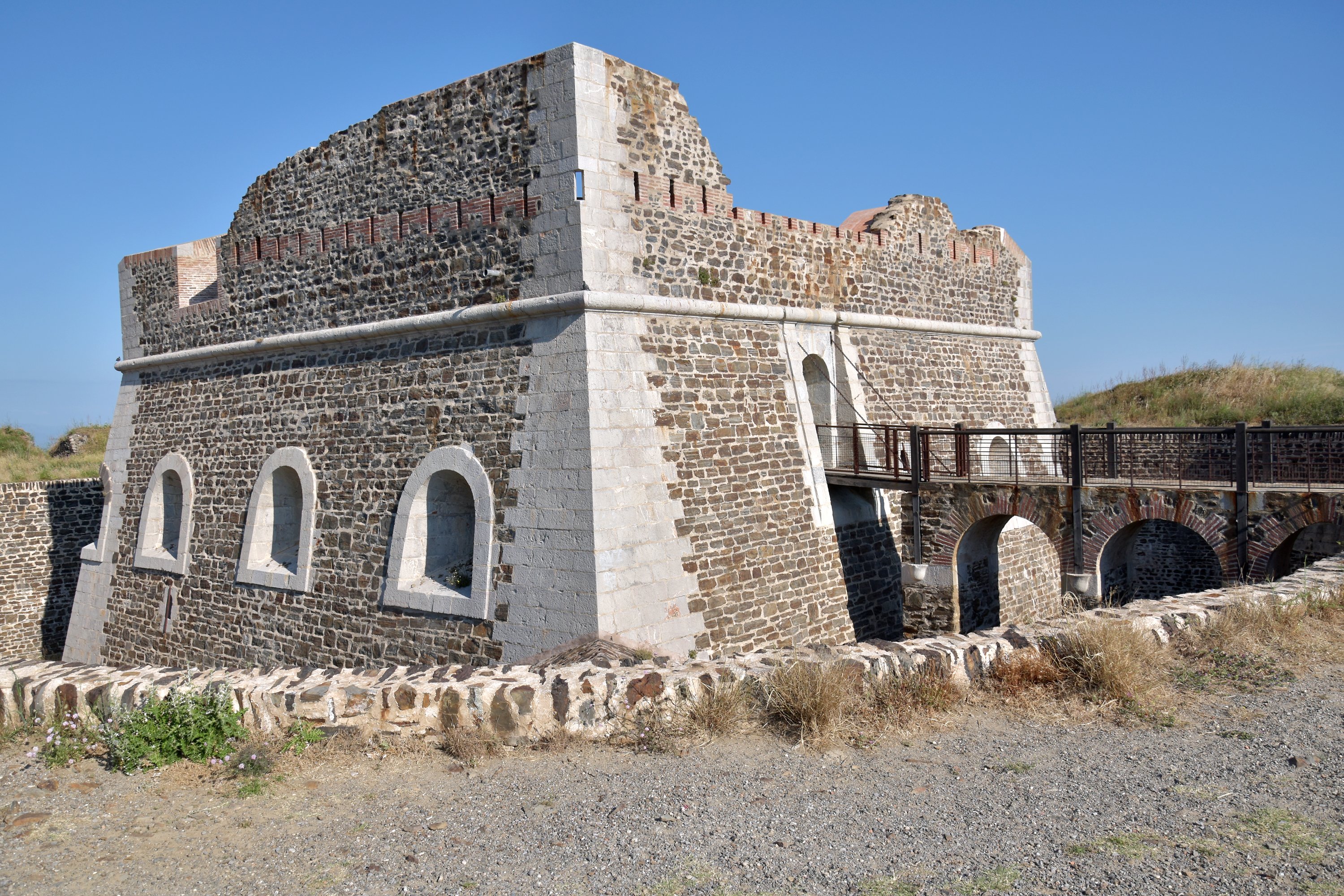
Collioure is the kind of small town that earns its reputation. A Catalan fishing village on the Côte Vermeille — the vermilion coast where the Pyrenees run down to the Mediterranean — it was painted so often and so well by Matisse, Derain, Braque, and Picasso in the early 20th century that it effectively became one of the birthplaces of Fauvism. "In the whole of France there is no sky as blue as the one above Collioure," Matisse wrote, and he was right about the quality of the light, which is exceptional: intense, clear, and reflected off both the sea and the red-schist rock that gives the coast its distinctive colour.
The town is small — a few thousand inhabitants — and its centre is concentrated around the harbour, the royal castle, and the baroque church whose bell tower incorporates a medieval lighthouse. The Château Royal sits directly on the waterfront, its foundations in the sea, a massive fortification built by the Templars and extended by the Aragonese kings and then Vauban. The Église Notre-Dame-des-Anges, with its pink dome and round tower-lighthouse, is the image that appears on every postcard of the town.
Collioure produces its own wine — the Collioure AOC, predominantly Grenache and Syrah — and the local anchovy industry is a genuine regional tradition: the salt-cured anchovies of Collioure, packed in tins or sold loose, are considered among the best in France and make an excellent thing to take home. The town is extremely busy in summer; Perpignan is 27 kilometres to the north and makes a more practical base for exploring the area.