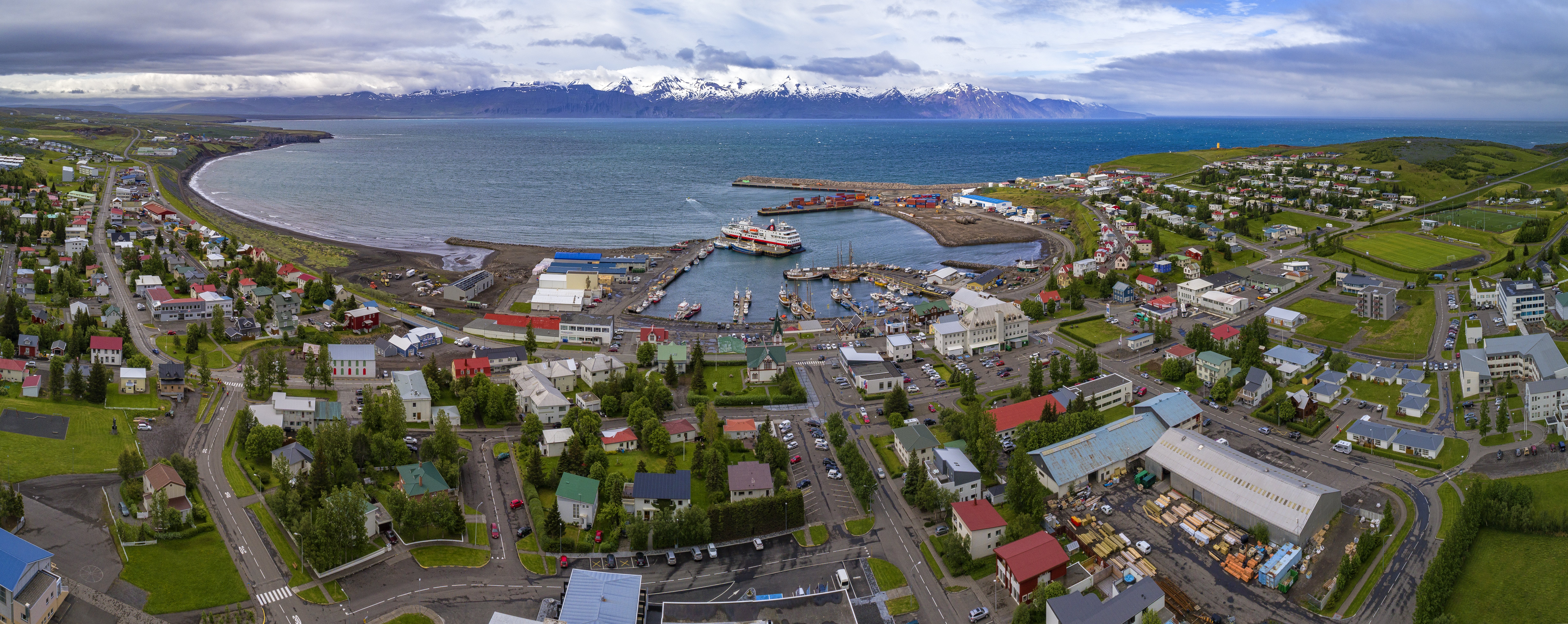
Husavik
©
Husavik

Husavik

North Iceland fishing town on Skjálfandi Bay, known for whale watching and colourful harbour houses.

Husavik is a small fishing town of about 2,500 people on the shores of Skjalfandi Bay in northern Iceland. It has earned the title of whale watching capital of Iceland — humpback whales feed in the bay from April through October, and sighting rates on boat tours regularly exceed 95 percent.

Beyond the whales, Husavik has a genuine small-town charm that the more touristed stops on the Ring Road often lack. The harbour is lined with colourful wooden houses, and the Husavik Whale Museum is one of the best small museums in the country. The town also makes a good base for visiting the volcanic landscapes around Myvatn and the powerful Dettifoss waterfall, both less than an hour's drive away.

Guide

Getting There

Húsavík is in northeast Iceland, about 490 km from Reykjavík by road. By car, take Route 1 (Ring Road) east and then north on Route 85; the drive from the capital takes around five hours, more if you stop along the way. Many visitors combine Húsavík with Lake Mývatn, which is 60 km to the south via Route 87 — the two make a natural pairing for a northeast Iceland itinerary.

Domestic flights connect Akureyri (the regional capital, 90 km west) to Reykjavík several times daily, and Eagle Air flies directly to Húsavík Airport from Reykjavík on a limited schedule — check current timetables as frequency varies by season. The most common approach for visitors without a rental car is to fly to Akureyri and rent there, or to join a guided tour that includes transport from Akureyri or Reykjavík. Bus services on the northern routes are infrequent and slow; a car makes the whole region vastly more accessible.

Guide

Things to Do

Húsavík punches well above its weight for a town of 2,000 people. It has the best whale watching in Iceland — some argue in all of Europe — and a cluster of small but genuinely excellent museums that reward a longer stay than most visitors plan. The town sits on a wide bay where cold nutrient-rich waters draw humpbacks and minkes in extraordinary numbers from May through October. Beyond the water, the wooden church on the hill is one of the most photographed buildings in north Iceland, and a surprising monument to American space exploration sits just off the main street.

Allow at least one full day here, more if you want to combine a whale watching trip with the museums at a comfortable pace. Many travelers use Húsavík as a base for the nearby Lake Mývatn area, but the town itself deserves its own unhurried afternoon.

Guide

When to Go

The whale watching season runs from May to October, with June through August the peak months for both whale sightings and visitor numbers. Humpbacks are most reliably present from June onwards when the bay is teeming with the small fish they feed on. The long summer days — Húsavík is just south of the Arctic Circle — mean late evening light that turns the harbour and church into something extraordinary, and you can be out on a whale watching boat at 10pm with the sun still up.

Winter visits are quiet and cold, but Húsavík is a working town that stays lively year-round. The northern lights are visible from September through March on clear nights, and the town offers geothermal bathing at the Geosea sea baths on the cliff above the harbour — hot pots overlooking the bay where humpbacks surfaced in summer. If you want the full whale watching experience, May to August is your window; if you want the northern lights, dramatic winter light, and no crowds, January through March works well.