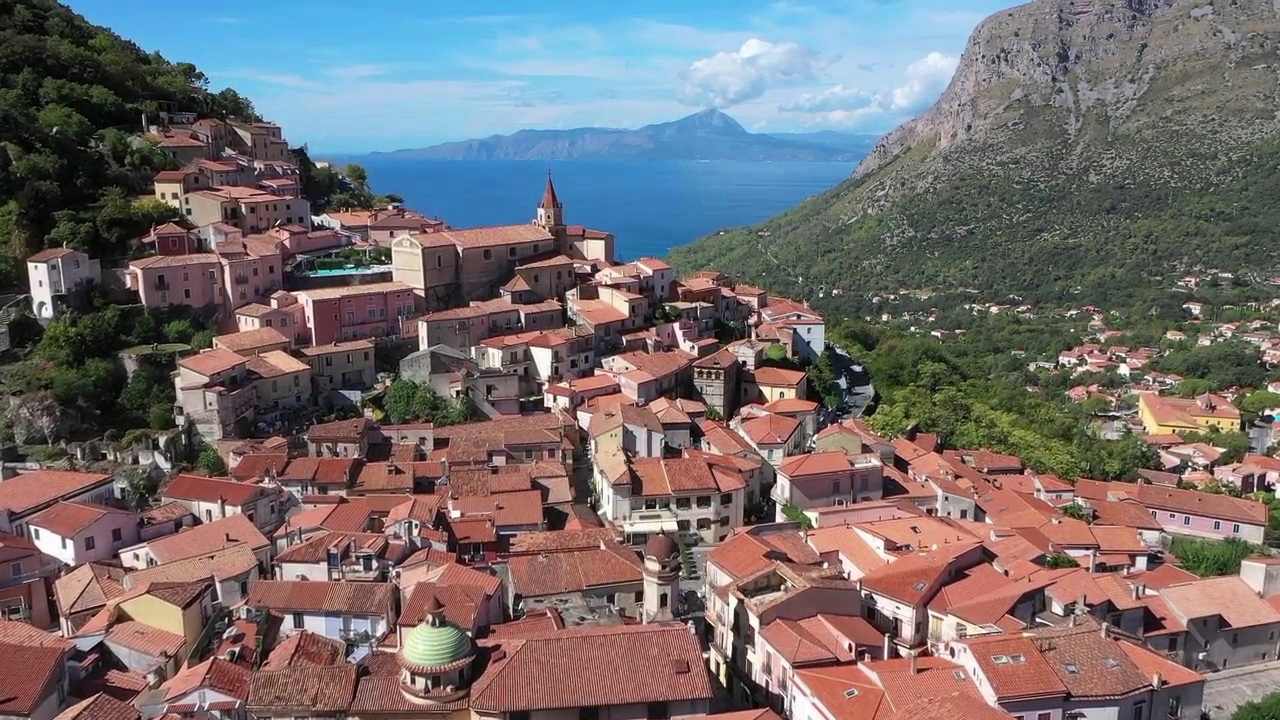
Basilicata coastal town squeezed between Tyrrhenian cliffs, mountain churches, and cave-dotted coves
Maratea is the best Basilicata has to offer coastal travellers. Squeezed onto a narrow strip between mountains and the Tyrrhenian Sea, it is the region's only stretch of coastline — and it makes the most of it.
The old town is built on the slopes of Monte San Biagio, its narrow streets threading between 17th- and 18th-century buildings. The main sight is the church of Santa Maria Maggiore in the centre of the village, but the real pleasure is in wandering. Above it all, on the summit, stands an enormous statue of Christ the Redeemer — smaller than Rio's, but dramatically sited beside the ancient Basilica of San Biagio.
The port is the liveliest area, with shops, cafes and some good restaurants. Boat excursions run to the caves along the coast, including the small but spectacular Grotta delle Meraviglie. The best beaches — rocky, clear-watered — are found at Acquafredda, about 10 km north, and Marina di Maratea, 5 km south along the coastal road.
Guide
Beaches
Maratea's beaches are mostly small, rocky or pebbly coves rather than long stretches of sand — but the water is among the clearest on the Italian mainland, and the coastline is dramatic. The two main beaches are at Acquafredda, about 10 km north of the centre, and Marina di Maratea, 5 km south along the coastal road. Both have sun-lounger concessions and a handful of beach bars in summer.
Smaller, harder-to-reach coves dot the cliffs between — Cala Jannita with its rare black sand, Spiaggia di Macarro, and the secluded Spiaggia di Filocaio. Many are accessible only by boat or by long stairs down from the road; the best way to see them properly is on a boat trip from Maratea port. The sea is usually swimmable from mid-May through October.
Guide
Eating Out
Maratea's restaurants split between the old town, the port, and the beach areas, with most of the better cooking up in the borgo or just below it. The local cuisine is Basilicatan with a heavy Tyrrhenian-coast accent: lots of seafood, of course, but also Lucanian pasta — orecchiette, cavatelli, lagane — served with hearty meat and chickpea sauces from the inland traditions of the region. The lampascioni (wild hyacinth bulbs), peperoni cruschi (crispy dried sweet peppers), and Senise peppers are local specialties worth seeking out. Book ahead in July and August; most kitchens close in mid-winter.
Guide
Getting There
Maratea is awkward to reach, which is part of its charm. The nearest airports are Naples (about 3 hours by car or train-and-coach) and Lamezia Terme in Calabria (about 2 hours). The Salerno-Reggio Calabria autostrada (A2) does not run through Maratea — the town sits on the SS 18 coastal road, which is slow and winding but spectacular.
The train is a viable option: Maratea station, about 4 km from the old town, is on the Tyrrhenian coastal line and has direct services to Naples (around 3 hours), Salerno (2 hours), and a handful of trains a day to Rome (4½ hours). A local bus runs between the station, the old town and the port; in summer a navetta shuttle runs more frequently. By car, the SS 18 hugs the coast both north and south, with many of Maratea's beaches and viewpoints along it.
Guide
When to Go
Maratea is a summer town: most hotels, restaurants and beach concessions open from Easter through October and many close entirely in winter. July and August are hot and busy, especially around the festival of San Biagio in early May and the patron saint days in summer. June and September are the sweet spot — warm enough for swimming, the sea still calm, the crowds thinner.
The Festa di San Biagio in May is the main event of the local calendar, with processions winding up to the basilica on Monte San Biagio. Christmas brings a small but atmospheric crib display in the old town. Winter is mild but quiet; expect many shops and restaurants to be closed, with little reason to come unless you want to walk the coastal trails in solitude.