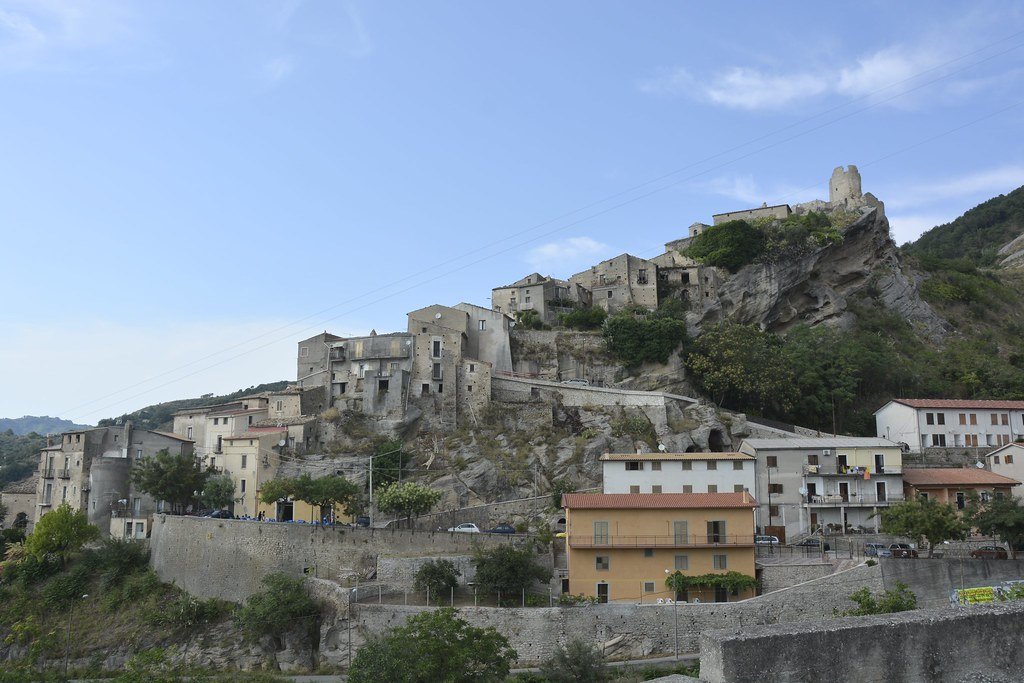
Layered Calabrian coastal town where Byzantine, Arab, Norman, and Roman traces meet above the Tyrrhenian Sea.
Amantea ranks high on a list of Calabria's prettiest towns, and it is one of the region's most historically layered. Long before the Greeks and Romans, Bronze and Iron Age settlements flourished around the mouth of the river Savuto near the port.
The Bruzi, Calabria's native warrior tribe, held off Greek colonisation for decades, which explains the lack of Greek architecture here, unlike almost every other Calabrian town. The Romans eventually prevailed and used 300 km of surrounding land as an ager, a supply territory for Imperial Rome, building a major port to ship the produce.
After the fall of Rome, Amantea sat on the border between Lombard and Byzantine territories. The Byzantines built a castle on the hill above town, still prominent today, commanding views of the coast in both directions. In 839 the Arabs took the city and established an emirate around it. The name Amantea comes from the Arabic Al Mantiah, meaning "stronghold."
Modern Amantea divides into two parts: the historical centre on the hill above, and the newer town below with shops, restaurants, and piazzas lining the main boulevard. It is a friendly, easy place to find your way around.
Guide
Beaches
Amantea has a long sandy beach running south from the centre of town for several kilometres. The closer stretches near the harbour have lidos with sun loungers, parasols, and beach bars for hire; further south, beyond the river mouth, the beach grows wider and more open, mostly free public sand mixed with the occasional pebble.
The water shelves gently — fine for kids — and the colour is the bright clear blue of the Tyrrhenian. North of town, the coast is more dramatic, with rocky coves accessible from the old SS18 highway. The Coreca Reefs just south are the best snorkelling option in the area. Sea conditions are calmest from June to September; outside the summer season the wind off the Tyrrhenian can be strong.
Guide
Eating Out
Calabrian food is one of the more distinctive cuisines of southern Italy — heavily spiced with peperoncino, big on cured pork, and dependent on the local 'nduja sausage and pecorino crotonese. Seafood dominates along the coast: swordfish, anchovies, sardines, and the local bianchetto whitebait fried in olive oil.
In the centro storico, Mediterraneo does Calabrian classics with a modern hand — try the swordfish involtini and the local Cirò red wine. Trattoria L'Oste della Pizzata, a few streets down from the castle, leans into traditional family dishes including hand-rolled fileja pasta with goat ragù. On the seafront, Lido Azzurro is the standard pick for fritto misto and grilled prawns straight off the boats, with tables right above the sand.
End the meal with liquirizia — Calabria is the world's largest producer of liquorice — or a small glass of the amaro silano, a herbal digestif made in the mountains east of town.
Guide
Getting There
Amantea sits on the Tyrrhenian coast of Calabria, on both the SS18 coastal road and the A2 Salerno–Reggio Calabria motorway, which runs inland a few kilometres behind the town. The motorway exit is "Falerna" or "Amantea" depending on which way you are coming from.
The Amantea railway station is a couple of kilometres south of the centre, on the Lamezia Terme–Paola line. Local trains stop frequently; from Lamezia (the regional hub) you can connect to fast Frecciarossa services up the Tyrrhenian coast to Rome and Naples, or south to Reggio Calabria. The nearest airport is Lamezia Terme (SUF), about 40 km north, served by easyJet, Ryanair, and ITA with seasonal flights to most of northern Europe. A taxi from the airport takes around 40 minutes; there is also an infrequent local bus.
Guide
When to Go
The best months for Amantea are May, June, and September — warm enough to swim, light enough on tourists for the beach lidos to feel uncrowded. July and August are hot, busy, and considerably more expensive; book ahead if you plan to come in August.
Out of season the town is sleepy but not closed — the centro storico bars stay open, and the trattorias do shorter hours. Winters are mild but wet and windy along the coast. The big local festival is the Festa di Sant'Antonio Abate in mid-January, with bonfires in the streets and roast pig; the Festa della Madonna del Carmine in July fills the seafront with processions and fireworks.