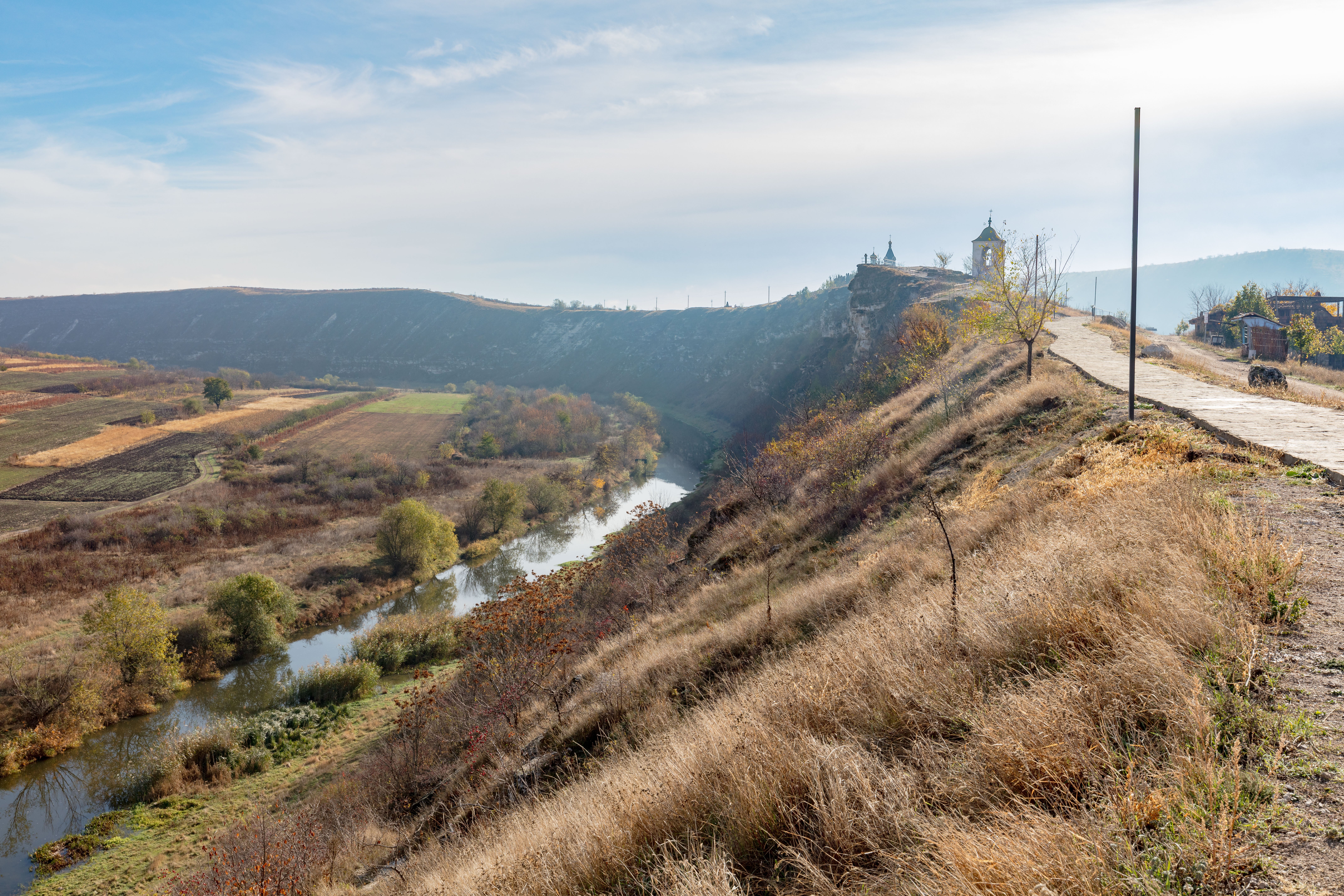
Orheiul Vechi is a natural and archaeological reserve about 60 km north of Chisinau, set in a dramatic limestone canyon where the Raut river loops back on itself. The site has been inhabited for thousands of years — by Dacians, Mongols, Tatars, and others — but what draws visitors today are the cave churches and medieval fortifications carved directly into the cliff face.
The cave monastery complex is still active. A resident Orthodox monk occupies one of the chambers; if he is present, he will let you descend the stairs into the restored altar chamber and onto the outside terrace, which hangs over the valley with no railing. Further up the cliff is a more traditionally built church, beautifully frescoed inside.
The approach road from Orhei offers a spectacular view of the entire bend of the river — the Raut river loop viewpoint is worth stopping for before you walk up to the complex. On the opposite hillside, a village and a church with green spires complete the picture. The broader archaeological park, which covers Mongol-era and Dacian remains on the same limestone peninsula, makes this one of the most historically layered sites in the country.
There is a small information centre and restaurant near the start of the path. The site can get busy with tour groups in summer; early morning visits are quieter.
Getting here independently requires a marshrutka to Orhei and then a local taxi for the final stretch. A private car from Chisinau — ideally with a guide who knows the history — is the most practical option. Along with the wine cellars, this is the place in Moldova not to miss.