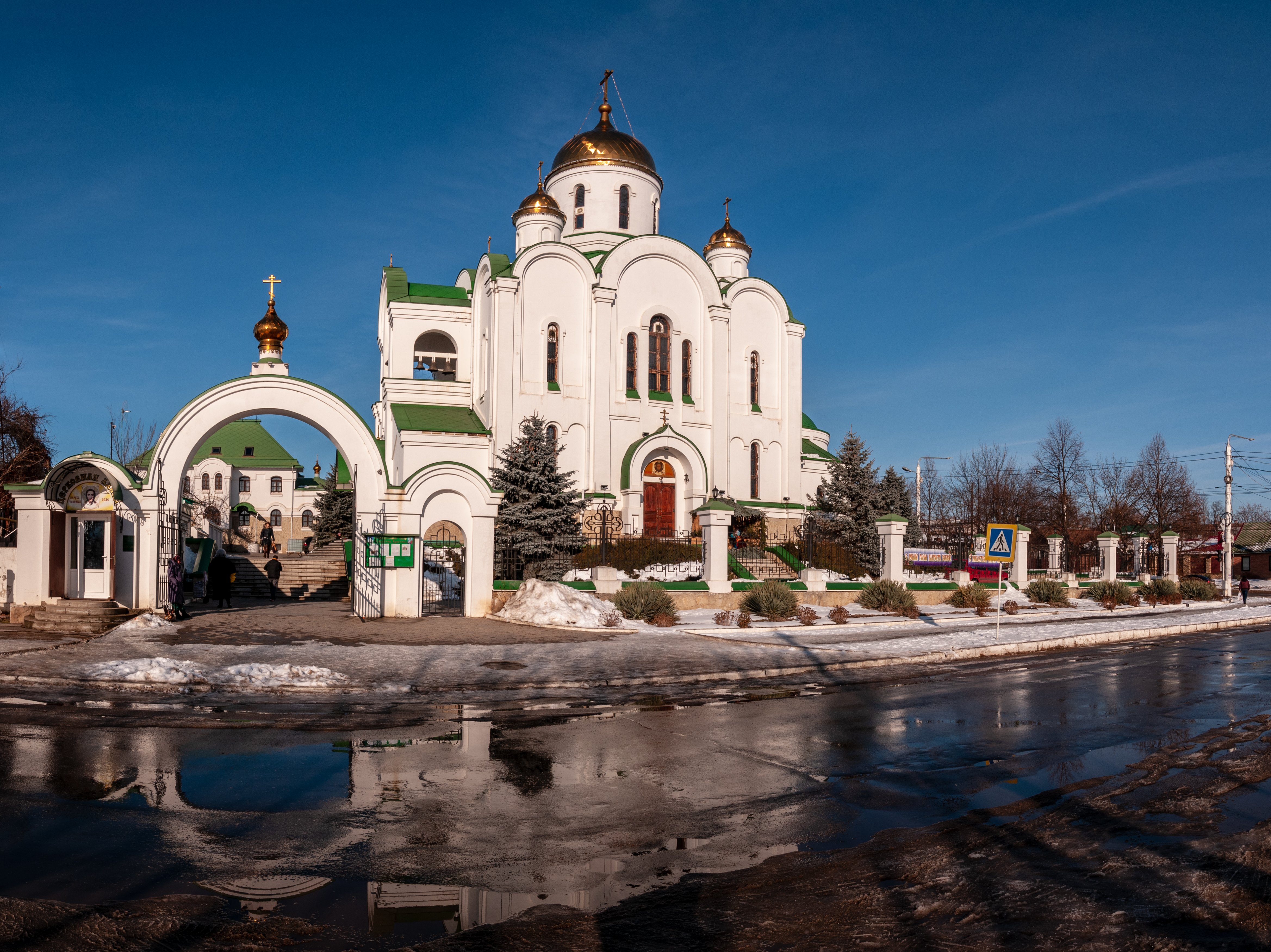
Dniester-side city of Soviet-era boulevards, Lenin statues, local roubles, and slow civic rhythms.
Tiraspol is the capital of Transnistria, the unrecognized breakaway republic that declared independence from Moldova in 1990 and has maintained a frozen existence since. The city sits on the east bank of the Dniester, about 70 km from Chisinau.
Walking the main boulevard — Karl Marx Street — past Lenin statues, Soviet-era murals, and the parliament building guarded by a tank frozen on a plinth, is a genuinely disorienting experience. The currency (Transnistrian roubles) is accepted nowhere outside the republic. The shops are stocked with Russian goods. The infrastructure is Soviet in pace and style. It is not threatening; it is simply different in a way that is hard to describe.
The KVINT cognac factory, which has been distilling since 1897, offers tours and sells bottles at prices far below what you would pay in Chisinau. The Sheriff complex, owned by the company that effectively runs Transnistria's economy, is a bizarre monument to private enterprise in what presents itself as a socialist state. Suvorov Square at the city's heart is dominated by a statue of the Russian general who founded Tiraspol in 1792 and never lost a battle.
From Chisinau, marshrutkas and shared taxis run regularly to Tiraspol (about 1.5 hours). At the checkpoint you receive a paper entry slip with a validity period — keep it and present it when you leave. Day trips are straightforward for most Western passport holders. For a longer excursion, Tighina and its Ottoman fortress lie 15 km west and the Noul Neamț Monastery is 15 km south.
Guide
Day Trips
The easiest excursion from Tiraspol crosses the Dniester to Tighina — known in Russian as Bender — about 15 km west. The town's 16th-century Ottoman fortress, built under Suleiman the Magnificent and still partly used by the military, is the most spectacular historical monument in Transnistria; the drive takes around 20 minutes by marshrutka or shared taxi.
For a quieter half-day, the Noul Neamț Monastery sits in the village of Chitcani, about 15 km south. Founded in 1864 by monks from the Neamț Monastery in Romania, it is an active complex of churches and a tall multi-storey bell tower, and a marshrutka from the city centre reaches it in roughly 30 minutes.
Guide
Eating Out
Tiraspol's dining scene is modest but authentic. The food is a mixture of Romanian, Ukrainian, Russian, and Moldovan: borscht, pelmeni dumplings, mamaliga (polenta), miteiti (grilled minced meat rolls), and placinte (pastries filled with cheese or potato). Prices are low by any standard; a full meal with drinks rarely costs more than the equivalent of $10.
Kumanek is the city's most recommended restaurant, known for traditional Ukrainian dishes with a local twist. Café Volna on the riverfront is a no-frills Soviet-decorated local café — Lenin watches you eat — that is popular with residents and probably the cheapest option in town. The Green Market near Suvorov Square sells fresh produce, dairy, and local specialities; buy some Transnistrian cognac while you're there.
Local beer is cheap and acceptable. The main spirit to drink is KVINT brandy, which should be sampled at the source.
Guide
Getting There
From Chisinau, shared taxis (maxi-taxi) and marshrutkas depart frequently from the central bus station for Tiraspol, taking about 1.5 hours. Agree on the price before you get in. At the Transnistrian checkpoint, your passport is checked and you receive a paper entry slip stating your permitted length of stay — typically 24 hours for day-trippers, or up to 10 days on request. Keep the slip with you at all times and present it when leaving.
Most Western passport holders can visit without advance arrangements. Citizens of some countries may need an invitation letter; check current requirements before travelling. The Republic of Moldova does not formally recognise the checkpoint as a border crossing, so officially you are simply moving between regions of Moldova, but Transnistrian officials treat it as an international border.
There is no direct public transport from Ukraine to Tiraspol. The main railway station receives trains from Odessa and a few other points, though schedules are erratic and the route from Chisinau by road is both faster and more reliable.