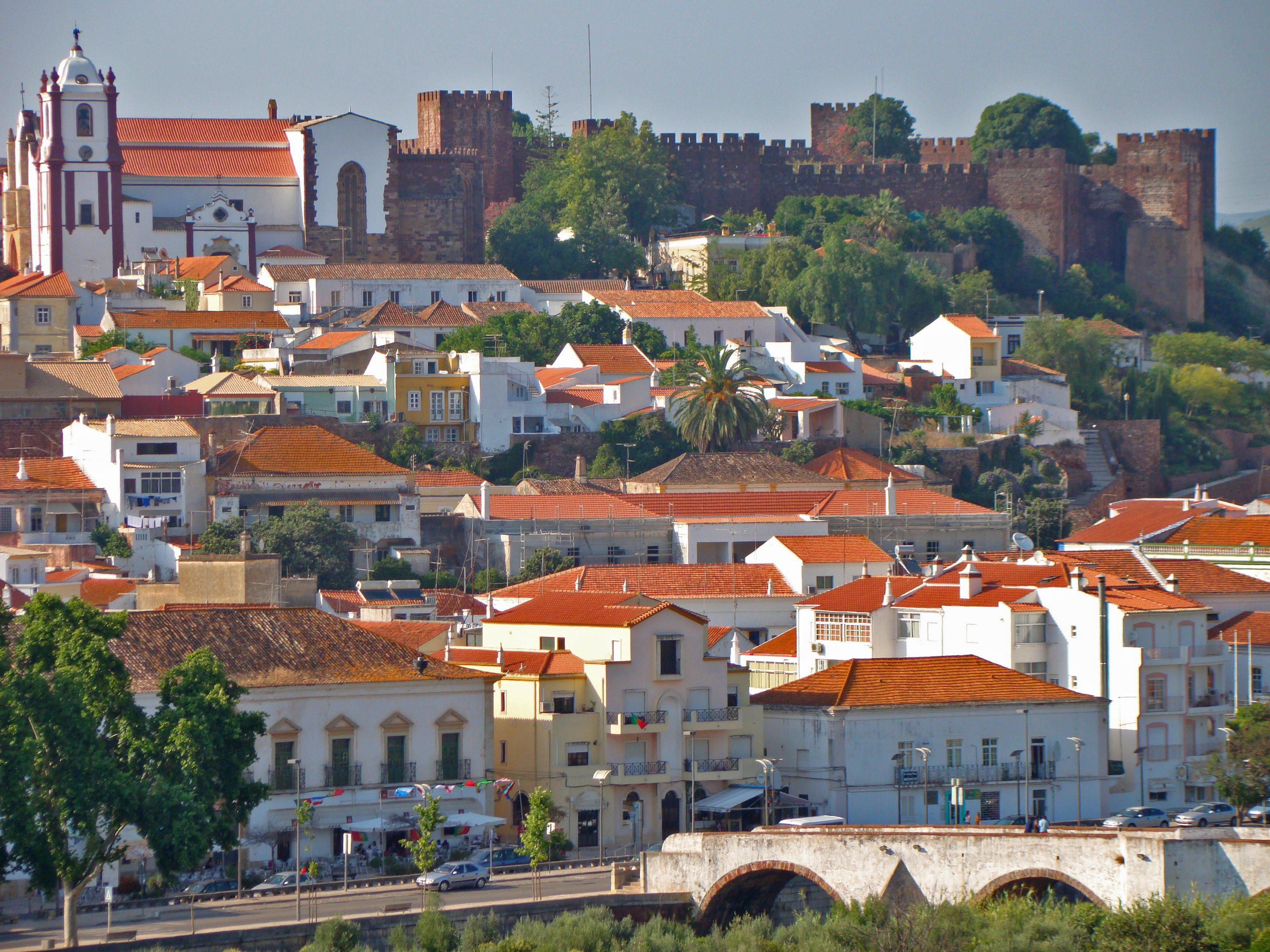
Historic Algarve hill town, once Moorish al-Gharb's capital and still dominated by a red sandstone castle.
Silves is the most historically significant town in the Algarve, though you would not know it from its quiet current state. For several centuries during the Moorish period it was the capital of al-Gharb, a city of scholars, poets, and traders whose population and wealth exceeded that of Lisbon. The Crusaders took it in 1189 and the Portuguese recovered it definitively in 1242, after which the town gradually declined in importance, and now it sits peacefully on a hill above the orange groves of the Arade river valley, more pleasant than impressive.
The Moorish castle at the top of town is the best-preserved Moorish fortification in Portugal — massive red sandstone walls enclosing an interior where you can walk the battlements and look out over the patchwork of citrus and cork oak that stretches to the coast. Below the castle, the Cathedral of Silves (Sé de Silves) occupies the site of an earlier mosque, a Gothic building rebuilt several times that still holds the tombs of some Algarve crusader kings.
The Museu Arqueológico on Rua das Portas de Loulé is worth a visit for its Arabic water cistern alone — a deep circular well left in situ beneath the museum building, its vaulted stonework intact from the Islamic period. The collection of local finds extends from the Chalcolithic through to the medieval era.
Silves is about 15 kilometres from the coast, far enough to be largely ignored by beach tourists, which keeps it pleasantly uncrowded most of the year. The annual Medieval Fair in August draws large crowds to a surprisingly well-mounted recreation of the Moorish-era market. The rest of the year, an afternoon is enough to see the main sights, with a stop at the riverside cafés before heading back.
Guide
Getting There
Silves is about 15 kilometres north of the coast, easily accessible from Albufeira, Portimão, or Lagos. By train, the Algarve line runs through the valley below town (Silves railway station is about 2 kilometres from the centre); trains are frequent from Faro, Albufeira, and Lagos.
By car, take the EN124 north from the coast — from Albufeira the drive is about twenty minutes, from Lagos about thirty. Parking is available below the castle walls and in the town square.
From Faro airport, the easiest connection is by train to Albufeira or Portimão and then a taxi or occasional bus to Silves. No direct buses run from the coast with useful frequency; a rental car or taxi is the most flexible option.
Guide
When to Go
Silves is at its most pleasant in spring (March to May) and autumn (September to October), when temperatures are warm but not oppressive and the almond and orange blossoms or harvests add colour to the surrounding countryside. Summer (July and August) is hot — regularly above 35°C — and while the interior of the castle and museum provide shade, the walk up from the car park to the castle walls can be exhausting in the afternoon heat.
The Medieval Fair in August is a major event that transforms the town for a week or more, with costumed traders, jousting, period food, and evening entertainments. It is very well done but the town fills up completely; book accommodation well in advance if you want to attend.
Winter is mild and quiet, occasionally wet. The town is uncrowded and the sites are easily accessible, though some cafés reduce their hours. A good time for anyone who wants the place to themselves.