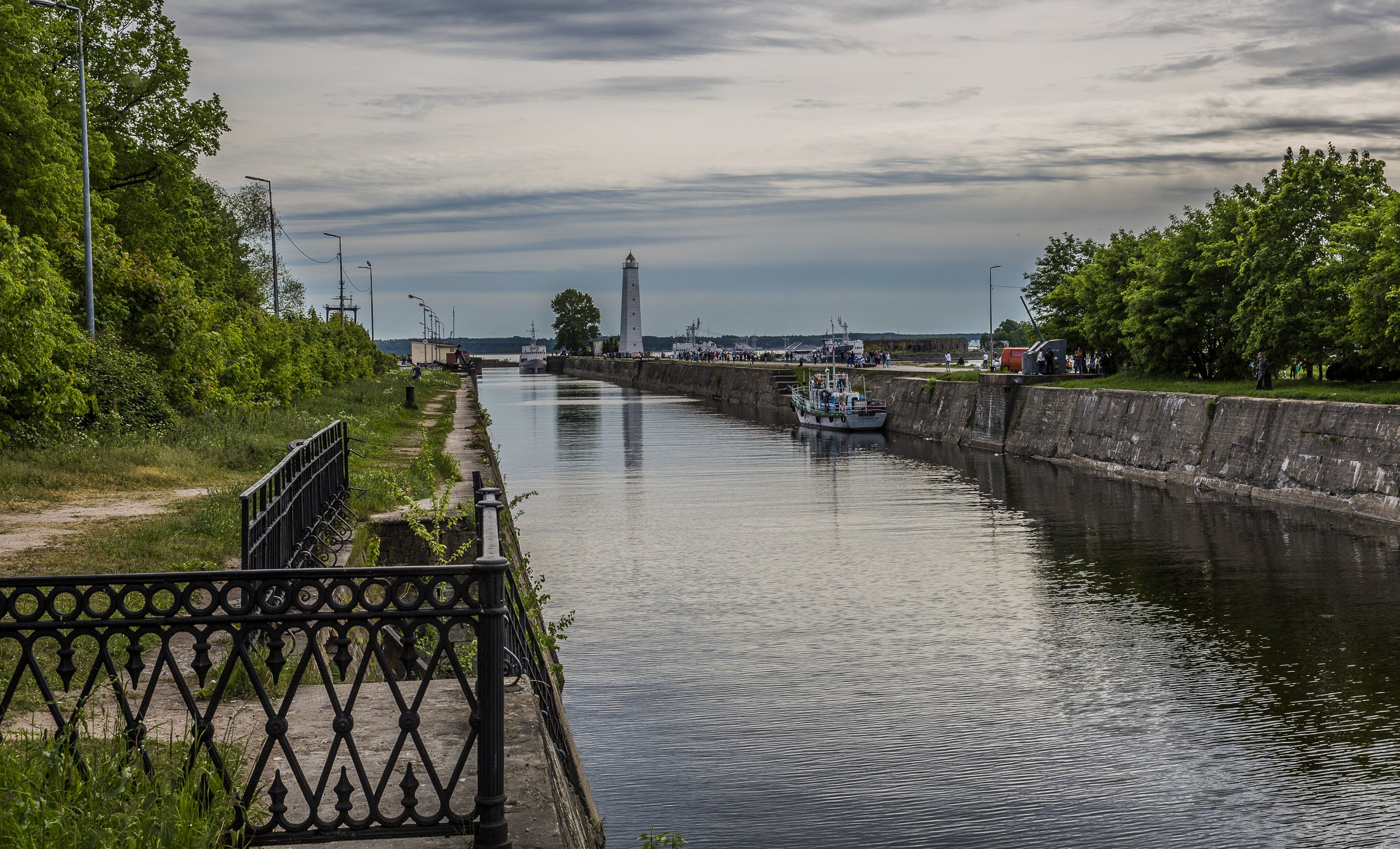
Kronstadt sits on Kotlin Island in the Gulf of Finland, 30 kilometres west of St Petersburg, accessible via the ring road dam that also functions as a flood barrier for the city behind it. For three centuries this was the main naval base of the Russian imperial and then Soviet fleet — one of the most fortified islands in the world, ringed by sea forts, bristling with naval guns, and completely closed to civilians until 1996. The military heritage is inescapable and is the main reason to come.
The Kronstadt Naval Cathedral is the centrepiece of the city: an enormous neo-Byzantine church built between 1903 and 1913 as the memorial church of the Russian Navy. It had been converted to a cinema and then left to decay before a remarkable restoration in the 2000s returned it to something close to its original grandeur. Its dome dominates the skyline of the island and can be seen from St Petersburg on a clear day.
The island's other great attraction is its ring of sea forts, built on artificial islands in the Gulf of Finland. Fort Alexander — known locally as the Plague Fort, for its use as a bacteriological research station in the late 19th century — is now accessible by boat in summer and is one of the more atmospheric historical sites in the St Petersburg region. The Kronstadt Naval Museum covers the history of the Russian Navy from Peter the Great to the present day.
Kronstadt is also the site of two famous rebellions: the 1905 mutiny and the 1921 Kronstadt rebellion, when sailors who had been heroes of the Bolshevik revolution turned against the new government and were violently suppressed. These events are not much commemorated in the city, but they cast a long shadow over its history.