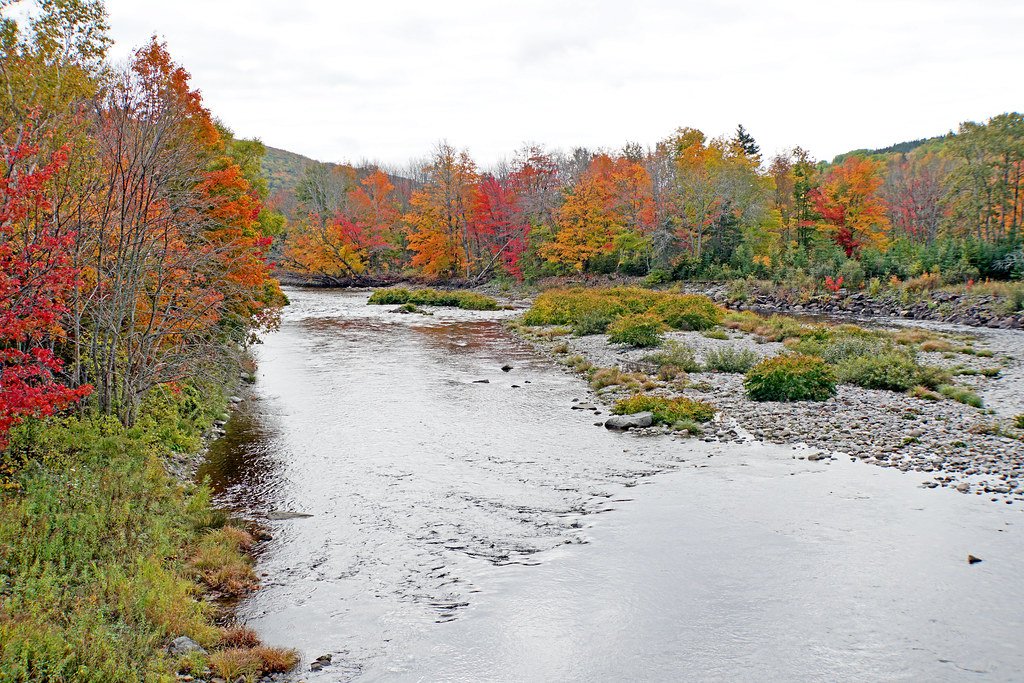
Cape Breton Island sits at the eastern tip of Nova Scotia, joined to the mainland by a single causeway across the Strait of Canso. It is one of the most dramatic landscapes in eastern Canada — a tilted slab of highland plateau rising straight out of the Gulf of St Lawrence — and a place where the country's cultural inheritance is unusually visible.
The famous loop here is the Cabot Trail, a three-hundred-kilometre coast road that runs around the northern half of the island and through Cape Breton Highlands National Park. The road climbs over headlands of bare basalt where the bald eagles ride the updrafts, drops to fishing coves still working their lobster traps, and threads pine forests where moose stand in the bogs at dusk. Drive it counter-clockwise to keep your car on the seaward side of the road. Allow at least two days — the scenic stops and short hikes from the road (Skyline Trail, Middle Head, Acadian Trail) are the point of being here.
The island's cultural identity is rooted in its Gaelic, Acadian and Mi'kmaq communities. Celtic music is not a tourist attraction here so much as a living tradition: fiddle sessions and ceilidhs run through the summer in small community halls, and the Celtic Colours festival in October pulls musicians from across the diaspora. On the east coast, the Fortress of Louisbourg is one of the largest historical reconstructions in North America — a French naval town painstakingly rebuilt on its 18th-century footprint, staffed by costumed interpreters who will sell you fresh-baked soldier's bread from the bakery oven. To the south, the freshwater Bras d'Or Lake — actually a vast inland sea — divides the island and is a magnet for sailors and birdwatchers.