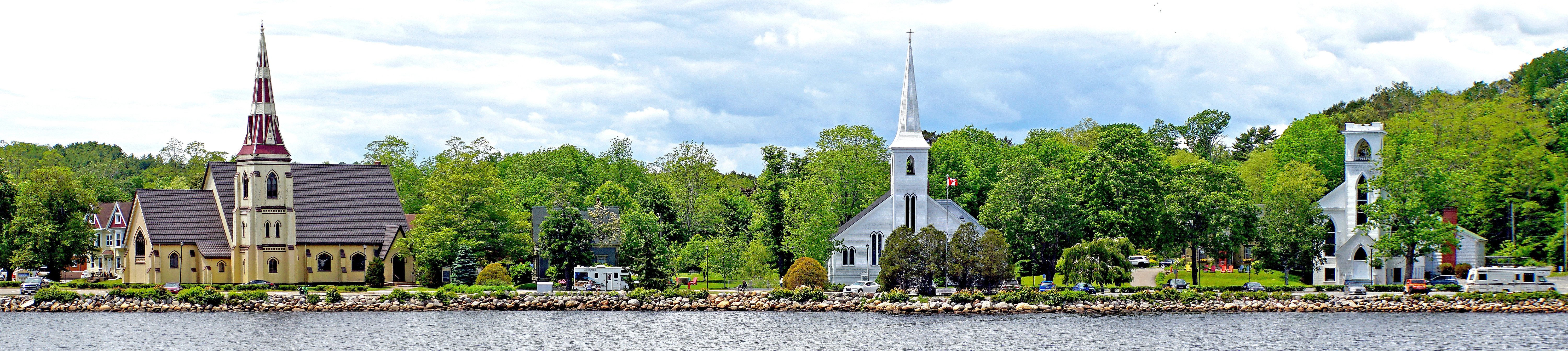
Mahone Bay is a tiny town of around 1,000 people on the South Shore of Nova Scotia, set on the inner curve of the wide bay of the same name, about 15 kilometres up the coast from Lunenburg and 90 kilometres from Halifax. It is best known for a single image — three nineteenth-century waterfront churches lined up in a row, their spires reflecting in the harbour at high tide — which has become one of the most reproduced views in Atlantic Canada. The town is small enough to walk end to end in twenty minutes, and that is exactly what most visitors do: a slow loop along Main Street and the harbour, with a stop at one of the bakeries or wood-fired pizza spots.
The bay was originally settled by German Protestant "Foreign Protestants" recruited by the British in the 1750s, the same wave that built Lunenburg the year before, and the town's nineteenth-century wealth came from wooden shipbuilding — at one point Mahone Bay yards launched some of the fastest schooners on the coast. The shipbuilding is long gone, but the small Mahone Bay Settlers Museum on Main Street covers the German settlement and the boatbuilding era, and the surviving early houses give the streetscape its character.
Beyond the Three Churches and the shops, the obvious side trip is Oak Island at the head of the bay, the small wooded island wrapped in 230 years of treasure-hunting lore and the recent television series. Oak Island Tours runs guided visits during the warm months. The bay itself is dotted with hundreds of small islands — local guides will tell you 365, one for every day of the year, though it is actually somewhat fewer — and kayak rentals from the town wharf let you paddle out among the nearer ones in calm weather. Most visitors spend half a day here as a stop between Lunenburg and Halifax; an overnight is worth it only if you want to catch the morning light on the churches.