Samaná Peninsula beach town where a former fishing village grew into a relaxed international enclave
Las Terrenas sits on the north coast of the Samaná Peninsula, a former fishing village that found itself on the map when a road was cut through the mountains in 1946. The French and Italians arrived first, then everyone else. Today it is one of the Dominican Republic's most cosmopolitan small towns — a place where you can eat fresh-caught lobster for lunch and proper French pastries for breakfast.
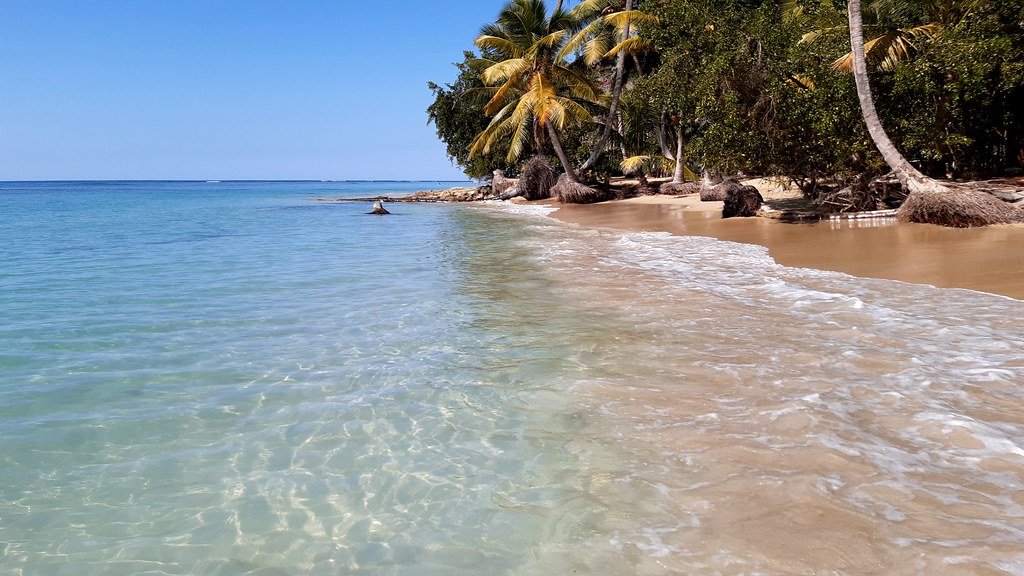
The appeal is straightforward: long coconut-palm beaches, warm water, and a town that still feels like a town rather than a resort. Playa Las Terrenas stretches west from the village centre, Playa Bonita lies a short drive further along the coast, and Playa Cosón — arguably the best of the three — runs for several unbroken kilometres to the east. The surf is gentle, the sand is golden, and the palm trees lean dramatically over the water.
The town itself is walkable and slightly chaotic. The main road, Calle Duarte, runs parallel to the beach and holds most of the restaurants, shops, and bars. Side streets are unpaved and flood after rain. Motoconchos buzz everywhere. The mix of Dominican, French, Italian, and Haitian residents gives the place an unusual character — more Mediterranean fishing village than Caribbean resort, with merengue playing from the colmados to remind you where you actually are.
Las Terrenas works well as a base for exploring the peninsula. The Samaná bay, where humpback whales gather from January to March, is less than an hour away. El Limón waterfall is a half-day trip on horseback. And the town itself is pleasant enough that doing nothing at all for a few days feels like a perfectly good plan.
Guide
Getting Around
Las Terrenas is small enough to walk, especially along the beach where the sand is firm. The town stretches along the coast rather than inland, so most of what you need is within a 20-minute stroll.
For anything beyond walking distance, motoconchos are the default. These motorcycle taxis are everywhere — flag one down and negotiate a fare of 50–100 pesos for a ride within town. They are loud, smoky (many run two-stroke engines), and ubiquitous. You get used to them. A 24-hour taxi stand sits on the beach road between the village centre and Playa Las Ballenas, offering a more comfortable alternative.
You can rent scooters, quads, and cars from several places in town. Cash usually gets a better deal than credit cards. Insurance is typically included, but read the contract carefully — you are responsible for damage. Driving in town is not difficult if you are comfortable with informal traffic rules and the occasional dog in the road.
For trips outside Las Terrenas, gua-guas (shared minibuses) run regular routes to Samaná and beyond. They range from minivans to converted school buses and are far cheaper than taxis. Caribe Tours operates scheduled bus service from Samaná to the rest of the country.
Guide
Getting There
The nearest airport is El Catey International Airport (AZS), also called Samaná International, about 35 minutes by car from Las Terrenas. It handles seasonal charter flights and a limited number of scheduled routes, mostly from North America and Europe.
Most visitors fly into Santo Domingo (SDQ) or Puerto Plata (POP) and drive. From Santo Domingo the journey takes around three hours via the Samaná highway, a modern toll road that has cut travel time significantly. From Puerto Plata, count on four to five hours.
Gua-guas (shared minibuses) run from Santo Domingo to Samaná and from Samaná to Las Terrenas. The ride is cheap and straightforward. Caribe Tours operates scheduled bus service on the same route. A private taxi from Santo Domingo airport will cost roughly $150–200 USD.
Guide
Beach Seafood Restaurants
The strip of seafood restaurants along Playa Las Terrenas is the simplest and most reliable eating experience in town: tables on or immediately above the sand, fishing boats visible at the eastern end of the beach, and a menu built entirely around what came in that morning. Dorado, lobster, red snapper, and shrimp appear in various preparations — grilled, fried, in a creole sauce, or simply with lime and tostones. The setting at sunset, with the water turning orange and the first stars appearing over the palm trees, is the Las Terrenas version of a formal dining experience.
Most of the beach restaurants operate on a similar model: you choose your fish or lobster from what is displayed, agree on a price, and wait for it to be prepared. The lobster is the regional speciality and is invariably fresh; the price varies by size but is considerably lower than you would pay for equivalent quality in Europe or North America. Order enough for two people from a single whole lobster and you have the defining Las Terrenas meal.
The restaurants are open from around noon, pick up for lunch, quiet in the mid-afternoon, and busy again from sunset. Competition for tables is rarely fierce except on holidays and during the January-February peak season. There is no reservation system; you simply show up. The best tables are the ones closest to the water.
Guide
Humpback Whale Watching
Between January and March, humpback whales gather in Samaná Bay in extraordinary numbers. The bay lies less than an hour east of Las Terrenas, and boat tours from Samaná town take visitors into the bay where the whales are mating, calving, and socialising throughout the winter. This is one of the best places in the world to watch humpbacks at close range, and a good day on the water will produce multiple sightings of breaching, tail-slapping, and the surface behaviour that makes humpbacks the most theatrical of the large whales.
Tours depart from the Samaná waterfront and typically last three to four hours. The boats are regulated — there are rules about approach distances and engine noise — and the whale encounters are genuine rather than staged. Biologists sometimes accompany the boats and can explain what they are observing in real time. A whale sanctuary was established in the bay in 1986, and Dominican regulations around whale watching have been relatively strictly enforced compared to other Caribbean nations.
From Las Terrenas, the trip to Samaná takes about 40 minutes by road. It is worth combining the whale watching with a visit to the town itself, which has a pleasant waterfront and a more Dominican atmosphere than the expat-flavoured Las Terrenas. Book whale-watching tours in advance during January and February, when demand is highest.